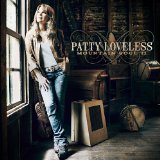
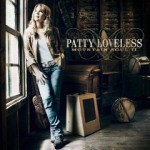
Inhabiting the highest pinnacle of artistic integrity must be a lonely place to dwell. Patty Loveless remains a commercial exile, of sorts for the crime of being “too country” for country radio and TV. But Loveless is undistracted by the trendy and continues to adhere to her artistic vision, making music that matters, music of enduring merit, music that would make her Appalachian ancestors very proud. Music like her current offering, Mountain Soul II.
Back in 2001, her acclaimed Mountain Soul set a very high standard for artistic achievement. This shining original is a unique blend of Country, Bluegrass and Mountain music. It is a heartfelt tribute to her parents, especially her coal-miner father, and the Appalachian music that nurtured and sustained their family through many tribulations.
Mountain Soul II is yet another labor of love from Patty Loveless and husband/producer Emory Gordy Jr. and a long awaited continuation of the splendid original. The same recipe was followed here with similar ingredients and equally spectacular results. Like the original, Mountain Soul II is a veritable feast of soul nourishing material, brilliantly served up by the finest pure-Country vocalist of our time, and a distinguished array of acoustic players and vocalists including Del McCoury, Vince Gill and Emmylou Harris.
Sandwiched between the stunningly innovative remake of Harlan Howard’s classic, “Busted”, and the exquisite Diamond in My Crown are generous servings of drumless acoustic music, a deeply moving, grassy mountain tapestry that delights and seldom disappoints.
“Busted”, the opener, is an empathetic song of solidarity for the economically downtrodden. Loveless restores Harlan Howard’s original coal mining lyrics with great effect. Raw and richly textured, the song is saturated with Appalachian acoustics that perfectly complement Patty’s twangy and nuanced Kentucky drawl. The melody is bouncy, almost in contradiction to the dire tale, but this is perhaps the perfect mountain irony; the power of music to help bring about the joy needed to cope.
The Bluegrass/Gospel classic, “Working on A Building” is an energetic tour-de-force with the perfectly blended high lonesome vocals of Loveless and Bluegrass master Del McCoury. The song is metaphorical, the work is God’s work, the hands are human, and the building is the Lord’s own. But the imperative is very down-to-earth, especially when interpreted as pertaining to the efforts to alleviate Appalachian poverty, a cause near and dear to Patty’s heart.
Other highlights include the pure Bluegrass Big Chance (transplanted from Dreamin’ My Dreams), a brilliant number by Loveless/Gordy which continues the Pretty Little Miss story from the first Mountain Soul. The song has an iconic Mountain sound that harkens to the hills, and is full of down home humor. It is perfectly crafted in every musical and lyrical detail.
“Bramble and the Rose” is pure passion and poetry, intertwined with the brilliant rustic tones of Loveless’ versatile voice. Few can inhabit the heart of a song like Patty Loveless.
“When the Last Curtain Falls” is a song that Emory co-wrote. The verses are all calm before the storming chorus, and then Loveless unleashes with her husband’s lyrics delivering a chilling cautionary tale of final accountability. It is an attitude adjustment that puts all things into perspective.
Mountain Soul II is inspired and very well crafted, but it does contain some apparent missed opportunities. Conspicuously absent are two up-tempo Bluegrass numbers from Loveless’ repertoire, Pretty Polly and Close By. Their inclusion would have enhanced the clear Mountain identity of the project even more, and would have created a more balanced mix of tempos.
Also the “less is more” philosophy is overdone in places, the sparse instrumentation works very well on songs like Diamond In My Crown, and the two a-cappella Gospel numbers, but some of the ballads might have benefited from some richer, rawer musical textures.
At first glance, there seems to be an over reliance on recut songs from her own catalog. But Patty Loveless brings forth the inherent Mountain Soul hidden in any given Country song, remaking them according to her natural Mountain sensibilities, and connecting more deeply with her own heritage in the process. She lovingly returns the songs to their essence and roots, back to the very origins of Country music deep in the heart of the hills.
Vocally, Mountain Soul II is Loveless at her best. Her crystal pure Appalachian alto deftly and fluidly shapes each note with rich and resonant tones and an uncanny sense of nuance that comes only with inherent talent and hard gained artistic maturity.
“Diamond in My Crown”, is the crown jewel of this remarkable album. It is hymn-like in its majesty, accompanied by an antique family pump organ, and some beautiful backing by composer Emmylou Harris. Loveless glows with unleashed vocalizations that are positively chill inducing. Transcendent, sublime, superlatives would be understatements when describing the Loveless interpretation of this gem.
Patty Loveless has once again transmuted the coal of hardship an heartache into pure golden tones. This Appalachian alchemy has yielded yet another diamond for her hard won crown. Mountain Soul II is nothing less than another 21st century Patty Loveless masterpiece.
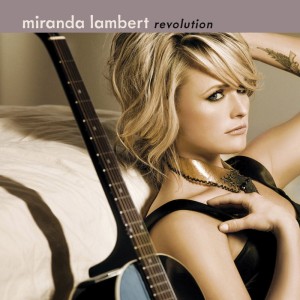
Miranda Lambert is a rare and fascinating case study of an artist who is able to push a significant number of records out the door, but is hard-pressed to receive equally significant radio airplay in return. While her first album, Kerosene, was certified Platinum and the follow up project, Crazy Ex Girlfriend, fared similarly well with Gold certification, she has only managed to squeak into radio’s top ten once with “Gunpowder And Lead.” On her third album, Revolution, it is entirely possible that Lambert has finally found a way to strike the tenuous balance of pleasing both critics and the general country music listening public with her album consisting of everything from sensitive ballads to rocked up, punk-flavored songs and a lot in between.
Not only does her impressive range of versatility sonically manifest itself, her depth of influences also appears by way of song contributions by people who aren’t just the usual suspects, but also dips into the pens of some highly esteemed Americana artists who aren’t typically covered by mainstream artists, as she did with songs from Gillian Welch and Patty Griffin on Crazy Ex Girlfriend. While there is a song that is co-written with the male members of Lady Antebellum and three co-writes with Blake Shelton, more interesting contributions are Fred Eaglesmith’s “Time to Get A Gun”, which is actually more relaxed than Eaglesmith’s manic rendering, Julie Miller’s “Somewhere Trouble Don’t Go” that was rearranged with a punk vibe, and a lyrically watered down (with confusing changes) but sonically amped up version of John Prine’s “That’s the Way the World Goes ‘Round”. Additionally, she includes three songs written with Ashley Monroe, including the catchy “Me and Your Cigarrettes” (also written with Shelton), which Monroe sings on as well.
As was ever present in her previous albums, Lambert maintains a certain edge for which she is best known both in sound and lyrics. Songs like “Maintain the Pain” (with a guest appearance from Blake Shelton), “Time to Get A Gun”, “Sin for A Sin”, “White Liar” and “Only Prettier” display Lambert’s trademark tendency toward the attitudinal. While all these songs are noteworthy for various reasons, “Only Prettier” specifically taps into Lambert’s sardonic capabilities, which results in the most amusing song of the album. Using political jargon, she suggests that the high society crowd can get along with the less refined folks but ends up antagonistically concluding with the barb, “We’re just like you, only prettier.”
However, as is also often overlooked with Lambert’s music, there is certainly a more sensitive and introspective side that is actually more prevalent on Revolution than on her prior albums. In fact, “Makin’ Plans”, “The House That Built Me”, “Airstream Song” (her answer to Merle Haggard’s “The Way I Am”), and “Virginia Bluebell” can all be described as gorgeous. Incidentally, they are also the quieter tracks. Of these songs, the most thematically compelling is “The House that Built Me”, which is an unshakably touching tribute to the contribution of the childhood home and its accompanying memories. “If I could just come in, I swear I’ll leave/Won’t take nothin’ but a memory from the house that built me”, she promises the house’s current owner.
In this fifteen song set, Lambert does not merely rest on the comfort ability of her past album’s themes and productions. Instead, she reaches for growth and diversity. While she is not completely successful (mostly thanks to some heavy production choices), her attempts to stretch herself are largely positive and indicative of an artist who is mainstream but not afraid to stay true to her tasteful and eclectic roots. Moreover, Lambert continues and even improves upon her natural inclination toward quality songs, stellar vocals and intriguing productions. Hopefully, she will someday be truly rewarded for her artistic integrity by receiving airplay to match her sales.
There’s a certain sadness to the month of September. The first hints of fall feel like the beginning of the end, as summer warmth tuns to autumn chill. Perhaps that’s why there are so many great songs about this time of year, nearly all of them tinged with sadness.

For me, “September When it Comes” is the most beautiful example of this theme. The track was recorded by Rosanne Cash and Johnny Cash just months before he passed away. The song eerily foreshadowed his death, which would come to pass that very September:
There are many other great country songs about September, like Ryan Adams & The Cardinals’ “September” and Cheryl Wheeler’s “75 Septembers.” Then there are the great songs about the season in general, like Lorrie Morgan’s “Autumn’s Not That Cold” and George Strait’s “The Chill of an Early Fall.” Pop music has its own fair share as well, with Neil Diamond’s “September Morn” and Green Day’s “Wake Me Up When September Ends” being bona fide classics.
Of course, the greatest September moment in pop culture history isn’t a song, but it deserves to be included every single time this month comes up in conversation:
What are your favorite songs about the month of September and the beginning of fall?
It’s time for another iPod (or any other music player) check. Last time, I asked you to put your music device on shuffle and then tell us the first ten songs that you would recommend. This time, I want you to do the same thing, but then jot down your initial thoughts on the songs as your ten recommended songs play. Then share your informal thoughts in the comments.
I’ll play along too, but I’ll spare you the Christmas songs that will inevitably come up in my shuffle, which I’d heartily recommend if I wasn’t keenly aware that it’s still only September.
John Anderson, “I’d Love You Again”
Nice, sweet song from the rough voice guy who’s still able to sing a tender song with the best of them.
Todd Snider, “Alright Guy”
I love how Snider really seems to be pondering this question: “I’m an alright guy? Right? Right?”
Ashley Monroe, “Can’t Let Go”
Peppy…reminds me of a Garth Brooks type song.
Patty Loveless, “What’s A Broken Heart”
Melancholy…something Patty Loveless does the best.
Rodney Crowell, “Earthbound”
A celebration of life that doesn’t happen to be sappy.
Kathy Mattea, “Junkyard”
I can relate to this song. My motto has always been “Life’s depressing enough. Why would I want to watch things that would only contribute to the darkness?” That’s why I don’t watch dark films, though it so happens that I don’t have the same philosophy about music.
The Judds, “Flies on the Butter (You Can’t Go Home Again)”
There’s just something wistful about this song. Obviously, the theme, but also how it’s performed. Perhaps I’m just imagining it, because I’m wistfully wishing there was a duo on radio like The Judds today…probably why I love Joey + Rory
Trent Summar and the New Row Mob, “Louisville Nashville Line”
It’s just imperative to turn Trent Summar and the New Row Mob up when they come up on the iPod.
Vince Gill, “Don’t Pretend with Me”
I really like the guitar on this song. It’s cool. In reality, this whole box set is awesome.
UPDATE: Congratulations to the following seven randomly selected (random.org) lucky winners: Chad, Michael, Paul Dennis, Mike, MusicMan, Larry O, and Andrew.
All of these people had very nice and well deserved things to say about Patty Loveless. If you didn’t win, I still urge you to purchase this very solid album when you are able. It will be well worth your money.
We appreciate all of your participation and urge you to keep checking in for another great giveaway.
Winners will be contacted by e-mail.
Ever since Patty Loveless released her 2001 landmark album, Mountain Soul, fans have been longing for a continuation of her acoustic based, bluegrass infused masterpiece. Not one to disappoint her fans, Patty Loveless is finally revisiting, after three albums, her critically (and public alike) acclaimed project in the form of Mountain Soul II.

Thanks to the generosity of Gigante Media, Country Universe is pleased to announce that we have copies of Mountain Soul II to give away to seven lucky readers.
All you have to do to be eligible for this contest is to leave a comment saying something nice about Patty Loveless, which shouldn’t be hard to do.
You have until Tuesday, September 29, 9PM EST to enter, at which point seven winners will be randomly selected from the comments.
If you want to increase your chances, be sure to add a comment to our friends over at My Kind of Country as well, who have a giveaway which ends a day earlier.
Good luck!
Track List:
1. Busted
2. Fools Thin Air
3. A Handful of Dust
4. Half Over You
5. Prisoner’s Tears
6. Working on A Building
7. Friends in Gloryland
8. {We Are All} Children of Abraham
9. Big Chance
10. When The Last Curtain Falls
11. Blue Memories
12. You Burned the Bridge
13. Bramble and the Rose
14. Feelings of Love
15. Diamond in My Crown
Rosanne Cash previews her collection of classic popular songs with a spin on the Don Gibson classic “Sea of Heartbreak.” The impact of Cash’s music usually depends on her incisive songwriting, but she’s had success in the past with well-chosen covers.
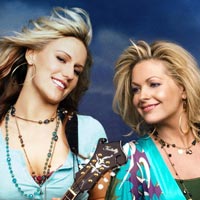
Her take on “Sea of Heartbreak” works because of her restrained delivery, with the light and floaty arrangement suggesting that these are calm waters. The undercurrent of grief reveals itself through the guest appearance of Bruce Springsteen. His ragged vocal provides a strong contrast to Cash’s sweet delivery.
The resulting record turns a song that all of us have heard countless times before into something new. That’s always the challenge that needs to be met when covering a standard, so this is a promising preview of Cash’s upcoming set.
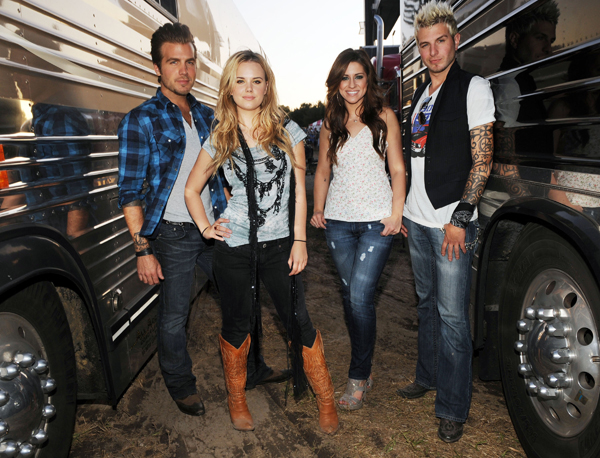
At the intersection of Taylor Swift’s present-tense teenage angst and Kenny Chesney’s trademark “those were the good old days” rememberings of carefree youth, you’ll find the new Bomshel single.
They’re old enough to be looking back on being 19 and crazy, but aren’t quite so old that those days seem completely idyllic. There’s a refreshing perspective here that those days were just stepping stones toward becoming who they are today. While they seem to say that they’d love to be 19 and crazy forever, the fact that they’re already figuring out how to explain that tattoo to their future children suggests that they’re not quite so eager to turn back the hands of time.
The song has an incessant driving beat that straddles the fence between urgency and just plain annoyingly fast. Also, like just about all the B-list singles out there these days, there’s far too much going on in the production. It would be nice to see more producers in Nashville show their confidence in the artist and the song by easing down on the clutter, but you’d have to be 19 and crazy to think that has a chance of happening.
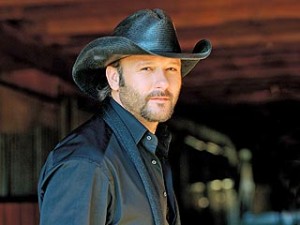
Tim McGraw records an entire song celebrating the “Southern Voice” by listing the contributions of everyone from Jerry Lee Lewis to Rosa Parks against a musical backdrop that is virtually indistinguishable from the New Jersey sound of mid-80s E Street Band.
Perhaps there’s an intended reference in the production to the pollination of art and culture that goes back and forth over the Mason-Dixon line. More likely, Tim and his band just like to rock it out. The list of names included is so broad that it’s hard to discern any larger message here other than “Hey! We’re from the south! We rule!”
And hey, collectively, the people he mentions do indeed rule, making this a reasonable exercise in regional pride. I can see the slide show behind him at this year’s CMA show already.
It’s hard not to at least mildly enjoy “How Far Do You Wanna Go?”. It’s catchy. It has a feel-good vibe, and the authentic kind that’s missing from many of the upbeat singles released by mainstream country artists these days. It pulses with a palpable energy, making the song quite infectious – and very appropriately complementing the “let’s leave this town and never look back” storyline.
It’s also hard to ignore the clunky production in the chorus –I don’t mind prominent rock flavoring in country music when it’s done effectively, but I’m not so sure that’s the case with this song– and the not-so-tight harmonies. And I’d be remiss not to mention the song’s striking similarities to Fleetwood Mac’s “Go Your Own Way,” particularly the melody and phrasing of the verses. Considering the group has cited Fleetwood Mac as one of its major influences, this isn’t exactly surprising – but it is a little… off-putting.
All that aside, the most interesting thing about “How Far Do You Wanna Go?” is that it embodies a sweet balance of free-spirit and maturity, a stark contrast to the purely youthful “Wild at Heart.” I think this quality is a sign of potential, and actually notably sets the group apart from its counterparts in the industry.
Written by Danny Myrick, Matt Serletic & Jeffrey Steele
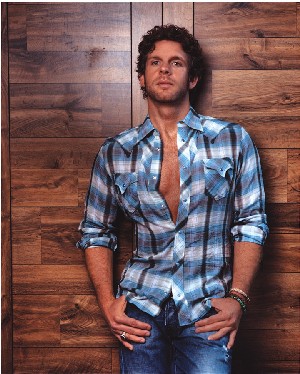
It’s always disappointing when a good song is tainted by mundane lyrics, and I fear that’s the case with “That’s How Country Boys Roll.” Like most of Currington’s singles, the song –lyrics aside– is charming and endearing, and the vocal performance rich and distinct.
But we come away from the song learning what, exactly, about country boys? That they like fishing, suped up cars and working real hard? Granted, there are a few deeper messages in the mix, but none are expressive enough to actually paint a picture of a multi-dimensional country boy.
Of course, I’d much rather have Currington tell me how country boys roll than have Jason Aldean preach to me how country girls roll… but then again, I’d much rather hear Alan Jackson’s genuine story of a small town southern man than listen to either. In the pack of “country folks” songs, “That’s How Country Boys Roll” sits somewhere in the middle. It’s inoffensive and unmoving – and that’s disheartening, because with one of the most interesting voices in country music, Currington’s capable of so much more.
Written by Billy Currington, Dallas Davidson & Brett Jones