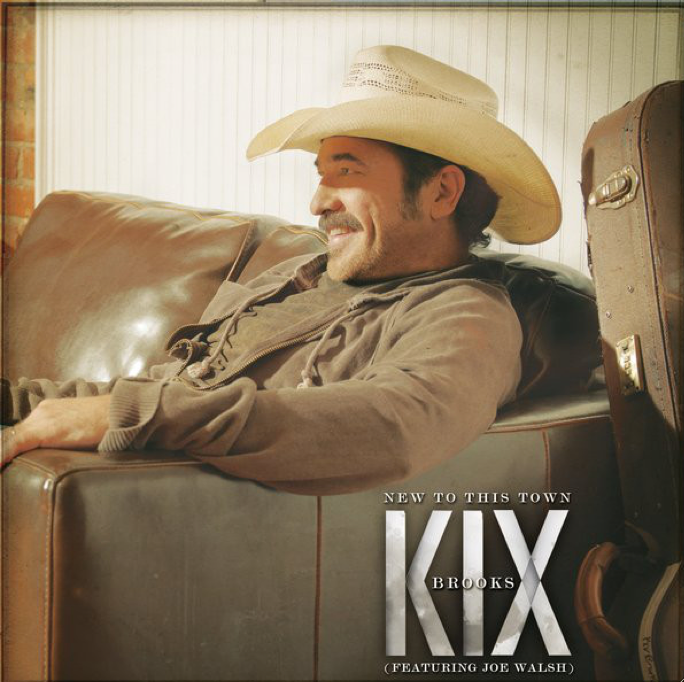
Awkward in the sense that the melody doesn’t have quite the same pull, and in the sense that, well…it’s a song called “Let’s Make Love,” performed in earnest by a real-life married couple. And as fantastic as Hill and McGraw sound together, it’s hard not to feel a little voyeuristic when they sigh, “I want to feel you in my soul!” It’s just hard.
Still, the record is not without its – ahem - adult-contemporary charms. Really, it’s worth it just for the weirdly engrossing “Look how hot we are!” music video. But it’s the kind of thing you probably wouldn’t want to listen to/watch with anyone else in the room. Unless maybe, I guess, if they were in the room with you because, like…y’know.
Written by Marv Green, Aimee Mayo, Chris Lindsey & Bill Luther
Eric Church has said that “Smoke a Little Smoke” is the single that changed his career. He’s totally right. Though he’d had bigger chart hits with tamer material, “Smoke” reintroduced Church as a fully formed artist, marrying his typical swagger to a bold lyric and one of Jay Joyce’s feistiest productions. It didn’t matter that the gatekeepers at country radio winced, stalling the song at #16; fans made “Smoke” a Gold single, and critics joined them in eagerly awaiting Church’s next effort.
It was savvy move, then, to have the next album’s opening trackecho “Smoke”‘s spirit. “Creepin’” runs on a similar blend of swampy acoustic guitars, thrashing electrics, and thumping percussion, and once again toys with its arrangement enough to keep the listening experience unpredictable.
But the track is hardly a Me-Too; if anything, it’s a Yes-And, conducting its groovy chaos even more confidently than its predecessor. It’s a record packed with great little hooks and changes: a rattlesnake-shake opening; some creepy-cool “bum bum”s; a snarling hair-metal solo; a series of whip-smart couplets (“Like a honey bee beatin’ on my screen door / I got a little buzz and my head is sore”). Banjos sneak in and out; drums march and crash; Church wriggles and howls as if in a fever sweat. “Creepin’” milks each moment to the max, urging you to push “Play” again and again to catch ‘em all.
It was already a fantastic opening to the album. But now that Church has enough clout to also make it the radio hit “Smoke a Little Smoke” never was, I dare say it deserves to become for him what “Whiskey River” has become for Willie Nelson: a signature song, and an immortal show-starter.
The country music community has lost a true beacon this week with the passing of Chris Neal, a superlative journalist and ally to independent blogs like ours.
As a ten-year staff writer for Country Weekly and a contributor to the Village Voice, Nashville Scene, Performing Songwriter, The 9513, and other publications, Chris helped set the standard for modern country music commentary, combining clear-eyed observations with his trademark acerbic wit. In a decade of confounding change for the genre’s industry and sound, he was a fearless voice of reason, equally comfortable celebrating country’s evolution and – no other word will do – “facepalming” over its less endearing developments. His recent work as Senior Editor of M Music & Musicians has only broadened his impact, delivering on his passion for all varieties of good music.
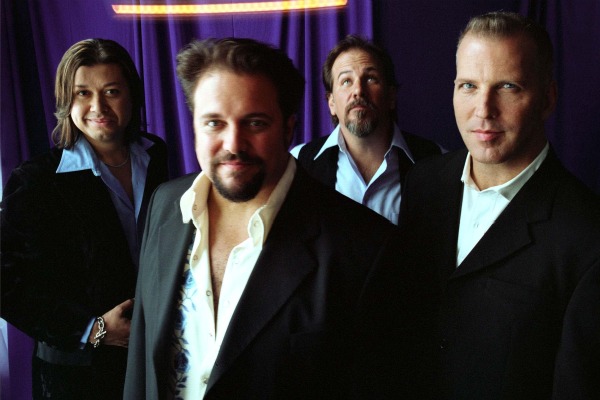
Of course, for many of us, Chris will be just as remembered for his lively presence across the web – including, blessedly, this blog. Who can forget how he would casually out-snark an entire comment thread of overheated 9513-ers? Who can forget the pure joy of his first batches of “country haiku”? Who can forget his pets?
But he wasn’t just a fun “internet friend,” either. Perhaps most enduringly, he was a mentor, an accomplished professional who used his platform again, and again, and again to help shine a light on writers he deemed deserving. It’s because of Chris Neal that many of us have the confidence and the audience to write about country music in this small way we do; and it’s because of his remarkable example that many of us keep trying in the first place.
Seemingly out of nowhere, everyone’s favorite dark horses from the 90′s return with their first radio single in eight years, somehow part of the all-powerful Big Machine label group. And they sound better than ever.
Well, ok – maybe not ever. But like The Mavericks’ best cuts, “Born to Be Blue” could easily pass for a lost pop gem from the 50′s or 60′s. It’s simple, it’s poetic, it’s not afraid to be a downer. It has a fluid, singable melody and a vocalist who can not only hit the notes, but make each one shimmer.
I first heard it the other day, when my local radio station did one of those “showdown of the new singles” things between it and the clunky new Blake Shelton. Quite frankly, the difference in quality wasn’t just clear; it was embarrassing. And for as strong as “Born to Be Blue” is, it also feels a bit like a warm-up exercise, like perhaps The Mavericks have even more tricks up their sleeves. I suppose we’ll see – but if Scott Borchetta can somehow get this played on the radio, you’ll never hear me decry his throne on Music Row.
This new Little Big Town single sounds cool. Surprise? Nah – they always sounded cool with Wayne Kirkpatrick producing, and new helmsman Jay Joyce brings the same quirky groove-sense he’s brought to Eric Church’s stuff. It’s a good sonic match.
The song, though. If you’re going to write about an experience as (relatively) esoteric as pontoon-partying, gotta find something in it to appeal to the rest of us. Craig Morgan’s “Redneck Yacht Club” had its playful melody and alliterations; “Pontoon”‘s lyrics are so dull that, when paired with the weird reverb on Karen Fairchild’s vocal, they start to sound like a diary of seasickness. No thanks!
I’ve always liked Kix as a singer, so I was happy to see that this single exists. He’s got one of those modest-but-charming Everyman voices, the kind that makes every song feel like a conversation with your ol’ pal.
He also sounds positively thrilled to flex it for us again, which is just infectious. Listen to how he relishes every note of “New to This Town,” like he doesn’t want waste a moment of this reintroduction. Love that! I love that.
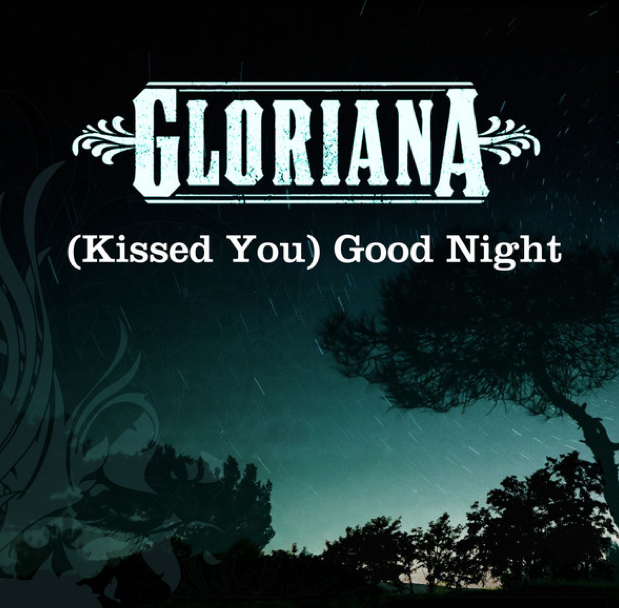
Just want to hear it on a different song. This one’s got some good bones – the main chorus cadence (before it becomes a crutch), the theme of wishing you could rewrite a history gone wrong. But the first verse about the younger man doesn’t set up a compelling launching pad for the rest of the song, and I don’t know if I buy Kix Brooks with this sound – pulsing verses, big rock chorus. Plus, the subject matter invites comparison to Tim McGraw’s dazzling “Old Town New,” and there aren’t a lot of songwriters who can go head-to-head with Bruce Robison or Darrell Scott, much less the two of ‘em together.
So as an appetizer, I can’t say it kix ass but…….! (I’m done writing forever.)
Written by Kix Brooks, Marvin Green & Terry McBride
Proof positive that what T. Swift pulls off only looks easy.
Because in theory, this should work better. Very relatable – if vanilla – premise, and melody with some real hooks. And these vocalists could probably out-sing Swift technically, right?
But the humanity, the vulnerability, the joyful spark that could have driven this micro-romance home – they’re simply absent, in lyrics and performance. It’s fine, but it’s flat. It’s here, but then it’s gone, and it’s whatever.
Own the Night, thy legacy cometh quickly. (But not swift…ly. K anyway:)