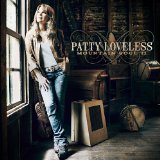
Inhabiting the highest pinnacle of artistic integrity must be a lonely place to dwell. Patty Loveless remains a commercial exile, of sorts for the crime of being “too country” for country radio and TV. But Loveless is undistracted by the trendy and continues to adhere to her artistic vision, making music that matters, music of enduring merit, music that would make her Appalachian ancestors very proud. Music like her current offering, Mountain Soul II.
Back in 2001, her acclaimed Mountain Soul set a very high standard for artistic achievement. This shining original is a unique blend of Country, Bluegrass and Mountain music. It is a heartfelt tribute to her parents, especially her coal-miner father, and the Appalachian music that nurtured and sustained their family through many tribulations.
Mountain Soul II is yet another labor of love from Patty Loveless and husband/producer Emory Gordy Jr. and a long awaited continuation of the splendid original. The same recipe was followed here with similar ingredients and equally spectacular results. Like the original, Mountain Soul II is a veritable feast of soul nourishing material, brilliantly served up by the finest pure-Country vocalist of our time, and a distinguished array of acoustic players and vocalists including Del McCoury, Vince Gill and Emmylou Harris.
Sandwiched between the stunningly innovative remake of Harlan Howard’s classic, “Busted”, and the exquisite Diamond in My Crown are generous servings of drumless acoustic music, a deeply moving, grassy mountain tapestry that delights and seldom disappoints.
“Busted”, the opener, is an empathetic song of solidarity for the economically downtrodden. Loveless restores Harlan Howard’s original coal mining lyrics with great effect. Raw and richly textured, the song is saturated with Appalachian acoustics that perfectly complement Patty’s twangy and nuanced Kentucky drawl. The melody is bouncy, almost in contradiction to the dire tale, but this is perhaps the perfect mountain irony; the power of music to help bring about the joy needed to cope.
The Bluegrass/Gospel classic, “Working on A Building” is an energetic tour-de-force with the perfectly blended high lonesome vocals of Loveless and Bluegrass master Del McCoury. The song is metaphorical, the work is God’s work, the hands are human, and the building is the Lord’s own. But the imperative is very down-to-earth, especially when interpreted as pertaining to the efforts to alleviate Appalachian poverty, a cause near and dear to Patty’s heart.
Other highlights include the pure Bluegrass Big Chance (transplanted from Dreamin’ My Dreams), a brilliant number by Loveless/Gordy which continues the Pretty Little Miss story from the first Mountain Soul. The song has an iconic Mountain sound that harkens to the hills, and is full of down home humor. It is perfectly crafted in every musical and lyrical detail.
“Bramble and the Rose” is pure passion and poetry, intertwined with the brilliant rustic tones of Loveless’ versatile voice. Few can inhabit the heart of a song like Patty Loveless.
“When the Last Curtain Falls” is a song that Emory co-wrote. The verses are all calm before the storming chorus, and then Loveless unleashes with her husband’s lyrics delivering a chilling cautionary tale of final accountability. It is an attitude adjustment that puts all things into perspective.
Mountain Soul II is inspired and very well crafted, but it does contain some apparent missed opportunities. Conspicuously absent are two up-tempo Bluegrass numbers from Loveless’ repertoire, Pretty Polly and Close By. Their inclusion would have enhanced the clear Mountain identity of the project even more, and would have created a more balanced mix of tempos.
Also the “less is more” philosophy is overdone in places, the sparse instrumentation works very well on songs like Diamond In My Crown, and the two a-cappella Gospel numbers, but some of the ballads might have benefited from some richer, rawer musical textures.
At first glance, there seems to be an over reliance on recut songs from her own catalog. But Patty Loveless brings forth the inherent Mountain Soul hidden in any given Country song, remaking them according to her natural Mountain sensibilities, and connecting more deeply with her own heritage in the process. She lovingly returns the songs to their essence and roots, back to the very origins of Country music deep in the heart of the hills.
Vocally, Mountain Soul II is Loveless at her best. Her crystal pure Appalachian alto deftly and fluidly shapes each note with rich and resonant tones and an uncanny sense of nuance that comes only with inherent talent and hard gained artistic maturity.
“Diamond in My Crown”, is the crown jewel of this remarkable album. It is hymn-like in its majesty, accompanied by an antique family pump organ, and some beautiful backing by composer Emmylou Harris. Loveless glows with unleashed vocalizations that are positively chill inducing. Transcendent, sublime, superlatives would be understatements when describing the Loveless interpretation of this gem.
Patty Loveless has once again transmuted the coal of hardship an heartache into pure golden tones. This Appalachian alchemy has yielded yet another diamond for her hard won crown. Mountain Soul II is nothing less than another 21st century Patty Loveless masterpiece.
This is a guest contribution by regular commenter, Michael Hawkins, who posts as Highwayman3.
The movies have the Oscars, the world of music has the Grammys, and that world subdivided into the country genre has the CM’s—the annual extravaganza that we fans look forward to every year. We see our favorites perform, win awards and lose with smiling gracious faces, or not [insert the inevitable Faith Hill reference here]. Everyone picks their favorites in each category as to who they’d like to win. But what about the show itself, the backdrop for which these prestigious awards are presented?
Recently, there have been posts at both The 9513 and on this site where people have been weighing in on their favorite moments from these awards. It occurred to me that none of those moments have happened in the last few years. The awards have slid into mediocrity, which is a fitting representation of the current state of country music. I understand producing these awards must be tough because you have to be everything to everyone, and acknowledge the traditional country, the Disney country, the old and new alike, and bring in people who don’t belong for the sake of ratings.
What’s wrong with the show?
The awards themselves seem like an after thought, filler in between all the endless performances. The main suspense isn’t who wins, but rather, how many performances the producers can fit in 3 hours. Also, it’s become an award show that is ashamed of its roots, barely mentioning who is inducted into the Hall of Fame. Any artist with the slightest sign of a wrinkle, regardless of their legend status is shunned and hidden in the audience next to seat fillers and radio contest winners. It’s an award show with self esteem issues, not cool enough to stand on its own. You can bet the main attraction used to promote this year’s show will be a non-country performer like Kid Rock, The Eagles of last year, and Jamie Foxx of two years ago.
What can be done?
Well, the first order of business would be for the Sommet Center to take out a one day restraining order from Miley Cyrus on November 11, 2009, or better yet, the whole Cyrus family, Billy Ray, Noah, aunts, uncles, cousins, etc. Yes, she’ll bring in ratings, but we’ve gotten along fine without her for 40 plus years.
The CMA’s need to take a cue from the Grammy awards, or even the American Idol finale. There are so many surprises, legends, moving moments, coming at you, left right and center, you don’t know what’s coming next, all you know is you’re in for the ride, you’re loving every second and you’re talking about it the next day. Last year, the biggest surprise was Shania Twain presenting Entertainer of the Year, which she has done at least 3 times before, and to those who keep up on country news, it was hardly a surprise at all.
What can possibly be done to make the night more entertaining?
How about taking a cue from this yearis Academy Awards and only announce a handful of performers, leaving the rest a mystery? Don’t tell us who and what everyone’s performing, which leaves more room for surprises. Also, like the Oscars, don’t announce who is presenting, and before each award have a mini-montage of past winners. Then at the end, the curtain opens and a surprise past winner comes out and shares insights on their winning experience. Instead of the otherwise cheesy dialogue or weird presenter pairings, it would make more sense if they just brought out Trisha Yearwood for Female Vocalist, Vince for Male, The Judds for Duo, Alabama forGroup, and hand it off to the winner like an Olympic torch or rite of passage. This way of thinking would work out great for the Entertainer of the Year category, in bringing out past winners, Roy Clark, and Barbara Mandrell, who also happen to be this year’s Hall of Fame inductees.
Speaking of the Hall of Fame, I would prefer it if it went back to how it used to be with a taped bio and artists performing a medley of hits. But even that is too much to ask. If they are going to cut it out entirely, the least they could do is show 3 separate 30-60 second bios of each of the inductees at different times as they are going to commercial and have them wave from the audience. Or, from the paragraph above, show a taped piece just before Barbara and Roy present Entertainer.
The most boring parts of the show are seeing full performances from all the mundane hits of the past year. Was it necessary for Darius Rucker to perform “Don’t Think I Don’t Think About It” last year when he wasn’t nominated? Yes, it’s necessary for the biggest hits to be performed, but does every top 5 hit of the past year have to be sung? Instead, encourage them to sing unique songs, like Alan Jackson in 2005 performing, “Wonderful Tonight”, songs you’ll actually remember more than 5 minutes after they are performed. Another idea, which the Grammys have down pat, is pairing people up. Think of the Al Green, Keith Urban, Justin Timberlake and Boys 2 Men grouping of earlier this year. For the CMA’s, this would be a perfect year to acknowledge the 20th anniversary of the hat act boom of 89. Why not bring out Alan Jackson, Clint Black, Garth Brooks, and Travis Tritt for a small medley?
Instead of each of the new artist nominees performing their full songs – do we really want to see Julianne Hough performing a full version of her song this year? - it would be great if they stole from the ACM’s all-star opener this year, and did the same thing with the 5 nominees. Lady Antebellum can be the ring leader like Brooks & Dunn were at the ACMs, and they all can perform a small portion of their hits. To wrap it up, Lady Antebellum can present the award. This will allow more time for the Collaboration and Video of the year awards to be back on the telecast.
If you ran the CMAs, thinking creatively but realistically, which special moments would you create that could go down in history and make country’s biggest night more fun to watch? How would you make George Strait’s performance less predictable? And how would you measure that Miley restraining order? In inches, feet, yards, or miles?
The following is a guest contribution from frequent commenter and devoted Patty Loveless fan, Stephen Fales, who is better known to Country Universe readers as Steve from Boston.
Country Universe is a site where timeless artists like Patty Loveless are not merely acknowledged, but embraced and celebrated. So when Leeann invited me to review my favorite artist’s Brownfield Maine concert as a guest contributor, I jumped at the chance. Thank you so much Leeann, Kevin and Country Universe for giving me this opportunity. And Leeann and Bill, it was a joy and an honor to join you folks for dinner and watch the concert with you. You both made this already memorable concert experience even more unforgettable for me, along with patty-loveless.net associates Nicole, Richard and Patti, and the following day Bob and Barbara, Kevin. And also, Marcia Ramirez from Patty’s band. Many, many thanks to all.
Patty Loveless at the Stone Mountain Arts Center, Brownfield Maine
July 3, 2009
Nestled in the northern reaches of the Appalachian Mountains, Brownfield Maine’s Stone Mountain Arts Center is a beautiful and intimate 200 seat converted barn turned listening room. It has a warm and rustic ambiance, and a very helpful staff. The wood beam framed building makes for a rich acoustical setting, almost like a giant, wooden resonator box. It is a hard place to find out there in the Maine wilderness, but well worth the effort, especially to enjoy artists and legends like Patty Loveless, Ralph Stanley, Marty Stuart, Suzy Bogguss and Kathy Mattea. Think of it as a quest.
This beautiful mountain setting was a perfect match for Patty Loveless, the celebrated neo-traditional Country artist with the warmly expressive Appalachian alto. The Queen of Mountain Soul seemed right at home in the northernmost reaches of her domain, and seemed to absolutely love the venue.
Patty Loveless is a warmhearted and humble lady, she is a true artist with a good sense of humor and down-to-earth personality, the “anti-diva” as her drummer, Martin Parker, calls her. She takes the stage with very little fanfare, no high tech video introduction or ostentatious stagecraft, no bells, no whistles. She just quietly joins her band and begins to sing. It is all about the music with Loveless, and she lets the music speak for itself.
Still, there was plenty of excitement in the air at Maine’s Stone Mountain Arts Center, but the magic emanated entirely from Patty’s empathetic heart and her crystalline Mountain-bred voice. She sings from a place even deeper than the heart, Patty Loveless sings from the very depths of her Appalachian soul. No smoke or mirrors needed, indeed, they would have been out of their league competing with such natural, God given talent. Patty Loveless sings without a net, and her performance on July 3rd, 2009 was inspired and virtually flawless.
Loveless is the prototypical Country artist. She has refined and perfected her inherent gifts through years of hard work and perseverance, and has become a living link to Country’s Golden age. The artistic (but not the chronological) scope of her work reaches all the way back to the works of the Carter family and Bill Monroe, and forward to the finest modern Country and Bluegrass artists. Folks like Jim Lauderdale who penned two of the 18 songs in Patty’s concert lineup. She is a master interpreter of their work, and a keeper of America’s rich Country and Bluegrass cultural heritage. Patty Loveless is herself, a national treasure.
All that’s good and great about Country music is embodied in the voice of Patty Loveless, and she brings it all to bear on her first rate, soul-nourishing material. Her mentors and musical heroes, her east Kentucky upbringing and authentic Coal-miner’s daughter heritage can be heard in the soulful Mountain timbre of each and every note that she sings.
Her amazing repertoire consists of songs that have been carefully selected over many years by Patty herself and her husband/producer (and genuine musical genius) Emory Gordy Jr. And this they have done with little regard to what is trendy, and with every regard to what is timeless, or potentially so. Patty and Emory choose and write their material with a profound understanding and appreciation of the heritage and traditions of authentic Country and Bluegrass, a heritage she often speaks of with great reverence between her songs. And by following her heart in all of her musical choices, Patty Loveless connects deeply with the hearts of her listeners.
Loveless’ song lineup at SMAC was a mix of real, hard-core Country, and the finest contemporary Country. But the lack of any Mountain/Bluegrass songs that she could have included from her catalog kept this generous sampling from being truly representative of who she is as an artist. Still, a generous lineup of her always high-quality hit songs, and her featured Sleepless Nights mini-set of classic Country covers was fine compensation, and is the stuff of legend in the making.
Patty blazed into her set list with passion and precision, leaving her audience awestruck and breathless. In a very real and literal sense, this was a breathtaking performance from start to finish. At 52, Loveless is still very much an artist on an upward trajectory, and her voice just keeps getting even better with the years.
Some notable highlights: Her heart wrenching rendition of the Jim Lauderdale penned “You Don’t Seem to Miss Me”, for which she won a Vocal Event of the Year award with the legendary George Jones. Loveless has collaborated with some of Country music’s absolute finest male singers, including Jones and Vince Gill, and for live performances she needs a strong male voice to fill the void on a few of those songs. Thankfully, she has found the perfect vocal partner in her band member, Garry Murray, who sang the tricky Jones harmony with feeling and finesse.
“Nothing But the Wheel” is the perfect Country song, by the perfect Country singer. It moves with a forlorn tempo, like the car the protagonist drives away from her heartbreak: ” And 41 goes on and on, and the lights go winding in the dawn, and the sky’s the color now of polished steel…and the only thing I know for sure, is if you don’t want me any-more then I’m holding on to nothing but the wheel.” With Patty Loveless at the wheel, it just doesn’t get any better or more Country.
Patty’s interpretation of the George Jones gem, “If My Heart Had Windows”, is a song of deep gratitude for love gone right, and she sings this slow lover’s waltz with a torch style intensity that warms the heart and burns to the soul.
Patty’s knockout rockabilly rendition of “Why Baby Why” kicks off her Sleepless Nights classics set with high octane energy…Patty describes it as “George Jones meets Tina Turner” But it’s all Patty Loveless…Patty is far too humble to admit this, but she very often surpasses her musical heroes with her own interpretations, and her version and performance here was no exception.
Ray Price’s original version of “Crazy Arms” was charming, but the Loveless version is nothing less than enchanting. It is pure music magic. Pete Finney begins and ends the song with a palpable sting from his expressive steel guitar, but it’s Loveless’ soulful and soaring vocal that really penetrates the heart. When Patty and Emory recorded their version “Crazy Arms” they slowed down the tempo from a moderate shuffle to a torchy ballad. This serves Patty very well in concert by giving her the opportunity to find and wring out every last drop of emotion hiding in the potential of the original.
Some inspired phrasing enables Patty to put great emotional emphasis on the lyric “crazy dream” as in “this ain’t no cra-zy dream I know that it’s real” whereas Price’s original stressed the first word “This” instead. This subtle yet dramatic difference is but one example of the interpretive genius of Patty Loveless.
The title song of Patty’s Grammy nominated classic country covers album, Sleepless Nights, features Vince Gill, and once again Garry Murray came through with flying colors. Vocally flying with Patty Loveless cannot be easy, “why did you go, why did you go? Don’t you know, dont you know? I need you”, But Murray keeps right up and they both soar to the heights. There was lightning in the area during this concert, and there was a single crackle that seemed to come from the amplifiers during this song. But Patty never missed a beat, and the whole song came off perfectly. Patty Loveless is a force of nature, and she positively electrifies her audience.
Lead guitarist Tom Britt took his opportunity to shine during an extended and exciting slide guitar introduction to another Lauderdale song, “Halfway Down” He wailed away like a true rock star, building anticipation before the familiar opening chords of this Loveless hit. Likewise, Patty kept the excitement going full boil throughout this rip-roaring Mountain Rock song.
The set closer was “Blame It on Your Heart”, perhaps Patty’s most performed song of all. She sings it with an energetic enthusiasm that makes the song fresh for singer and listener, every single time. Indeed, this is the way that she approaches every performance, embracing each and every note like it was her first and only chance to shine and share her gift. This Harlan Howard song is just plain fun and children seem to love it as well, as they try to sing the tongue-twister chorus. Loveless is artist and entertainer in equal measure. No other singer on the scene today balances the two quite as well as Patty Loveless does, with the exception perhaps of Dolly Parton.
Patty’s stage presence is confident as one would expect from a seasoned veteran, but also warm, easy going, and playful. She has a natural Country charisma and even her speaking voice, her relaxed east Kentucky drawl is music to the ears of her audience. The stories of her musical heroes, and her accounts of her formative years as a young artist under the tutelage of the late great Porter Wagoner, and her 21 year membership in the Grand Ole Opry, are informative and entertaining.
Her audience interaction is often full of surprises. Observing the intimacy of the venue, Patty commented how folks in the front rows were so close, and jokingly suggested they grab an instrument and come on up onstage. “But don’t grab me”, she quipped. “Although on second thought, that may be fun” Then she quickly added, “don’t mind me, I’m just a real cut up and a harmless flirt”.
When she mentioned her husband Emory Gordy Jr., she received some noticeable applause from the audience. Patty responded saying that it was good that Emory had some fans here as well, and “I see a young lady here with an Emory (University) shirt, How many concerts is this now, Nicole?” to which Patty’s (and Emory’s) most devoted fan replied “199″, and Patty said with a smile, “Wow, I owe you one, don’t I?” Patty also said something about how she was glad Nicole was such a huge Emory fan, then added: “but don’t forget now, he’s MY man”, which also brought laughter from the audience.
After “Blame” Patty introduced her incredible band. It is clear that all these folks are friends and fans of each other, and Loveless herself can often be seen warmly grinning, holding her heart and slowly shaking her head from side to side with enraptured appreciation during her band’s various instrumental interludes. And proficiency on multiple instruments almost seems to be a requirement in the Loveless band. Marcia, Deannie and Garry all play at least three instruments, and it seems most everyone is schooled on mandolin in a way reminiscent of Bill Monroe’s old Bluegrass string band. The stage, as wide as it was, could barely contain the scope of this incredible array of talent.
There are only a few criticisms for this otherwise flawless concert. The sound of the drums for the first few songs was much too loud, and competed for volume with Loveless’ strong vocals instead of supporting them. But that sonic imbalance was pretty well corrected by the sound techs before too long.
Also, Loveless seemed pitch perfect all throughout, with only one or two apparent missteps. Just enough to remind us that this is a gifted flesh and blood human being, and not some kind of angelic troubadour.
After the band introductions and some more friendly banter with her audience, Patty eased into her encore performance of the Hank Williams standard “Cold, Cold Heart”. With sparse acoustic instrumentation and a little steel, it was almost a capella, and one could hear a pin drop between the notes. Patty’s version is chill-inducing perfection, tear producing and is especially potent live. And that evening her performance was especially transcendent, almost supernatural. I almost expected to see the ghost of Hank Williams take a seat and tip his hat to the finest female interpreter of his work, bar none. I would love to see what Loveless could do with ole Hank’s “I’m So Lonesome I Could Cry”. The audience, and even her own band, was transfixed and mesmerized. Band members Marcia and Deannie especially, looked on with smiles of amazement.
With the completion of each song in the lineup, Loveless and her band received enthusiastic applause, which she greeted each time with sweet smiles and a grateful “God Bless You.” And at the end, she received thunderous standing ovations, and seemed genuinely humbled and overwhelmed. She gathered her band with her outstretched arms, and then they all graciously bowed a collective bow.
Patty Loveless is the most authentic voice in Country music today. Her fidelity to tradition, her creative blending of her own brand of mountain and country music, and her artistic integrity have rightly earned her the title of “Queen of Mountain Soul” from the great Ralph Stanley himself. And performances like her Brownfield concert on Friday, and albums like the exquisite Sleepless Nights demonstrate that she has earned the title “Queen of Country Soul” as well.
Patty’s long awaited follow up to her acclaimed 2001 classic Mountain Soul is scheduled for release on September 29th. Mountain Soul II has every essential ingredient to be yet another Loveless-Gordy masterpiece, and should enrich her already exceptional set list considerably. Just in time for the next leg of her tour starting this Fall.
As for a possible return to the Stone Mountain Arts Center? Word has it that Patty loved it so much, and felt so welcome by her gracious hosts Carol Noonan (folk singer and songwriter), and her husband, their staff and her appreciative fans, that she hopes to return twice a year.
Both on record and in concert, the music of Patty Loveless befriends the listener. She may sing “Soul of Constant Sorrow” on her Mountain Soul album, but the music of Patty Loveless is a source of great and constant joy, as well as inspiration, catharsis and consolation for all with attentive, listening hearts.
-Steve from Boston
For more information on Patty Loveless, visit
Patty-loveless.net,
Which is the most comprehensive and up-to-date Patty Loveless fan site.
The following is a guest contribution from Scott O’Brien.
“But someone killed tradition. And for that someone should hang.” –Larry Cordle & Larry Shell, “Murder on Music Row”
Dan Milliken’s recent post got me thinking: The country music I grew up with is nothing like the music on country radio today. If I turned on today’s country radio in 1988, I might not realize it was a country station and keep right on flipping. Back then, Randy Travis and Keith Whitley’s traditional twang ruled the airwaves. Today, they are dominated by the giggly teeny-bopper ditties of Taylor Swift and the boy band sounds of Rascal Flatts. Did they get away with murder on music row? Well, let’s start by briefly uncovering country’s traditional roots.
What is traditional country music? Is it simply anything from the past? That seems too broad; Shania Twain wasn’t traditional. Anything that isn’t pop? Maybe, but that is still a rather wide and subjective net. To me, traditional country music is honky tonk music. It heavily employs steel guitars, fiddles, and forlorn vocals. It moves at a slow pace. There are no drums or electric guitars. The songs typically deal with heavy topics such as heartbreak, cheating, or drinking, with a ballad here and there. In most cases, the goal is to induce pain. Not bad pain, but the therapeutic empathy that tugs your heart and helps you through your personal struggles. The patron saint of traditional country is Hank Williams. Hank’s first disciple is George Jones. Jones’ first disciple is Alan Jackson. The traditional template is supposed to help us decipher what is country and what is not. After all, what makes country music country if not fiddles and cheatin’ songs?
These days, traditionalists have a legitimate beef. When you turn on the radio, you don’t hear much steel guitar. Instead, you hear what might pass for 1990s pop, replete with fluffy repetitive lyrics, catchy drum beats, guitar riffs, and sex appeal. We aren’t preserving country music when the CMT Music Awards feature the B-52s and Def Leppard in lieu of John Anderson and Charley Pride. Was there a tribute to recently deceased traditionalist Vern Gosdin? No way. Do today’s artists “tear your heart out when they sing”? Not a chance. Is Keith Urban going to fill Conway Twitty’s shoes? Not a prayer. You know we are in trouble when pop-infused zipwire-flier Garth Brooks sounds more like Merle Haggard than today’s stars. Heck, just listen to Taylor Swift’s latest album. If that is country, I’ll kiss your ass. Nashville, we have a problem.
But let’s not go off the deep end just yet. Maybe traditionalists are thinking about things too narrowly. Country music is much more than Webb Pierce’s raw steel guitar-laden crooning. It always has been. Going back before Hank to the First Family of Country Music, the Carter family sound was an amalgam of several different sub-genres including Appalachian old-time, folk, and gospel. Jimmie Rodgers, the Father of Country Music, blended elements of jazz, gospel, old-time and blues to create some of the first country sounds. Marty Robbins played just about every musical style conceivable. Traditionalist hero Elvis Presley sang rockabilly. Johnny Cash had similar beginnings and even years later there was nothing “traditional” about his trademark up-tempo bass beat. Waylon Jennings’ music incorporated Buddy Holly’s rock-n-roll rhythm; he even wrote a song about how un-Hank-like his music was. Merle Haggard’s Bob Wills-inspired Bakersfield sound used amps and electric guitars. Even 1980s ACM Artist of the Decade Alabama shunned the steel guitar altogether and typically sang up-tempo, feel-good music. Yet these names are among the most venerated by traditionalists. What gives?
The problem is that traditionalists aren’t even sure what traditional country is. If it includes all artists who sold country records without crossing over to pop, the label is not very helpful. If it is strictly honky tonk, do we really want a bunch of Hank Williams clones? As great as he was, we surely do not. There has to be some updating – just ask Alan Jackson, who has innovated the traditionalist motif without sacrificing his authenticity. The genre has to evolve or it risks becoming boring and repetitive. Waylon Jennings understood this well (“It’s the same old tune, fiddle and guitar/Where do we take it from here?”). Hank Williams’ own son realized it too after trying for years to replicate his father’s sound. His song “Young Country” directly attacked the tradition-or-else mentality: “We like some of the old stuff/We like some of the new/But we do our own choosing/We pick our own music/If you don’t mind, thank you.” He is right. Why draw lines? Strict uniformity is not desirable in any genre, particularly country, whose trademark is its diversity of influences, instruments, rhythms, voices, song topics, and stories.
So what should define today’s country music? It should pay tribute to the past by incorporating and updating its unique fusion of diverse influences. It doesn’t have to be strictly “traditional.” But country music needs to capture the sentiments of rural and working class America. It needs to cover painful topics like drinking and cheating. It needs to tell colorful stories. It needs to tear your heart out sometimes. It also needs to make you feel good sometimes. What it shouldn’t do is become pop music. When country is indistinguishable from Top 40, it loses its soul. Unfortunately, this has happened with the Keith Urbans, Rascal Flatts, and Taylor Swifts – all talented artists to be sure. But country artists? Not so much. Still, there are old warhorses like George Strait who carry the torch and newcomers like Jamey Johnson who give us hope that country’s soul will stay alive and well.
Country music is a genre which I have come to appreciate largely through osmosis. My parents did not play it in the house or the car when I was growing up. New York has had trouble maintaining a quality country station, and even when it has, the radio dial did not find its way down there often.
My youth occurred before the internet and satellite radio, and our tape deck for car trips tended to be filled with Phil Collins, Paul Simon and the soundtrack to various musicals (being the youngest, my objections were drowned out by “Diamonds on the Soles of her Shoes”…etc). My mother did occasionally refer to my father’s affinity for Glen Campbell’s “Wichita Lineman”, but mostly because he would never sing past the first seven words.
While I did experience some country music courtesy of the mainstream crossovers, my true exposure came thanks to Kevin. He has made reference before on this site to the amount of music on his iPod, and I have seen a great deal of this music when it occupied racks-upon-racks of tapes and CDs. When we became friends, I couldn’t help but be exposed to all manner of country songs and artists, and I have gradually (and sometimes grudgingly) grown to appreciate and even seek out country on my own.
The foregoing is mostly a roundabout way to introduce what I have been allowed to address as a discussion topic. I have long noticed that country songs are regularly recorded by several artists. While Whitney Houston introduced many people to “I Will Always Love You”, I have heard many different recordings by Dolly Parton. Though the Patsy Cline version is heard most frequently, “Crazy” has popped up on shuffle as performed by Willie Nelson, Dottie West and LeAnn Rimes. An artist can bring their own spin to a familiar tune, and sometimes make it their own, a concept championed by the judging panel of American Idol.
Last week, Kevin and I were discussing cover songs, when I brought up the idea of “untouchables.” I conceived of an “untouchable” as a song that is so well done by a particular artist that subsequent covers either fall flat in comparison, or are never attempted at all. In the above songs by Parton and Nelson, I have enjoyed the spins that others have put on the original/most notable version. The sincerity and vulnerability of the Dolly version is an interesting contrast to the power and bombast of the Houston take. Patsy’s iconic vocal is interestingly juxtaposed to Willie’s distinctive delivery. I love both songs, but would not consider them untouchable.
For me, one of the first songs I thought of was George Jones’ version of “He Stopped Loving Her Today”. I have discovered that Johnny Russell was the first to record the song, but that his label refused to release it. Other notable artists to cover the song include: Alan Jackson, Josh Turner, Johnny Cash, Sammy Kershaw and David Alan Coe.
However, every version I have heard has only made me think of the Jones cut, and the feeling I get every time his voice crescendos with the violins while nailing the chorus. I would propose this as an untouchable song, unless the artist was merely honoring Jones, as many of the above did in their versions.
Another would be “I Walk the Line” by Johnny Cash. The only other versions I could find with a quick search were the Rodney Crowell duet and a cover by the rock band Live. While Joaquin Phoenix did a solid job in the movie, you just can’t cover Cash very convincingly. There are many songs by him which just don’t sound the same without his voice moving them along.
So here is where the discussion would jump off:
What songs do the readers of Country Universe consider untouchable, and why?
Thanks to Kevin and the other writers for allowing me to guest post.
The following is a guest contribution by Country Universe reader Tad Baierlein.
When Dan Seals died of lymphoma last Wednesday, a great deal of the press coverage centered on his days as “England Dan” in the soft rock duo England Dan and John Ford Coley. Seals’ country career, though more successful for a longer period of time, seemed to be treated as an afterthought.
Many of the obituaries mentioned Seals’ biggest country hit, “Bop”; hardly an accurate representation of his years spent in country. Now, it’s perfectly justifiable to glance at a person’s career highlights for a newspaper obituary, but I think that a great deal more attention should’ve been paid to Seals’ death within the country music community. I would like to contribute this little appreciation to one of my favorite country artists.
#25
“The Banker” Rebel Heart, 1983
For two years following the split of England Dan and John Ford Coley, nothing seemed to be going right for Seals. First off, he recorded two solo soft rock albums just as that sound was going out of favor. Aside from one single ekeing its way into the Adult Contemporary charts, the albums were considered huge failures. Secondly, Seals had accrued a massive amount of debt to the IRS; almost everything he owned was repossessed to pay it. Seals’ move to Nashville had been planned for quite a while but in 1982 it seemed almost a necessity.
This song that he wrote for Rebel Heart would seem to place his frustrations and hope in the story of a man trying to save his land from an evil, number-crunching banker. Sometimes when it seems like all hope is lost all you can do is work to get yourself out of trouble. Seals could only hope that the oil-rich resolution of “The Banker” came true in his life as well; he wouldn’t have to worry.
#24
“Fewer Threads Than These” On the Front Line, 1986
The Seals album On the Front Line was his first as a country superstar. Refreshingly, Seals decided to go in a more self-assuredly country direction. With only a few exceptions (“I Will Be There,” “You Still Move Me”) the album follows a more straightforward country path. The album not only points to the direction Seals would take with his Rage On album, but also to the direction producer Kyle Lehning was already pursuing with his most famous artist, Randy Travis. This song, one of only three on the album not written by Seals, is a lovely traditional-sounding tune about patience in a relationship, featuring great dobro work by Jerry Douglas.
#23
“Candle in the Rain” Rebel Heart, 1983
Seals had worked with Kyle Lehning for six years prior to his first country album. Lehning produced the most successful albums for England Dan and John Ford Coley. Much like Seals, Lehning didn’t consider himself part of the rock ’n’ roll community. Not only was he already working in Nashville at the time he started producing England Dan, he was established as a country musician (working with artists
like Waylon Jennings and the Glaser Brothers).
If Seals hadn’t strongly indicated an interest in country music right off the bat, it’s more than likely that he would’ve drifted in that direction anyway with Lehning at the helm. “Candle in the Rain,” an album track from Rebel Heart, features a new wave/country mix that’s pretty revolutionary. Right off the bat there’s a combination of acoustic guitar and synthesizer that hadn’t been heard in country music previous to Lehning’s production. The clear, almost new wave, drum beat in the chorus, the mixture of steel guitar and synthesizer, the airy backing vocals; “Candle in the Rain” really does combine the best elements of country and rock. It was a sound that Lehning and Seals would return to on many occasions.
#22
“My Baby’s Got Good Timing” San Antone, 1984
Bob McDill and Dan Seals had a mutually beneficial songwriting relationship during Seals peak years as a country artist. McDill helped Seals find his voice as a country artist and songwriter, and Seals allowed McDill to get back to the more challenging material he had written in the seventies for folks like Don Williams and Bobby Bare. “My Baby’s Got Good Timing” is a tenetive first step for both artists; both are still unsure of Seals viability as a country artist.This is mainly McDill’s patented breezy love song matched with Seals’ best pop vocals. It’s an excellent combination but one that doesn’t point to the brilliant compositions the two would write in the years to come.
#21
“God Must Be a Cowboy” Rebel Heart, 1983
To me, Seals’ Bahai faith really colors “God Must Be a Cowboy,” his first top ten hit. From what I understand (and I probably don’t) Bahai is like a buffet table of spirituality (take a little of this from Christianity, a little of that from Hinduism, oh that part of Islam looks good…), with meditation on universal tolerance at its core. “God Must Be a Cowboy” travels on the well-worn path of songs about country beauty vs. city clog, but there’s a meditative quality to the lyrics that separates it from the pack.
Seals takes time to appreciate the friendship of an old guitar, whose sound “sure smooths the wrinkles of my soul.” “An eagle overhead” makes Seals want to fly away before his time. Whatever home means to you, thank God there’s a trail to take you back there. Seals doesn’t chastise the city (“it’s alright for awhile/Sure makes you feel good when you’re there”), but he understands that in order to appreciate it you must first appreciate the quiet moments in the country. As a country artist, Seals tended to share his faith more by recording songs about tolerance rather than preaching. “God Must Be a Cowboy” really embraces his faith to a point that it shouldn’t be ignored.
#20
“Lullaby” (with Emmylou Harris) On the Front Line, 1986
In many ways this song could be considered the opposite (or resolution of) Seals‘ huge 1985 duet “Meet Me In Montana.” Marie Osmond’s saccharine vocals are replaced by Emmylou Harris’ relaxed harmonies. A spare acoustic sound (highlighted by Mark O’Connor’s always welcome fiddle) replaces the rather bombastic orchestration of “Meet Me In Montana.” Poignancy and contentedness replaces fear and urgency. While “Meet Me in Montana” practically throttles you to get its attention (in a good way), “Lullaby” glides. The song doesn’t draw attention to itself, and if you notice how beautiful it is at the end of On the Front Line, well, good for you. A lovely song.
#19
“Bop” Won’t Be Blue Anymore, 1985
Undeniably catchy, and a monster crossover hit that rocketed Seals to the top of country play lists, “Bop” is also marred by some of the worst tendencies of eighties production. From the processed saxophone to the drum machine to the squiggly synth prominent in the mix, “Bop” was Public Enemy Number One for folks who wanted country music to get back to its traditional roots. The strange thing is, “Bop”was not only an anomaly as far as Seals’ country career was concerned, but it also doesn’t match anything Kyle Lehning has been known for before or since. “Bop” was a very fun gamble that worked extraordinarily well. The unfortunate side effect was that the song associated Seals with the pre-packaged country the hat acts tried to eradicate in the early nineties.
#18
“I Will Be There” On the Front Line, 1986
A bit of a bone thrown at the pop-country crowd that made “Bop” such a massive hit (co-written by Jennifer Kimball, the co-writer of “Bop”). That isn’t to say it’s not an impressive song, but aside from the mandolin that comes and goes in the verses it’s not very country. “I Will Be There” sticks out like a sore thumb on On the Front Line. Even so, the production is definitely more tasteful than “Bop”; it’s almost as if Seals and Lehning looked at what they had done and were like, “we need to step back a little from this for our own good.” Also very prominently featured on this song are Baillie and the Boys, a vocal group who had quite a few hits of their own in the late eighties, as well as providing excellent backup to the likes of Seals, Randy Travis and Clint Black, among others.
#17
“Saw You in My Dreams” Make it Home, 2002
After the failure of his last two singles from On Arrival, Seals decided to sign a deal with Warner Bros. The resulting albums, Walking the Wire and the Kyle Lehning-less Fired Up, were flops. After the inevitable drop from Warner Bros. Seals became a touring artist at modest venues. With one exception, Seals’ only albums from 1994 to his death were live recordings of old hits.
His last chance at regaining his country audience was 2002’s Make it Home, a very nice collection of new material (mainly written by Seals or Nashville pro Rand Bishop). There are no amazing moments on Make it Home, but it’s almost uniformly well done. The best song on the album, in my opinion, is this song about a chance encounter/pickup. For a subject that could’ve turned sleazy on a dime (“would you believe I saw you in my dreams” he casually mentions to his crush in the chorus) it’s a sincere and very sweet song. If Make it Home is indeed Seals’ last solo album, it’s a good way to finish things up.
#16
“Big Wheels in the Moonlight” Rage On, 1988
Seals’ 1988 album Rage On is probably his definitive moment as an artist. All of a sudden the relaxed production of On the Front Line was matched with uniformly good songs. One of the recurring themes of Rage On is wanderlust, whether it’s from a relationship (“Addicted”) or the boredom of a small town (“They Rage On”).
Wanderlust is name-checked in “Big Wheels in the Moonlight,” and it’s probably the most deceptively downcast song on the album. The protagonist spends two verses talking about his dream of riding the big rigs, but in the third he’s stuck in the same town with “kids and a wife and a regular job.” That dream that drew him in as a kid now haunts him as an adult, but he‘s resigned to not living it. Seriously, without listening to the lyrics, who would guess how sad this song is?
#15
“You Still Move Me” On the Front Line, 1986
Country fans who can overlook the mid-eighties production painted a little thick on “You Still Move Me” will find a breathtakingly beautiful ballad. Not only is the melody lovely, but the song contains some of Seals’ greatest vocal moments. Particularly outstanding are his pained vocals in the bridge, and his “God, you move me” at the end. That moment perfectly sums up this song about a man who can’t believe he’s about to wreck a good relationship, but can’t control his emotions any longer.
#14
“You Plant Your Fields” Won’t Be Blue Anymore, 1985
Wendy Waldman’s route to Nashville mirrors Dan Seals in every way except scope. A moderately successful singer/songwriter in the 1970’s, Waldman moved to Nashville in the early eighties. Unlike Seals, Waldman found her niche in songwriting for artists like Crystal Gayle, The Nitty Gritty Dirt Band and Don Johnson (I mean, I’m talking about Wendy Waldman here, how could I ignore the fact that she wrote “Heartbeat” for Don Johnson).
“You Plant Your Fields” is more introspective than most of Waldman’s country material, comparing the seasons of love to tending the farm: “You plant your fields when the spring is tender, when the summer beats down you pray for rain, you hope for the harvest, the long cold winter, then you plant your fields again.”
#13
“In San Antone” San Antone, 1984
Broadway vs. home is a hoary old cliché, but it always seems to apply. For every artist who makes it big on the great white way there are at least a thousand who become disillusioned and homesick. The title track to Seals second country album is a story about a singer trying to make it on Broadway but missing the girl he left behind in San Antone. It’s unclear whether he’ll return to her, but it’s a pretty safe bet considering he “can’t take much more of Broadway,” namely his squalid seventh floor apartment. The rocking coda of the song, where he proclaims “She believes in me!,” would probably point the way of departure.
#12
“Three Time Loser” On the Front Line, 1986
It doesn’t get much more fun than this little ditty from On the Front Line. This is one of Seals’ amazing run of nine number one singles, and eleven out of twelve. It’s interesting that Seals often gets mentioned as a pop star first and country star second, because as a kid I considered him to be the quintessential country artist. Every single he released struck some sort of chord, whether it was a lovely ballad about friends, a pure rock song about someone being there, or this country song about trying to figure out girls (surprisingly prescient to a seven year-old).
#11
“Five Generations of Rock County Wilsons” Rage On, 1988
A bit like “The Banker” in context but much more successful and realistic as a composition. If the theme for most of Rage On was wanderlust, this song expresses the exact opposite emotion. The protagonist wants to stay put and is outraged that his heritage means nothing to the men driving him off his land. He finally resigns himself to the fact that he will have to make way for the “big diesel cats.” At the end he boards a “big ol’ gray dog” bound for wherever; the song makes him sound like he’s doing it at gunpoint.
#10
“Bordertown” On Arrival, 1990
After eight years of nothing but top ten hits, the streak finally broke with “Bordertown.” It wasn’t like the song hit number 12 either; it barely cracked the top 50. Possibly it was the transition to the early-nineties hat acts, but probably it was the controversial material: “Bordertown” is about illegal immigration, a touchy issue at the time that has only grown touchier since 9/11.
Seals and Bob McDill’s viewpoint, that everyone deserves a chance to become an American, is a stance that not many artists would take a chance on. The writers don’t waffle on “Bordertown”; they have a clear opinion that nobody should stand in the way of somebody who wants a better life. “The law’s the law,” except when the law applies to human decency. “It’s not his job to say what’s right or wrong,” and it’s not anybody’s job to stop people from improving their situation. It’s a shame that this was the single that drove Seals off of the charts, because it’s a song that deserved a wider audience to hear its message.
#9
“Up On the Hill” Rebel Heart, 1983
Almost like a dry run for “They Rage On,” this song is about star-crossed lovers who find love and escape at night to their little makeout point. But unlike some other songs that share this same story the song takes a very pessimistic turn when the man from the wrong side of the tracks finds out “that money is what it’s all about.” But the man doesn‘t give up; every night he still climbs that hill, waiting. Good luck fella.
Another great example of the soon to be commonplace Kyle Lehning production style, with steel guitars standing side-by-side with electric guitar and a propulsive drum beat. This style almost seems more natural for those of us who grew up with 80’s and 90’s country music. To me, it’s hard to believe that there was a time when it didn’t exist (for better or worse).
#8
“Addicted” Rage On, 1988
A brilliant song about a woman trapped in a destructive relationship, “Addicted” remains a very powerful piece of work. There’s a wonderful YouTube performance of “Addicted” from 1991 where Cheryl Wheeler joins Seals on stage to play guitar and sing a verse that wascut out of the single version. It’s interesting to see the writer and the singer’s different takes on the song: Whereas Seals sings the song like a concerned bystander dealing with a situation he has no control over, Wheeler sings her verse as an almost desperate wake-up call to a friend. It took a lot of guts for Seals to release “Addicted” as a single (and not only that, but as the first single from the album Rage On) and it’s a great performance.
#7
“Meet Me in Montana” (with Marie Osmond) Won’t Be Blue Anymore, 1985
As Seals and writer Paul Davis’ first country number one and duet partner Marie Osmond’s return to the top after a ten year absence, “Meet Me In Montana” is a bit of a watershed for the soft-rock-to-country transfer of the mid-eighties. Davis was a crony of Seals and Kyle Lehning, as well as being a successful soft rock performer in his own right in the late-seventies. Instead of pursuing country superstardom Davis decided to retire from performing and write songs (occasionally performing, most notably with Paul Overstreet and Tanya Tucker on “I Won’t Take Less Than Your Love”). Davis wrote two very important songs for Seals: “Bop” and this brilliant duet. Seals’ clear voice matches perfectly with Osmond’s sunniness. Their voices add some hopefulness to a subject matter that could’ve been a little harsh.
#6
“My Old Yellow Car” San Antone, 1984
It’s a shame that Seals didn’t pair up more with Thom Schuyler, who was for a time considered the songwriter’s songwriter in Nashville (partly because he wrote the songwriter’s song, “16th Avenue”). As a country singer, Seals was at his best telling a story or getting inside a character, and Schuyler was one of the best in the early eighties. In “My Old Yellow Car,” the successful protagonist looks back with regret at the old rust-bucket, and the innocence, that he’s lost track of.
#5
“Love On Arrival” On Arrival, 1990
OMG it’s LOA. IMHO the song is LOL clever. I’ll quit that.
Seals’ final two number ones were great old rock ’n’ roll throwbacks: “Love On Arrival” and his cover of Sam Cooke’s “Good Times.” Those singles arrived at a time when country was trying to “get back to its roots;” instead of Sam Cooke and The Beatles (Seals’ idols growing up) the new traditionalists name-checked George Jones and Merle Haggard.
At the time it seemed like the gulf between new artists like Garth Brooks and Clint Black and late-eighties artists like Dan Seals couldn’t have been wider. Brooks and Black weren’t crossing over from pop, and they didn’t seem to have rock ‘n’ roll roots; they seemed authentic. This was before Brooks showed his Billy Joel fetish and Black started writing songs with Jimmy Buffett.
If anything, Garth Brooks can be seen nowadays as inheritor of Dan Seals’ throne: an immensely popular artist not afraid to be country or pop if the need be and not afraid to be controversial if the need be. As for the song itself, “Love On Arrival” is clever, fun and has a great hook: what more could you ask for.
#4
“Gonna Be Easy Now” On the Front Line, 1986
A song about the hopelessness and lack-of-control of day-to-day life. I love the question/answer chorus that just gets bleaker and bleaker as it goes: “What’re you gonna do if the well runs dry? I’ll wait for the rain to fall. What’re you gonna do if the crops all die? Well, I won’t have to work at all. What’re you gonna do if the creek gets high? I’m still making up my mind. What’re you gonna do if the sun don’t shine? I’ll lay right down and die, and then everything’ll be alright.”
The protagonist puts on a brave face, a sort of roll-with-the-punches mentality, but inside he knows that “problems ain’t goin’ away, they’re just gonna change their shape” (this pessimistic attitude about rolling-with-the-punches contrasts harshly with the lessons taught in “You Plant Your Fields“). Seals’ final scream, “Everything’s gonna be easy now,” is a real eye-opener.
#3
“They Rage On” Rage On, 1988
“They Rage On” is the song that broke Seals’ streak of number one singles, and listening to it it’s easy to see why; this ain’t no drinking song depression, it’s full-blown hopelessness. I wouldn’t place a song this bleak at the top of any chart. “They Rage On” is a song about small-town people who have nothing better to do with their lives, so they sit around holding each other tight, “searching for the answers.”
If it sounds like I’m dismissing “They Rage On” I’m certainly not; I’ve never heard a song encapsulate small town frustration any better. I’m just amazed that it was released as a single. If “They Rage On” doesn’t prove that Seals took more risks than any other country artist of the late-eighties I don’t know what does. Whatever the case, “They Rage On” is a gorgeous, brooding number which deserved its place as Seals’ streak-breaker.
#2
“One Friend” The Best, 1987
As I said before, from reading the obituaries it would seem that Seals had two signature moments as an artist: one as a member of England Dan and John Ford Coley with Parker McGee’s “I’d Really Love to See You Tonight” and the other as a solo crossover artist with “Bop.” Those two songs are all well and good, but to me “One Friend” and “Everything That Glitters” will always be Seals’ signatures.
Amazingly, “One Friend” had to be resurrected and re-recorded for his greatest hits to become a single. Seals recorded a spare two-minute long acoustic version for the end of San Antone. The original version was obviously supposed to be a pleasant little album ender, nothing more. Kyle Lehning thought the song had potential, so he had Seals repeat the bridge and the chorus, then added orchestration. The finished product is a song that is deceptively simple and universal, and one of the greatest songs about commitment I’ve ever heard.
#1
“Everything That Glitters (Is Not Gold)” Won’t Be Blue Anymore, 1985
“Everything That Glitters (Is Not Gold)” is a brilliant composition. It’s a song filled with great characters (apparently from stories that Seals‘ grandmother told him): the struggling rodeo rider living in a mobile home, his little girl who’s slowly turning into a woman, the old horse that should be put to pasture except the rider “just can’t bear to let him go” and, of course, the woman who let success go to her head and left the people who loved her behind. The song is basically crying for a movie to be made of it, except no movie could match Seals’ emotions here.
The first verse and chorus is sung with vulnerability and resignation. The anger starts to build in the second verse, culminating at the bridge where he tells her “Someday I’m sure you’re gonna know the cost, cause for everything you win there’s something lost.” Then, after a moment to gather himself, Seals wistfully sings the chorus, then whistles off into the sunset.
The following article is by guest contributor and Country Universe commenter, Craig R.
My Start in Country Music
By Craig Ross
My memories only started collecting at age four. That year, 1969, my uncle was shot and seriously wounded in Vietnam. I had just started eating hamburgers for the first time. During the summer I saw Neil Armstrong walk on the moon on my parent’s bedroom black and white television set. And I knew the entire lyrics to only two songs, which I sang over and over again: “Raindrops Keep Falling on My Head” by B.J Thomas and “King of the Road” by the great Roger Miller. But growing up in a Baltimore suburb in a middle class, college educated black American home placed me in a rare position. My cousins listened to Motown, R&B, and some pop. The adults listened mainly to jazz. My parents were open to all types of music, and the one I fell in love with was country music.
In 1969 they still called it country-western music. And at that point in time it seemed to be everywhere. On the radio they played Roger Miller, Johnny Cash, Glen Campbell, and Eddy Arnold on pop stations. On television country music was coming into its own. In 1969 alone we watched Hee-Haw, The Porter Waggoner Show, The Johnny Cash Show and The Glen Campbell Goodtime Hour. The first time I ever saw the great Louis Armstrong was on Cash’s show.
And of course, every sitcom seemed to be about the country living in 1969: Green Acres, Petticoat Junction, The Beverly Hillbillies and Mayberry RFD. It may have been the perfect time to fall for country music. At four I liked the finger snapping of “King of the Road”, the cowboy hats, and the pretty lady singers in their wigs and gowns on television. I wasn’t dreaming of being a bull rider, a farmer or honky- tonk singer. But music defines you in some way. And at forty-four I realize now that I was being converted to a sound that would anchor the rest of my life. Country spoke to me in way no other music of my youth did. The very nature of the raw storytelling was addictive. Truth undiluted, unfiltered, uncalculated – can be a drug like no other.
The following is a guest post by longtime reader Vanessa Prince. She shares a story about Carrie Underwood that has also been featured in Country Weekly.
When fate called, I was napping. The phone would not stop ringing, so I angrily answered, “Hello.” It was the Carrie Underwood Fan Club, letting me know that I had been selected to attend a Meet and Greet at her upcoming concert.
When the big night came, I awaited my meeting with Carrie. I was joined on line by a little girl named Hayley, who was with her aunt. The girl was so excited, I asked her if she wanted to go ahead of me, and they did. She was so cute, jumping around and asking where Carrie was. I asked her, “Do you have something for Carrie to sign”?
Her aunt said “No, just the tickets.” I had brought my Carnival Ride cd jacket, so I offered her a picture from the booklet. Her eyes were so big when she said “Yes, please!” Her aunt was very appreciative, while seeming to slightly tear up. She told me that Hayley was supposed to meet Carrie this past April, but it didn’t work out with the Make-A-Wish Foundation. My heart sank as I learned that the little girl in the cowboy hat has leukemia. They had managed to get meet-and-greet passes for the show at the very last minute.
A gentleman named Matt, who works with Carrie, told Hayley to peek around the corner. She looked, and then she covered her mouth with one hand. She looked back at us and said, “She’s real pretty!” Once Carrie made eye contact with her, Hayley barreled over to her, nearly knocking the young singer over. I didn’t think Hayley was going to let go.
The following is a guest contribution from Country Universe reader Cory DeStein. An additional Six Pack written by Kevin J. Coyne will follow later this week.
K.T. Oslin appears to most often enter a conversation with the line, “Older woman who broke into the music business.” A better introduction would be genius songwriter. She was the first woman to win the CMA award for Song of the Year. Her first two albums sold platinum and in three short years, she was awarded three Grammys, four ACM Awards, and two CMA Awards. With theatrical videos such as “80’s Ladies,” “Come Next Monday” and “Mary and Willie,” along with her masterful songwriting skills, her work has a timeless quality, with the themes she addressed back then still being relevant and fresh today.
I first knew of K.T. Oslin through the video “Come Next Monday” when I was just a child in 1990, and Love in a Small Town became the very first album I ever owned. After hearing “Hold Me” on satellite radio in 2006, I quickly caught myself up on her catalog and was very pleased that I did. She may not be an elite vocalist like Trisha Yearwood or Carrie Underwood, but her refreshing tack on songwriting will please any discerning listener.
“80’s Ladies”
80’s Ladies
The song that broke down the barriers on Music Row and forever changed the rules of what could be written about in country music. Her feminist anthem for the middle-aged woman only peaked at No. 7 on the charts, but it went on to win Oslin her first Grammy and the CMA award for Song of the Year. Oslin has said of “80’s Ladies” that she wanted it to be something people would remember her by. She certainly succeeded on that front.
“Hold Me”
This Woman
On a trip to North Carolina to visit friends in 2005, a song came on my satellite radio. The spoken verses described a husband detailing to his wife how he had planned to leave her that very morning. I found the lyrics quite harsh and brutally honest in his intentions. “When I left here this morning I was bound and determined I was never going to come back…” Never before had I heard a song take this approach. As the wife explained she too had left that very morning with no plan on returning. Oslin speaks the verses, but when the couple reconciles, she sings with gusto: “Don’t kiss me like we’re married. Kiss me like we’re lovers.”
“Hey Bobby”
This Woman
Oslin moved from the busy streets of New York City to mild side streets of Nashville, Tennessee in the eighties. Shortly after her arrival, she was invited to Catfish Fry – not something that you would find in NYC. The event inspired her to write “Hey Bobby.” The lyrics almost seem to be from a man’s point of view, but instead it’s just K.T. breaking down yet another barrier, as she plays the seductress tempting her lover with the a tryst out in the countryside.
“Come Next Monday”
Love In a Small Town
On the last of her four No. 1 singles, Oslin sings half-hearted promises of losing weight, going to bed early, and dropping a lover who is no good for her. Oslin’s wit and personality shine through, as the listener knows she truly will be sorry come Tuesday when it all starts over again. The song shot to the top of the charts with the help with the Bride of Frankenstein themed music video.
“New Way Home”
Greatest Hits: Songs from an Aging Sex Bomb
I usually feel less is more in the production arena but in this tale of woman preserving her heart by finding a new way home, Ballard’s larger production works moer effectively. Oslin sings of finding a new way home to protect her heart from all that it has already had to go through. She “can’t be driving by your house no more” because “someday I’ll see something I don’t wanna see, and it will only break my heart all over again.”
“Maybe We Should Learn To Tango”
Live Close By, Visit Often
“Tango” could possibly be the sequel to Oslin’s 1988 “Hold Me,” with the married couple still working on ways to keep the flame alive. When we first met the two in the late eighties, they each made it to the edge of town, but turned the car around and headed back to each other’s arms. Now they consider taking tango lessons as a way to reconnect, hoping the physical closeness can help to close the growing emotional distance between them.
If you are interested in writing a guest post for Country Universe, send an e-mail to kevin@countryuniverse.net
The following is a guest contribution from Country Universe reader Erik North.
Sometimes you first find out about your favorite artists not necessarily from your peers but, strangely enough, from either your parents or your relatives.In the case of Linda Ronstadt, I found about her through my aunt, who had a copy of Linda’s 1978 album Living In The U.S.A. that I listened to when I was eight years old back in 1978. Since that time, I have been a very staunch fan of Linda’s, even on those occasions when her excursions into other musical arenas have driven others to distraction.As it is with Elvis or the Beatles, if you have to have Linda Ronstadt explained to you, you may never get it.
Linda is not one of those who confines herself to any single genre; while that does tend to cause people a lot of problems, it’s in Linda’s nature to explore as much as she can, regardless of what the critics, or even her own fans, think.Whether it’s big band pop, Mexican rancheras, Gilbert and Sullivan, traditional, contemporary, and urban folk music, the experimental classical music of composer Philip Glass, rock and roll, blues, R&B or jazz, she just can’t stop exploring musically.
And yet, at the same time, even though she has never put herself in the strict category of being a country singer, her classic country-rock albums and songs have influenced at least three different generations of female country and roots-rock singers.She has an appreciation for and a huge knowledge of the country genre, through and through, having grown up in Arizona on a steady diet of Hank Williams and Patsy Cline, the Grand Ole Opry and the Louisiana Hayride.The early rockabilly records of Elvis, and later Buddy Holly, were also important factors in her musical growth.And when there was a revival of American folk music as the 1960s dawned, she was into that, too, getting a full dosage of traditional Appalachian folk music and bluegrass.All of those things have factored into how Linda Ronstadt approaches country music.Her approach is just more Sunset Boulevard than Music Row, that’s all.
Although it often gets pointed out that many of Linda’s hits are remakes of long-standing rock, R&B, and country songs that had been hits for others, what often gets overlooked is the complete albums those hits came from, and the songs that surround those hits.Linda was perhaps the first female singer in any genre, country or otherwise, whose career was defined by albums as much as (if not more than) hit singles.And so this is an advocacy of Linda’s great talents within or on the perimeter of the country genre, not only as a hitmaker, but as an album artist par excellence as well.
#25
“The Only Mama That’ll Walk The Line”
Hand Sown, Home Grown, 1969
From Linda’s debut album, arguably the very first alternative-country album by a female artist, comes this feminist take on a song that had been a hit the previous year by Waylon Jennings (as “The Only Daddy…”).Linda’s snarling, almost-spat-out delivery, and a clever change in a lyric at the beginning, are almost a challenge against the stereotype of female country singers of that era.It was the first song she did on the Johnny Cash Show on June 21, 1969, that introduced her to country music audiences.
#24
“I Can’t Get Over You”
Adieu False Heart, 2006
Linda’s duet album with Ann Savoy, though rooted in Celtic and Cajun roots music, goes into very rustic traditional folk/country territory with this ballad written by Julie Miller, whose husband Buddy plays acoustic guitar on this track.Linda’s lead vocals transport one back to that rootsy sound, aided and abetted by Ann’s harmony vocals.It is one of the standout tracks on an album that got a Grammy nomination for Best Traditional Folk Music recording in 2006.
#23
“It’s So Easy”
Simple Dreams, 1977
At the height of her success, Linda also fueled a revival of rock and roll legend Buddy Holly’s catalog; and one of the ways she did this was to record this traditional rock and roll number from 1958 and spice it up with clavinets, a cowbell, and pounding drums.The inherent rockabilly twang of the song got a fair amount of country airplay, even though it only charted at No. 81 on the country singles chart.It nevertheless got to No. 5 on the pop singles chart.And at the same time, the album it came from was the No. 1 album on both the pop and country album charts.
#22
“Willing”
Heart Like A Wheel, 1974
Who says women don’t do truck driving songs?Thanks to this number written by her good friend, the late Lowell George (of Little Feat), Linda pulls it off in this dissolute tail of being “robbed by the rain/driven by the snow” and being given “weed, whites, and wine” while journeying “from Tucson to Tucumcari, Tehachapi to Tonopah.”This is a defining song in the California country-rock repetoire from a landmark album in the genre.
#21
“New Partner Waltz”
Livin’, Lovin’, Losin’, 2003
This all-star tribute to the country/gospel duo the Louvin Brothers won the 2003 Grammy for Country Album of the Year. Overlooked amidst the contributions made by heavyweights like Vince Gill, Terri Clark, Dierks Bentley, and her Trio pals Dolly Parton and Emmylou Harris, was this particular track in which Linda returns to her traditional country roots by duetting with the album’s producer and her good friend, bluegrass music master Carl Jackson.The two of them do such a good job, and it showed that Linda always had a lot of business revisiting the country arena.
#20
“That’ll Be The Day”
Hasten Down The Wind, 1976
Having previously done a superb country/folk version of Buddy Holly’s last hit “It Doesn’t Matter Anymore” on Heart Like A Wheel, Linda returned to the Holly catalog two years later with this modern rockabilly remake of his and the Cricket’s No. 1 hit from 1957.The use of echo on Linda’s vocals, and the twin guitar breaks provided by her guitarists Waddy Wachtell and Dan Dugmore, propelled this song to No. 11 on the pop singles chart, and No. 27 on the country chart in October 1976, and led to Linda earning her second Grammy award, this one for Best Pop Female Vocal.
#19
“Crazy Arms”
Linda Ronstadt, 1972
Linda’s penchant for understanding the traditions of honky-tonk heartbreak songs, while realizing the timelessness of them, is borne out in this recording of a song that had previously been a hit for, among others, Ray Price in 1956, and has since been more recently covered by Patty Loveless, one of Linda’s many fans and peers.Coming from her self-titled album, which was her first true country breakthrough (it reached No. 35 on the country album chart early in 1972), this song also features contributions from a couple of guys named Glenn Frey and Don Henley.Need I tell anyone what became of them?
#18
“Break My Mind”
Hand Sown, Home Grown, 1969
Another country standard, this one written by John D. Loudermilk (he of “Tobacco Road” and “Indian Reservation” fame, among others), this one was a favorite among the elite of the Los Angeles country-rock movement of the late 1960s; and Linda had the foresight to give it a honky-tonk rock throwdown rendition, complete with an unusually growling lead vocal from her, and a stinging guitar break from the late, great West Coast C&W guitar master Clarence White.
#17
“Poor, Poor, Pitiful Me”
Simple Dreams, 1977
Linda often took a lot of hard knocks from critics for being “self pitying,” so in response, she shocked them by doing this very atypical Warren Zevon-penned hard country-rocker (complete with cowbell and syn-drums).This song revealed a humorous side of Linda, though it’s a brand of humor that is as black as coal.If its chart placement at the time seemed a little low (No. 31 pop, No. 56 C&W), it still remains one of Linda’s all-time best performances, given that it is essentially an ode to gang rape—a point that Terri Clark may have missed when she did this song nineteen years after Linda.
#16
“Long, Long Time”
Silk Purse, 1970
One overlooked fact about this incredibly heartbreaking ballad is that Linda recorded it, and the album it came from, largely with a group of Nashville session musicians known as Area Code 615.The fact gets overlooked because the contributions made by fiddle player Buddy Spicher and pedal steel master Weldon Myrick to the song make it seem more orchestral than pure country.This song was also the only time Linda strongly advocated for its release as a single, over the objections of her then record label Capitol, and it paid off.Not only did it go to No. 25 on the Billboard Hot 100 in October 1970 (getting onto country radio later in the decade, when Linda’s crossover popularity was too great to ignore), but it also got Linda her first Grammy nomination, for Best Contemporary Female Vocal.
#15
“Colorado”
Don’t Cry Now, 1973
Much like her version of the Eagles’ “Desperado” on this same album (her first for Elektra/Asylum), this country-rock ballad, written by Rick Roberts of the Flying Burrito Brothers (he replaced Gram Parsons) and later of Firefall, is a tale of homesickness and a desire to come back to the homestead after many long years of being alone.It is a fitting song for Linda, for though she grew up in Arizona and not Colorado, its sentiment and its setting in the Intermountain West are borne out in Linda’s passionate, heartfelt delivery, boosted by a lush string section and surrealistic pedal steel guitar work from the late, great Sneaky Pete Kleinow.
#14
“He Was Mine”
Western Wall: The Tucson Sessions, 1999
Linda and her good friend Emmylou Harris are a Mutual Admiration Society of the highest order, and their 1999 collaboration, recorded in Linda’s hometown, was a substantial hit with country and roots-rock fans (No. 73 pop, No. 6 C&W, October 1999).One of the songs on this album that stands out is this track, written by Emmy’s ex, Paul Kennerley, and given a typically passionate delivery by Linda, boosted by Emmy’s harmony vocal and Greg Leisz’s pedal steel solo.This was meant to be heard by a larger core of listeners, but country radio sadly stayed away from it.
#13
“When Will I Be Loved?”
Heart Like A Wheel, 1974
The hard-belting style Linda displays whenever she gets her teeth into a traditional rock and roll number is very much in evidence in this Everly Brothers remake, essentially the Sunset Strip meeting the rockabilly sound of Sun Records, with its twanging guitar break from Linda’s long-time favorite session player Andrew Gold.All that kept it from going to No. 1 on the pop chart was the Captain and Tenille’s “Love Will Keep Us Together”; it became Linda’s one solo No. 1 country hit in June 1975.
#12
“Walk On”
Feels Like Home, 1995
Matraca Berg considered it an extreme honor to have one of her songs recorded by one of the female legends who inspired her the most, even asking that those who were listening with her keep silent as she took it in.This hoedown, fueled by Linda’s Southwestern drawl and Allison Krauss’ fiddle, sadly got what amounted to The Shaft from country radio in April 1995, as it charted only at No. 61 on the country singles chart.Nevertheless, it is one of Linda’s strongest, most countrified vocal performances in her stellar career.
#11
“Telling Me Lies”
Trio, 1987
Linda’s 1987 collaboration with good pals Emmylou Harris and Dolly Parton was among the best-selling country albums of the pre-Garth, post-Urban Cowboy era; and one of the reasons was this Linda Thompson/Betsy Cook-penned ballad about betraying and deceitful men—perfect for a world-class vocalist like Linda, who sings lead here.“Telling Me Lies” peaked at No. 3 on the country chart on July 15, 1987, when Linda turned 41; and Trio peaked at No. 1 C&W, No. 6 pop, winning a Grammy for Best Country Vocal Duo/Group performance for 1987.
#10
“I Fall To Pieces”
Linda Ronstadt, 1972
It may be considered sacrilege for a non-country singer to tackle a song made immortal by Patsy Cline back in 1961, but Linda takes a cue from Patsy’s relaxed delivery, giving this standard it a modest shuffle sound, rent with pedal steel and fiddle flourishes, and the ambience of a live audience (this was recorded at the legendary Troubadour nightclub in Los Angeles in August 1971).Once again, future Eagles Don Henley and Glenn Frey are there, assisting Linda with good grace.
#9
“I Never Will Marry”
Simple Dreams, 1977
A traditional Appalachian folk ballad popularized first by the Carter Family is given a restrained treatment by Linda, complete with her good friend Dolly Parton’s authentic Appalachian harmony vocals, which makes it appropriate that it should have peaked at No. 9 on the country singles chart in June 1978.What gets overlooked, though, is that Linda plays acoustic guitar on this track as well, helped out by the traditional Dobro shadings of the Seldom Scene’s Mike Auldridge (as an addendum, this song’s A-side, a hard-rocking version of the Stones’ “Tumbling Dice,” was a No. 37 pop hit).
#8
“A River For Him”
Winter Light, 1993
Winter Light, released in late 1993, was one of Linda’s most criminally underrated albums (only getting to No. 92 on the pop album chart); and one of the highlights of it was this tear-inducing, acoustic guitar-and-synthesizer-dominated ballad written by her good pal Emmylou Harris.Linda’s low-key delivery of Emmy’s lyrics is really affecting without being manipulative, and she gets all of the heartbreaking nuances, as she had done twenty-three years before with “Long, Long Time.”
#7
“Crazy”
Hasten Down The Wind, 1976
Once again, Linda isn’t afraid to tackle a classic, as she does here with this Willie Nelson-penned ballad immortalized by Patsy Cline in 1961.Linda’s approach is more bluesy than Patsy’s is, but her delivery, besides paying homage to a legend, also helped coin the phrase “torch rock.”The song, which hit No. 6 on the country chart in February 1977, also made the album it came from a No. 4 hit on the pop album chart, and No. 1 country.
#6
“I Will Always Love You”
Prisoner In Disguise, 1975
There is such a thing as subtlety, something that Linda proved when she became the first artist to cover this Dolly Parton mega-classic, just fourteen months after Dolly’s original.If you think you’ve heard all you need to hear of this song through Whitney Houston’s arguably way-over-the-top 1992 version for the movie The Bodyguard, do yourself a favor and take a listen to Linda’s version, poweredby Andrew Gold’s subtle piano, the R&B-tinged backup singers, Dan Dugmore’s pedal steel flourishes, and, above all else, Linda’s dramatic, heartfelt soprano voice.This song helped power the album to No. 4 on the pop album chart, and No. 2 on the country album chart in late 1975.
#5
“Heartbreak Kind”
We Ran, 1998
There is just no way of getting around it: We Ran, released in June 1998, is one of Linda’s greatest latter-day albums and arguably also the single most criminally underappreciated album of her career (it only got as high as #168).And one of the highlights of this album is this track, penned by Paul Kennerley and country maverick Marty Stuart, a return to Linda’s early ’70s C&W-rock roots.It is essentially a duet of sorts, as former Eagle and longtime Ronstadt musician favorite Bernie Leadon harmonizes in a very slithery way with her and also does the twangy Telecaster guitar licks.This one track should have gotten country airplay.
#4
“Silver Threads And Golden Needles”
Don’t Cry Now, 1973
How does this grab you—a remake of a remake.Linda had originally recorded this song, first a hit for Wanda Jackson in 1956, on Hand Sown, Home Grown in 1969, but she was unhappy with the arrangement of the song on that album.Four years later, she redid this country standard as a country-rock hoedown, fueled by the fiddle work of Cajun musician Gib Guilbeau and some piercing steel guitar work from Ed Black.With a No. 20 placement on the country singles chart in May 1974 (the album it came from hit No. 5 on the country album chart, and No. 45 pop), “Silver Threads” began Linda’s crossover dominance, by which she helped reconnect rock and roll with its traditional country roots.
#3
“Blue Bayou”
Simple Dreams, 1977
What had originally been a very modest hit for its writer, the late and legendary Roy Orbison, in 1963 turned into one of Linda’s signature hits, also helping to re-establish Orbison’s place in the rock pantheon.With its bass line, marimba, and lush electric piano backing, in Linda’s hands, “Blue Bayou” is influenced to no small degree by Linda’s Mexican roots (she re-recorded this song again shortly after this had hit, this time in Spanish).Propelled near the climax by Dan Dugmore’s soaring steel solo, “Blue Bayou” got to No. 2 on the country chart in November 1977, and on Christmas Day was at No. 3 on the Billboard Hot 100.With “It’s So Easy” also at No. 5 on the Billboard Hot 100 at the same time, Linda had set two records.She became the first female artist to have two top five hits at the same time, and the first act of any kind to pull off such a feat since the Beatles dominated the Top Five in April 1964.
#2
“I Can’t Help It (If I’m Still In Love With You)”
Heart Like A Wheel, 1974
Linda always mentioned Hank Williams as a pivotal musical influence; and on her version of one of Hank’s signature hits, she puts her money where her big voice is.Aided and abetted on harmony vocals by her good pal Emmylou Harris, Linda pulled off a remarkable feat.“I Can’t Help It,” which hit No. 2 on the country singles chart in March 1975, was the B-side of “You’re No Good,” Linda’s No.1 pop hit of one month earlier.The following year, she won the first of (so far) eleven Grammy awards, for Best Female Country Vocal, beating out, among others, Emmylou and her other Trio pal Dolly Parton.
#1
“Love Is A Rose”
Prisoner In Disguise, 1975
One can trace the Dixie Chicks’ approach back to this bluegrass-fueled version of a Neil Young composition that reveals Linda’s approach to country—more Laurel Canyon than the Opry, but still rooted in country, thanks to the contributions of Herb Pederson on banjo, and David Lindley on fiddle.“Love IsA Rose” hit #5 on the country chart, while the A-side, a pounding version of the Motown classic “Heat Wave,” simultaneously hit No. 5 on the pop singles chart in November 1975.
If you are interested in writing a guest post for Country Universe, send an e-mail to kevin@countryuniverse.net