

Don Henry

Country Universe’s Best Singles of 2013, Part Two: #20-#1
If this year’s singles list leaves you with a familiar feeling, it’s not your imagination. For the first time in Country Universe history, an artist has topped the year end list for two years in a row, and there are plenty of repeat appearances from CU favorites. But there are some fresh faces too, including some promising new singer-songwriters and inspired collaborations from artists we already liked an awful lot by themselves.
As always, share your thoughts and personal favorites in the comments!

#20
“Hangin’ Up My Heart”
Emmylou Harris & Rodney Crowell
Individual rankings: #3 – Leeann; #20 – Kevin
What a way for Emmylou and Rodney to kick off their much anticipated duet project! The bouncy tune shows the power duo in fine form both in voice and spunk and signals what will turn out to be one of the finest albums of the year. – Leeann Ward
Single Review: Miranda Lambert, “All Kinds of Kinds”
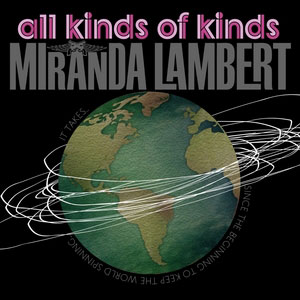 I haven’t heard a country song spin such a fantastical yet somehow believable yarn about circus folk since Kathy Mattea’s “Harley”, a fan favorite album cut from her 1991 set, Time Passes By.
Don Henry wrote that tune, and he’s a co-writer of this latest single by Miranda Lambert as well. “All Kinds of Kinds” is actually headed to country radio, giving this new tale the opportunity for a wider audience than that little-known gem from two decades ago.
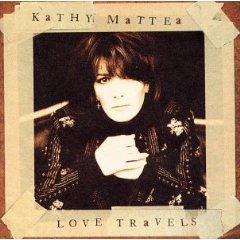
Choice Cuts: Kathy Mattea, “Beautiful Fool”
A repost from last year, in honor of Dr. King.
Beautiful Fool
Kathy Mattea
from the 1997 album Love Travels
Our antiseptic approach to the legends of American history often results in the life’s work of Dr. Martin Luther King Jr. being reduced to four words and a three-day weekend. To prevent this in my own mind, I often revisit “Beautiful Fool”, a Don Henry composition that can be found on Kathy Mattea’s 1997 album Love Travels.
What I love about this song is its realism and its willingness to take on two voices of perspective at the same time. As an older woman reflects on King’s impact on her country and the sacrifices he was willing to make, she remembers her far less charitable opinion of him when he was alive: “Walter Cronkite preempted Disney one night, and all us kids were so upset. We thought you were a trouble instigator marching through our TV set.”
