Posts Tagged ‘Gretchen Wilson’

Justin Moore, “Small Town USA”

Friday, February 20th, 2009

justin-moore-copyWhat can you say when the song title tells you upfront how generic the song itself is going to be? I mean, the thing practically reviews itself, doesn’t it?

Seriously, though, the problem here isn’t that the song is about why living in a small town is (as you might guess) awesome.  The problem is that it doesn’t really give anyone who doesn’t feel the same way any reason to feel otherwise. It was clearly written solely to appeal to a demographic of people who also live in small towns and can relate to surface-level ideas like “everybody knows me and I know them” and “give me a Sunday morning that’s full of grace” (or in Moore’s case, “grA-a-A-a-A-ace”) without any further development of those ideas.

But that’s the thing: without further development, the ideas just sound really, really clichéd. Simply pointing out that you enjoy a “six-pack of Lite” doesn’t really tell me much about you, because guess what? Lots of people from lots of different living environments like lite beer. You have to give your ideas a little context for them to mean anything to anyone but you.

The problem reminds me of “Redneck Woman,” which also glorified a particular rural lifestyle but felt a lot more accessible in how it did so. I think what made the difference was that Gretchen Wilson explained why she liked being a redneck instead of just saying, “hey, I like being a redneck.” For instance, when she mentioned that she liked to drink beer, she set it up as a contrast to being a “Barbie Doll-type” who “swig[s] that sweet champagne,” so that even if we couldn’t relate to that particular preference ourselves, we could see where she was coming from and apply the greater principle in play to ourselves. If her life was a party, she let us in on it.

Moore, on the other hand, is like that guy who calls you from inside the party to let you know how awesome it is without actually explaining what’s going on. It’s not that you don’t believe him; it’s just that he never explains why you should happen to care.

Grade: D+

Listen: Small Town USA

Buy:


Grammy Flashback: Best Female Country Vocal Performance

Sunday, January 25th, 2009

Revised and Updated for 2009

While the Grammys have honored country music from the very first ceremony in 1959, they did not begin honoring by gender until 1965, when the country categories were expanded along with the other genre categories.

This is a look back at the Best Female Country Vocal Performance category. It was first awarded in 1965, an included single competing with albums until the Best Country Album category was added in 1995. When an album is nominated, it is in italics, and a single track is in quotation marks.

I’ve often made the case that female artists were making the best music in the 1990s, and the Grammys did a great job nominating songs and albums that were ignored at the CMA and ACM awards, which is not surprising, given that those shows have so few categories that are actually for songs and albums.

As usual, we start with a look at this year’s nominees and work our way back.

2009

  • Martina McBride, “For These Times”
  • LeAnn Rimes, “What I Cannot Change”
  • Carrie Underwood, “Last Name”
  • Lee Ann Womack, “Last Call”
  • Trisha Yearwood, “This is Me You’re Talking To”

This year’s lineup includes three former winners and two women looking for their first victory in this category. Martina McBride is in the running for the eighth time in fifteen years, and with one of her more understated performances. Lee Ann Womack returns for a fifth time, having received a nomination for the lead single of her five most recent albums. Both ladies turned in good performances here, but they’ve been overlooked for records bigger and better, so they’re not likely to snap their losing streaks this time around.

As for the previous winners, LeAnn Rimes earned her third consecutive nod, bringing her total to five in this category. She hasn’t won since 1997, when she took home the award for “Blue.” If enough voters hear “What I Cannot Change,” she might have a shot, though the only version of the song that’s been a legitimate hit has been the dance remix.

Trisha Yearwood won in 1998 for “How Do I Live,” her only victory to date. But she’s earned her tenth nomination for “This is Me You’re Talking To,” which is arguably her strongest vocal performance of the ten. Like Rimes, the challenge is getting enough voters to listen to it, but she’s never been more deserving of the victory than she is this year.

Still, the favorite remains Carrie Underwood. She’s quickly become a favorite with Grammy voters, having won this category two years running, along with Best New Artist in 2007. She’s the nominee with the highest profile, and while “Last Name” is nowhere near the same league of “Jesus, Take the Wheel” and “Before He Cheats” in terms of artistry or impact, it was a big hit, something that the other four entries cannot claim.

If Underwood was nominated for “Just a Dream,” she’d have a mortal lock on this one. But the strength of the other nominees will at least keep this race competitive. If Underwood prevails, Grammy queen Alison Krauss better watch her back.

2008

  • Alison Krauss, “Simple Love”
  • Miranda Lambert, “Famous in a Small Town”
  • LeAnn Rimes, “Nothin’ Better to Do”
  • Carrie Underwood, “Before He Cheats”
  • Trisha Yearwood, “Heaven, Heartache and the Power of Love”

Looking at this lineup, you’d think that it was a golden age of female country artists, something akin to the mid-nineties. In reality, only one of these songs was a big radio hit, though three others managed to go top twenty. In terms of quality, however, this is the most consistent and thoroughly wonderful set of nominees this category has seen this century.  You’d have to go back to exactly 1999 to find a better lineup.

In a year when any winner would have been deserving, Underwood won for “Before He Cheats,” her second straight win for a signature mega-hit from her debut album.

(more…)

Grammy Flashback: Best Country Album

Saturday, January 17th, 2009

A look back at the previous winners and nominees of the Best Country Album Grammy, updated to include the 2009 contenders.

The Grammys have been doing better in the country categories since they reintroduced the Best Country Album category in 1995, which had only been in existence for two years in the 1960s. Prior to 1995, albums and singles were both eligible in the vocalist categories, so full albums would compete against single tracks in Best Male Country Vocal Performance,  for example.

Looking over the history of this fairly young category, you can see trends emerge, with certain acts clearly being favorites of NARAS. You see the same trend with the CMAs, just with different people. What is clear with the Grammys is that radio and retail success will only carry you so far. For awards that are supposed to be based on artistic merit, that’s how it should be.

As with the CMA flashbacks, we’ll begin with a look at this year’s nominees, then discuss previous year’s in reverse chronological order. Winners are in bold.

Be sure to drop by My Kind of Country and vote in their Best Country Album poll. Let your preference be known!

trisha12009

  • Jamey Johnson, That Lonesome Song
  • Patty Loveless, Sleepless Nights
  • George Strait, Troubadour
  • Randy Travis, Around the Bend
  • Trisha Yearwood, Heaven, Heartache and the Power of Love

Four veterans and one newcomer vie for this year’s Best Country Album, and it’s a wide-open race with no obvious favorite. The critically acclaimed breakthrough album of Jamey Johnson could earn him his first Grammy. The legendary George Strait would like to start a Grammy collection of his own. Like fellow nominee Patty Loveless, this is his third nomination for this award. While Loveless has also yet to win this one, she does have a Grammy already, for her contributions to the multi-artist collaboration “Same Old Train.”

Randy Travis is a real contender here; five of his previous albums have won Grammys. Two of them (Always & Forever, Old 8×10) won in the Best Male Country Vocal Performance category, back when albums and singles competed with each other in that race. And while this is his first nomination for Best Country Album, he was won Best Southern, Country, or Bluegrass Gospel Album three times, for Glory Train (2007), Worship & Faith (2005) and Rise and Shine (2004.)

While Vince Gill broke the all-female trend in this category last year, he was nominated in an all-male field. If the trend begins again this year, this will be a battle between Loveless and Trisha Yearwood. The latter’s Heaven, Heartache and the Power of Love is arguably the strongest album in this category, and while Yearwood won three Grammys in the nineties, she has never won Best Country Album, despite earning more nominations than any other artist in the history of the category – Heartache is her eighth set to contend for the trophy. She’s beyond overdue, but her competition is formidable.

vince-gill-these-days2008

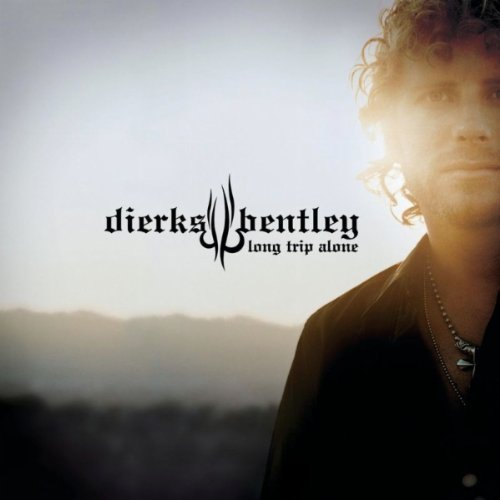
  • Dierks Bentley, Long Trip Alone
  • Vince Gill, These Days
  • Tim McGraw, Let it Go
  • Brad Paisley, 5th Gear
  • George Strait, It Just Comes Natural

With the exception of Shania Twain’s Come On Over, no album that has also been nominated for the general Album of the Year race has failed to win Best Country Album. So it was no surprise when Vince Gill picked up the trophy for his four-disc opus These Days. In his acceptance speech, he good-naturedly ribbed Kanye West, providing one of the evening’s brightest moments.

2007

  • Dixie Chicks, Taking the Long Way
  • Alan Jackson, Like Red On a Rose
  • Little Big Town, The Road to Here
  • Willie Nelson, You Don’t Know Me: The Songs of Cindy Walker
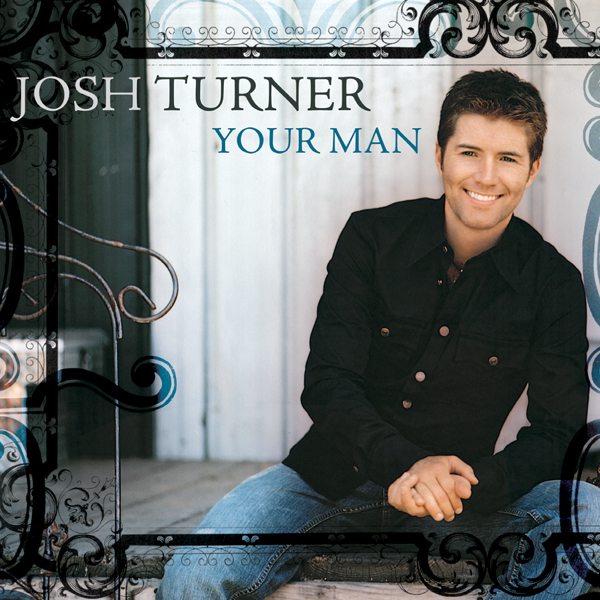
  • Josh Turner, Your Man

The Chicks became the first artists in Grammy history to win four genre Best Album awards, breaking their tie with Eminem, who has won three Best Rap Album trophies. This was one of five trophies they took home at the February 2007 ceremony, and the album returned to #1 on the country chart and back to the pop top ten on the strength of those victories.

(more…)

Various Artists, Ultimate Grammy Collection: Classic Country and Contemporary Country

Saturday, December 13th, 2008

Various Artists

Ultimate Grammy Collection:

Classic Country

Contemporary Country

stars-312

Earlier this year, the Grammys celebrated their fiftieth anniversary with a series of compilations focusing on winners in different fields.  Two of the best entries in this series focused on country music.  With five decades of winners to choose from, it’s no surprise that Ultimate Grammy Collection: Classic Country and Ultimate Grammy Collection: Contemporary Country are solid collections.

The Classic Country set is particularly strong, including a diverse selection of significant artists from the sixties and seventies.   Even better, most of them are represented with their signature tracks.    Roger Miller opens the set with “King of the Road”, easily his biggest hit.   Other superstars include Tammy Wynette (“Stand By Your Man”), Johnny Cash (“A Boy Named Sue”) and Waylon & Willie (“Mammas Don’t Let Your Babies Grow Up to Be Cowboys.”)

As the collection moves on to the seventies and eighties, there is a healthy portion of pop-country classics from the likes of Kenny Rogers (“The Gambler”), Dolly Parton (“9 to 5″), Crystal Gayle (“Don’t it Make My Brown Eyes Blue”) and Willie Nelson (“Always on My Mind”).   In the midst of that crossover sound, however, there’s  a healthy dose of traditional country, courtesy of George Jones  with “He Stopped Loving Her Today.”

That Jones track is the only one that wouldn’t be familiar to fans that buy the set because they remember those crossover hits, even though it’s a country classic.   They might also revel in the discovery of  Ray Price (“For the Good Times”) and Jerry Reed (“When You’re Hot, You’re Hot”), which were both AM radio staples back when top 40 regularly played country records.     The set also includes mega-hits from Charlie Daniels Band, Lynn Anderson, Donna Fargo and Jeannie C. Riley.   The only real misstep is the inclusion of Johnny Cash & June Carter’s “If I Were a Carpenter”,  an unnecessary inclusion that was no doubt shoehorned in because of lingering sentiment for all things Cash.   That slot would’ve been better represented with Conway Twitty and Loretta Lynn’s “After the Fire is Gone.”

(more…)

Matraca Berg

Sunday, November 16th, 2008

When women became the dominant creative force in country music during the mid-nineties, it wasn’t just on the strength of their vocal talents, but also because of their excellent choice of material. No single songwriter supplied more of that quality material than Matraca Berg, one of the most prominent and successful female country songwriters in country music history.

Most songwriter stories begin with their journey to Nashville, but Matraca Berg was born in Music City. She grew up thinking that she’d either be a lawyer or a songwriter, and she later quipped that once she dropped out of high school, it was obvious that law wasn’t an option.

Not that it mattered much. Berg was only eighteen when she met up with songwriter legend Bobby Braddock (”D-I-V-O-R-C-E,” “He Stopped Loving Her Today”), who was very impressed with her self-written songs and suggested they pair up to write on together. The result was “Faking Love,” which went to No. 1 for T.G. Sheppard & Karen Brooks in 1983.

Not a bad start for a young songwriter. But some lean years followed as she honed her songwriting craft, while also pursuing a career as a recording artist. Things began to pick up in the late eighties, when Reba McEntire turned her “The Last One to Know” into a #1 hit in 1987. After she scored more cuts with Randy Travis, Tanya Tucker and Sweethearts of the Rodeo, RCA offered her a recording contract.

In 1990, her stellar debut album, Lying to the Moon, was released. Four singles made moderate dents on the singles chart, and the album sold enough to reach the forties on the album chart. A second album was recorded but never released, and then RCA tried to push her in the pop market with the 1993 album The Speed of Grace. It failed to make an impact, and she was dropped from the label.

These would have been harrowing times, except for the fact that a bumper crop of female artists were looking for smart, contemporary material. Berg’s debut album was mined by several artists. Trisha Yearwood immortalized the title track, Pam Tillis covered “Calico Plains,” Dusty Springfield tackled “You Are the Storm,” and Berg’s childhood heroine, Linda Ronstadt, recorded “Walk On.”

Patty Loveless had a top five hit in 1990 with Berg’s “I’m That Kind of Girl,” and scored a #1 single six years later with “You Can Feel Bad.” Suzy Bogguss, another rising star in the early nineties, cut “Eat at Joe’s”, which had been recorded for that unreleased second album. Berg and Bogguss became friends and songwriting partners, and they wrote Bogguss’ last big hit together, “Hey Cinderella”, which went top five in 1994.

Trisha Yearwood would become the artist most associated with Berg. She had a big hit in 1992 with “Wrong Side of Memphis,” a No. 1 single with “XXX’s and OOO’s (An American Girl)” in 1994 and a top five hit with “Everybody Knows” in 1996. Meanwhile, Martina McBride had her first No. 1 single in 1996 with “Wild Angels,” which Berg had imagined would be the title cut of one of her own albums.

Yearwood passed on the song that would become Berg’s signature composition, and it was recorded instead by an aspiring new artist named Deana Carter. In 1996, Carter made Berg’s “Strawberry Wine” her debut single, and the slow waltz about lost innocence was a surprise smash, topping the charts for two weeks. Carter repeated at #1 with the follow-up single, another Berg song called “We Danced Anyway.”

All of these hits renewed interest in Berg as a recording artist, and she signed with Rising Tide Records. In 1997, she released Sunday Morning to Saturday Night. She was invited to perform on that year’s CMA awards telecast, where host Vince Gill introduced her as not just a songwriter, but a poet. She performed the heartbreaking “Back When We Were Beautiful” and received one of her two standing ovations of the evening. The other one came when she and co-writer Gary Harrison won Song of the Year for “Strawberry Wine.” She was only the third woman in history to win the award, after K.T. Oslin (1988) and Gretchen Peters (1996).

In 1998, Berg had a popular video hit with “Back in the Saddle”, thanks to a supporting cast of many of the female stars who’d scored hits with her songs: Trisha Yearwood, Faith Hill, Suzy Bogguss, Patty Loveless and Martina McBride. Meanwhile, newer artists also began to embrace Berg’s work. Sara Evans did well with “Fool, I’m a Woman” and Berg earned some big royalties when the Dixie Chicks had a smash with her “If I Fall You’re Going Down With Me.” She even caught the attention of another legend, Loretta Lynn, who recorded “Working Girl” for her Still Country album in 2000. Terri Clark followed Lynn’s lead and included the song on her 2002 comeback album Pain to Kill.

More recently, Keith Urban included “Nobody Drinks Alone” on his Be Here album, Pinmonkey revived her Rising Tide single “That Train Don’t Run,” and Lee Ann Womack cut “You Should’ve Lied.” Berg earned a Grammy nomination for “I Don’t Feel Like Loving You Today,” which was a hit for Gretchen Wilson.

But it’s with those nineties women that Berg remains most closely associated. Patty Loveless earned a Grammy nomination for her performance of “On Your Way Home.” Pam Tillis included “Crazy By Myself” on her 2007 album RhineStoned. Trisha Yearwood’s new album features Berg’s “Dreaming Fields” as the emotional centerpiece.

In recent years, Berg has been touring both the U.S. and Europe with other female songwriters, and while she shares billing with peers like Gretchen Peters and Carolyn Dawn Johnson, the depth of Berg’s catalog is unmatched by any female songwriter of her generation.

The Matraca Berg Catalog

  • “Faking Love,” T.G. Sheppard
  • “Hey Cinderella,” Suzy Bogguss
  • “The Last One to Know,” Reba McEntire
  •  “Strawberry Wine,” Deana Carter
  • “Wild Angels,” Martina McBride
  • “Wrong Side of Memphis,” Trisha Yearwood
  • “XXX’s and OOO’s,” Trisha Yearwood
  • “You Can Feel Bad,” Patty Loveless

CMA Flashback: Horizon Award (New Artist)

Sunday, November 9th, 2008

For a look back at the other major categories, visit our CMA Awards page.

2010

  • Luke Bryan
  • Easton Corbin
  • Jerrod Neimann
  • Chris Young
  • Zac Brown Band

Usually there isn’t this much turnover in this race unless most of last year’s nominees are ineligible.  This year, only one of the four eligible nominees from last year – Zac Brown Band – earns a nomination.  With their massive success and their multiple nominations, they’ve got an excellent shot at winning. Then again, Easton Corbin is elsewhere on the ballot, too. It could be a horse race.
2009

  • Randy Houser
  • Jamey Johnson
  • Jake Owen
  • Darius Rucker
  • Zac Brown Band

Thirteen years after winning the Best New Artist Grammy as part of Hootie & The Blowfish, Darius Rucker won the country music equivalent, adding an exclamation point to the most successful pop-to-country crossover in a generation.

lady-antebellum2008

  • Jason Aldean
  • Rodney Atkins
  • Lady Antebellum
  • James Otto
  • Kellie Pickler

The industry favorites Lady Antebellum became the fourth band in history to win this award, following Rascal Flatts, Dixie Chicks and Sawyer Brown.

2007

  • Jason Aldean
  • Rodney Atkins
  • Little Big Town
  • Kellie Pickler
  • Taylor Swift

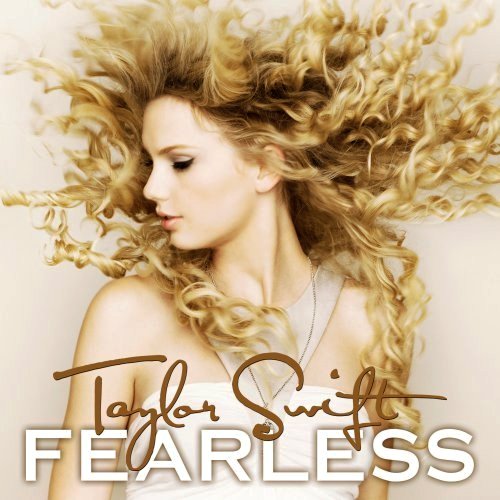
In the year since winning the Horizon Award, Swift has solidified her position as the genre’s most successful rising star.  While her debut album hasn’t reached the sales heights of the first discs by previous winners Carire Underwood and Gretchen Wilson, Swift is still one of the genre’s only significant sellers.

2006

  • Miranda Lambert
  • Little Big Town
  • Sugarland
  • Josh Turner
  • Carrie Underwood

I had a sneaking suspicion that Josh Turner was going to take this home, but as I’ve said before, Carrie’s got the best pipes since Trisha Yearwood. That she’ was acknowledged for that at such an early stage of her career is pretty amazing. Somehow I think the thrill of winning Horizon was short-lived, as winning Female Vocalist the same night left that memory in the dust.

2005

  • Dierks Bentley
  • Big & Rich
  • Miranda Lambert
  • Julie Roberts
  • Sugarland

Four of these five were nominees again the following year, and all in categories besides just Horizon, though Lambert got another shot at that as well. I think Big & Rich and Sugarland are making the most interesting music, and they’re moving more units than Bentley, though he’s no slouch himself. The CMA showed good judgment this year.

(more…)

14 Comments

Category CMA Awards
Tags: , , , , , , , , , , , , , , , , , , , , , , , , , , , , , , , , , , , , , , , , , , , , , , , , , , , , , , , , , , , , , , , , , , , , , , , , , , , , , , , , , , , , , , , , , , , , , , , , , , , , , , , , , , ,

Gretchen Wilson, "Don't Do Me No Good"

Sunday, July 13th, 2008

I don't think I've ever heard Gretchen Wilson rock out quite this much. There's a driving energy to “Don't Do Me No Good” that is relentless, and it helps gloss over the fact that once again, Wi

lson's material is not quite up to par.

This would make for decent album filler, but it's not distinctive or interesting enough to really stand out among her singles to date.

Grade: B

Listen: Don't Do Me No Good

Buy: Don't Do Me No Good

zp8497586rq

100 Greatest Women, #56: Matraca Berg

Saturday, May 10th, 2008

100 Greatest Women

#56

Matraca Berg

When women became the dominant creative force in country music during the mid-nineties, it wasn’t just on the strength of their vocal talents, but also because of their excellent choice of material. No single songwriter supplied more of that quality material than Matraca Berg, one of the most prominent and successful female country songwriters in country music history.

Most songwriter stories begin with their journey to Nashville, but Matraca Berg was born in Music City. She grew up thinking that she’d either be a lawyer or a songwriter, and she later quipped that once she dropped out of high school, it was obvious that law wasn’t an option.

Not that it mattered much. Berg was only eighteen when she met up with songwriter legend Bobby Braddock (“D-I-V-O-R-C-E”, “He Stopped Loving Her Today”), who was very impressed with her self-written songs and suggested they pair up to write on together. The result was “Faking Love”, which went to No. 1 for T.G. Sheppard & Karen Brooks in 1983.

(more…)

100 Greatest Women, #85: Gretchen Wilson

Sunday, April 6th, 2008

100 Greatest Women

#85

Gretchen Wilson

Never underestimate the power of good timing. When Gretchen Wilson finally landed a recording contract after years of laboring in obscurity, country radio was more hostile to female artists than at any point in its modern history.

When her debut single “Redneck Woman” was released in 2004, Martina McBride was the only female artist who was consistently hitting the top ten with her singles. Two years earlier, when country sales had skyrocketed thanks to massive sales of new albums by superstars Shania Twain, Dixie Chicks and Faith Hill, all of the credit for the boom was given to post-9/11 anthems by Alan Jackson, Toby Keith and Darryl Worley. Country radio shunned Hill, Lee Ann Womack and SHeDaisy for their crossover sounds, and when Natalie Maines uttered her innocuous comment about President Bush in March 2003, the Dixie Chicks were instantly removed from country radio playlists. They were the only female act that was regularly having singles nearing the top of the charts. When “Redneck Woman” finally hit the airwaves in the spring of 2004, women hadn’t been so scarce on the country radio since the early sixties.

(more…)

Gretchen Wilson, “You Don’t Have to Go Home”

Thursday, September 13th, 2007

Good enough.  She sounds fully engaged, it’s up-tempo and rowdy without being in-your-face obnoxious, and every detail from this last call scene sounds authentic and believable.   It’s certainly more realistic than “All Jacked Up.”    I doubt it will fire up her career at radio again, but it’s good enough.  That’s about all I can say.

Grade: B

Listen: You Don’t Have to Go Home

Buy: You Don’t Have to Go Home

Writers

Latest Comments

Most Popular

Worth Reading

View Older Posts