Country Universe contributor and reader Cory DeStein flagged this rundown from Billboard regarding women on the charts this decade:
PERFECT 10: On Country Songs, Carrie Underwood ropes her 10th top 10, as “Cowboy Casanova” climbs 11-8. With the advance, Underwood now stands alone in first-place for most top 10s on the chart among solo women this decade.
Here are the solo females with the most top 10s on Country Songs since 2000:
10, Carrie Underwood
9, Faith Hill
9, Martina McBride
8, Taylor Swift
7, Sara Evans
7, Reba McEntire
6, Jo Dee Messina
5, LeAnn Rimes
5, Gretchen Wilson
4, Shania Twain
Notably, the artist who led the category among women last decade did so with almost three times as many top 10s. Reba McEntire ranked first among solo women in the ’90s with 27 top 10s on Country Songs. Trisha Yearwood placed second with 18 between 1990 and 1999, and Faith Hill, Patty Loveless and Tanya Tucker each posted 14 in that span.
The decline in fortune for women at radio this decade is even more pronounced when you compare the above top ten to the previous decade:
Most Top Ten Singles by a Female Artist – 1990-1999:
Reba McEntire (27)
Trisha Yearwood (18)
Faith Hill (14)
Patty Loveless (14)
Tanya Tucker (14)
Pam Tillis (13)
Lorrie Morgan (12)
Shania Twain (12)
Wynonna (11)
Martina McBride (10)
That’s ten women who matched Underwood’s total for this decade. That Underwood didn’t even hit the top ten for the first time until late 2005 shows how bleak it was at radio for female artists this year.
But this comparison doesn’t even tell the whole story. Take a look at the list of women with the most top ten singles two decades ago:
Most Top Ten Singles by a Female Artist – 1980-1989:
Reba McEntire (23)
Crystal Gayle (22)
Dolly Parton (21)
Janie Fricke (17)
Barbara Mandrell (17)
Rosanne Cash (16)
Emmylou Harris (16)
Anne Murray (14)
Tanya Tucker (12)
Kathy Mattea (10)
Notice the trend? This decade, the top ten women combined for a total of 70 top ten hits. In the 90′s, the top ten women enjoyed a total of 145 top ten hits. In the eighties, a total of 168 top ten hits. Even the nineties list is dominated by women who were played heavily in the earlier part of the decade.
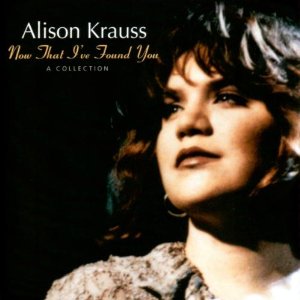
What’s strange is that it was in the mid-nineties that female artists became the dominant commercial force in country music. Janie Fricke never had a gold album. Shania Twain has sold 48 million albums. Yet Fricke had more top ten hits in just the eighties than Shania Twain has earned in her entire career. Record buyers have wholeheartedly embraced Alison Krauss and Miranda Lambert, but despite their strong sales, they’ve each enjoyed only one solo top ten hit.
So what to make of all of this? Is the recent success of Taylor Swift and Carrie Underwood an indication that things are improving for women on the radio dial? Is it worth noting that Sugarland and Jennifer Nettles (11 top ten hits) and the Dixie Chicks (14 top ten hits) have done their part to compensate for this lack of gender parity? Does it even matter that radio is playing women less often each decade, especially if record buyers are finding their music anyway?
Sara Evans is an excellent singer in desperate need of a better production team. She sings the fire out of a fairly decent pop-country song here, but the arrangement is an overwhelming distraction, with far too much clutter in the mix.
It’s to her credit as a vocalist that she’s not drowned out completely, but she’s ill-served by the production philosophy that bigger is better. The opposite is true with both pop and country music, so it never ceases to amaze me how difficult that concept is to grasp for too many of those who make pop-country records.
John Farrar or Mutt Lange could make a great record out of this song and vocal talent, but we’ll have to settle for only a good one this time around.
Written by Nathan Chapman, Sara Evans, Chris Lindsey, and Aimee Mayo
For a good stretch in the nineties, women were the dominant creative force in country music. Songwriter Matraca Berg was an indispensable component of that dominance, penning many of the biggest hits and best-loved tracks by signature acts like Trisha Yearwood, Patty Loveless, and Martina McBride.
It’s no surprise that this list of Favorite Songs written by Matraca Berg is almost completely composed of female artists. So distinguished is Berg’s catalog that worthy cuts by the Dixie Chicks, Nitty Gritty Dirt Band, and Gretchen Wilson just missed the list. Even Berg herself is only present with one performance, despite releasing several outstanding recordings in her own right.
But the beauty of these lists is that these are my own favorite songs, so I don’t have to force anything on to the list just to make it more well-rounded. Add your own favorites in the comments, and read Matraca’s 100 Greatest Women profile to learn more about this stunning songwriter.
#25
“Wild Angels” – Martina McBride Wild Angels, 1995
This was meant to be the title cut of an album that Berg never released. Instead, the cut went to Martina McBride. It was McBride’s first #1 single, and listening to it today, it sounds remarkably rough around the edges for an artist who’d eventually become an AC radio staple.
#24
“Fool, I’m a Woman” – Sara Evans No Place That Far, 1998
Berg’s writing can be effortlessly snarky, as evidenced by this breezy Sara Evans track that was a minor hit in 1999. “Did I say that I’d never leave you behind?” she queries. “Well, just keep treating me unkind. ‘Cause fool, I’m a woman, and I’m bound to change my mind.”
#23
“When a Love Song Sings the Blues” – Trisha Yearwood Real Live Woman, 2000
Trisha Yearwood is Berg’s finest vessel, the only voice elegant enough to equal Berg’s words. This melancholy closer to Yearwood’s excellent Real Live Woman set finds the protagonist seeking solace in a dusty old piano, playing “Faded Love” and “Born to Lose” so she doesn’t have to cry alone.
#22
“Give Me Some Wheels” – Suzy Bogguss Give Me Some Wheels, 1996
A tense struggle between being herself and living up to an idealized creation formed by her lover leads to choosing the car keys over sticking around. “I’ll never be the angel you see in your dreams. Give me some wheels if I can’t have wings.”
#21
“The Last One to Know” – Reba McEntire The Last One to Know, 1987
Berg’s talents came to full fruition in the nineties, but there are a handful of treasures in her catalog from the previous decade. McEntire’s dignified performance is tasteful and understated, as she asks herself, “I believed you really loved me. Why can’t I believe you said goodbye?”
#20
“Demolition Angel” – Pam Tillis The Collection, 2006
A variety of CD and MP3 albums have been compiled from the live DVD released by Pam Tillis in 2005. She debuted several new songs in that concert, including “Demolition Angel”, a stellar Berg song that has yet to be included on a studio album. She’s asking God to send down a “demolition angel” to tear down the walls she’s built around her heart, which she describes as a “monument to pride.”
#19
“Everybody Knows” – Trisha Yearwood Pure Country, 1992
I once saw Yearwood remark durin a concert that she had to record this song because it included the words “jerk” and “chocolate.” She’s growing frustrated with everyone in her life that has a different opinion on how to get over her heartache. She’s be happy to be left alone with “some chocolate and a magazine.”
#18
“You Should’ve Lied” – Lee Ann Womack Something Worth Leaving Behind, 2002
A deliciously bitter rejection of a cheater’s apologetic confession. “You overestimated me,” Womack seethes, “thinking I would understand. Believing that your honesty would make me see a bigger man. Was that all part of your plan?”
#17
“You Are the Storm” – Dusty Springfield A Very Fine Love, 1995
Springfield covered this evocative track from Berg’s debut album, a weary goodbye to a man plagued by his own inner demons. “I tried to love you, I tried to keep you from harm,” she rues, “but I can’t give you shelter when you are the storm.”
#16
“You’re Still Here” – Faith Hill Cry, 2002
This shamefully overlooked gem from Hill’s Cry collection is painfully poignant. A woman sings to her husband who has passed on, but is still everywhere that she goes. My personal favorite moment is when she sings, “I heard you in a stranger’s laugh, and I hung around to hear him laugh again. Just once again.”
#15
“Cry on the Shoulder of the Road” – Martina McBride Wild Angels, 1995
Levon Helm provides the killer harmony track as McBride finally leaves a troubled relationship behind, content to find her comfort out on the interstate. “I’d rather break down on the highway with no one to share my load, and cry on the shoulder of the road.” I’ve always thought that the lyrics of Lee Ann Womack’s “A Little Past Little Rock” were heavily influenced by this song.
#14
“For a While” – Trisha Yearwood Inside Out, 2001
Another Berg song cut by Yearwood that uses the word “jerk”, though I suspect it was the undercurrent of self-deprecation that truly appealed to the songstress when she cut this song. Watching an old Road Runner cartoon, she notices the “poor old coyote. Someone had a worse day than me for a change.”
#13
“Mining for Coal” – Randy Travis No Holdin’ Back, 1989
This deep and moving performance by Randy Travis makes me wish more male artists would cut Berg’s songs. He’s so surprised to have found a true love while he was just looking for someone to ease his loneliness. “It’s like finding a diamond when you’re mining for coal.”
#12
“Come Back When it Rainin’” – Trisha Yearwood Real Live Woman, 2000
Here, Yearwood is refusing to indulge her rainy day lover, who only seems to come around when he’s feeling down. “I’m just someone to call when you need a place to fall,” she notes, showing him the door.
#11
“You Can Feel Bad” – Patty Loveless The Trouble With the Truth, 1996
Loveless turns the tables on the man who thinks he’s letting her down easy. “Your head is hanging and you look real sad. Maybe you should have called?” Her heart may be broken but her dignity – and biting wit – remain intact.
#10
“Strawberry Wine” – Deana Carter Did I Shave My Legs For This?, 1996
Berg’s signature song of lost innocence is a perfect match for Carter’s sandpaper vocals. For those of us who “still remember when thirty was old”, this remains a beautiful commentary on the passage of time.
The earliest entry in Berg’s trilogy of songs inspired by her grandfather’s farm. I don’t know if this one is as autobiographical as “Strawberry Wine” and “The Dreaming Fields”, but it’s certainly as beautiful. “Calico Plains” tells the story of an older sister sharing her dreams with her younger sister. Little sis ends up making that dream her own when the elder Abilena finds herself with child and must marry and stay at home.
#8
“Nobody Drinks Alone” – Keith Urban Be Here, 2004
A cautionary tale sung to a man who thinks he is at home by himsef, drowning his sorrows and painful memories with a bottle of wine. “Don’t you know nobody drinks alone?” Urban warns. “Every demon, every ghost from your past, and every memory you’ve held back follows you home.”
#7
“Wrong Side of Memphis” – Trisha Yearwood Hearts in Armor, 1992
If there’s a better song out there about chasing the dream of country music stardom, I haven’t heard it. As the opening track of Yearwood’s landmark sophomore set, it announced her arrival as one of country music’s greatest album artists.
#6
“On Your Way Home” – Patty Loveless On Your Way Home, 2003
Loveless earned a Grammy nomination for this confrontation of a cheating spouse who isn’t quite as forthcoming as his spurned lover needs him to be. “The truth is gonna set you free,” she sings, wearily promising, “If you keep on lying to me, I might stay right here just to spite you.”
#5
“Diamonds and Tears” – Suzy Bogguss Something Up My Sleeve, 1993
Berg’s finest philosophical moment, a reflection on how the journey of life is its own destination. Even lost love is a form of “higher education”: “I have said and heard the word ‘goodbye’, felt the blade and turned the knife sideways. But I crossed bridges while they burned, to keep from losing what I’ve learned along the way.”
#4
“The Dreaming Fields” – Trisha Yearwood Heaven, Heartache, and the Power of Love, 2007
A return to the wheat fields of her youth upon the death of her grandfather contains a sprinkle of social commentary, but is mostly a heart-wrenching exploration of grief over “the end of a world I love.”
#3
“My Heart Will Never Break This Way Again” – Patty Loveless Strong Heart, 2000
The end of a first love brings not only the death of that romance, but also of the innocence that dies along with it. “It’s too bad, it’s so sad when your innocence is gone. It’s wasted on the ones that do you wrong.” Thus is the end result of a love “too blind with trust to know the Judas kiss.”
#2
“Back When We Were Beautiful” – Matraca Berg Sunday Morning to Saturday Night, 1997
Berg received a standing ovation when she performed this stunning song on the 1997 CMA Awards, the same night that she won Song of the Year for “Strawberry Wine.” It recounts a conversation between grandmother and granddaughter, with the former confessing to the latter that “I hate it when they say I’m aging gracefully. I fight it every day. I guess they never see.”
The song is not available digitally and the album is out of print, but you can listen to it here.
#1
“Lying to the Moon” – Trisha Yearwood The Song Remembers When, 1993
Berg refused to perform this song for years after Yearwood’s version was released, feeling that she couldn’t do it justice after Yearwood’s flawless rendition. Berg’s poetic style could be too precious in lesser hands, but Yearwood’s ability to be sincere without being schmaltzy makes her the perfect singer for “Lying to the Moon,” a song so breathtakingly beautiful that it’s easy to forget it’s essentially about getting stood up.
“I told the starry sky to wait for you. I told the wind to sigh to like lovers do. I even told the night that you were true, and that you would be here soon, and now I’m lying to the moon.” It’s one of Berg’s finest songs, combined with one of Yearwood’s finest vocal performances, a high-water mark for two of the genre’s greatest talents.
I’m pleased to introduce a new feature to Country Universe readers, which is a spin off of Favorite Songs by Favorite Artists called Favorite Songs by Favorite Songwriters.
While we all appreciate songwriters for their invaluable contributions to our favorite artists, they still often remain unrecognized as the people behind the scenes and, therefore, stand in the shadows of the big name artists who sing their songs. The purpose of this feature is to spotlight those songwriters who had or have aspirations of being stars, but are better known for sharing their craft with the more visible artists.
Therefore, the criteria for this feature is that the spotlighted songwriter has to have both written songs that other artists have recorded and recorded music of his/her own. For instance, Darrell Scott, Rodney Crowell, Radney Foster, Kris Kristofferson, Bruce Robison, etc. are eligible songwriters, since they’ve recorded their own music and written songs for other artists. Conversely, people like Alan Jackson, Garth Brooks, Randy Travis, Clint Black etc. won’t be eligible, since they’ve mostly only written songs for themselves and not others.
Finally, Favorite Songs by Favorite Songwriters will include a mix of songs that the songwriter has recorded, and songs that he/she has written that other artists have recorded, which will obviously depend on our favorite songs by that songwriter and our preferred version of the chosen song.
With this feature, we hope to help readers realize the contributions of individual songwriters and, perhaps, inspire you to explore the artists’ own discographies as a result.
Last summer I kicked off our Songwriters Series with my favorite modern country music songwriter, Darrell Scott. So, I thought it fitting to do the same with this new feature. Since I’ve already taken up considerable space describing this feature, I encourage you all to refer to my aforementioned spotlight to learn more about the man about which this article is written.
A pertinent note, however, is that most of the songs on this list have been recorded by both Scott and other artists. While the majority of the songs on this particular list will specifically refer to other artists, please assume that Scott’s own recordings are more than worth exploring as well.
#15
Darrell Scott, “Banjo Clark” Aloha From Nashville
One of the things that I marvel the most about Darrell Scott is his ability to write songs that sound like timeless standards. “Banjo Clark” is one such song. In fact, I had to double check to make sure Scott had actually written this song and that it wasn’t a public domain standard that he revived.
#14
Tim McGraw, “Old Town New” Live Like You Were Dying
Scott wrote “Old Town New” with another superb modern songwriter, Bruce Robison. So, it’s no surprise that this song about a man wishing that he could make his old town feel new again after a failed relationship is good. While it remained just an album cut on McGraw’s signature album, it’s as good as many of the singles that were released from it.
#13
Suzy Bogguss, “No Way Out” Give Me Some Wheels
“No Way Out” is up-tempo, but is not devoid of life’s realities. The family experiences familiar hardships, but the husband and wife hold themselves accountable by reminding each other that they’ve “fell in love and there’s no way out.”
While Bogguss’ recording is the superior version, both Darrel Scott’s and Julie Roberts’ versions are good as well. Moreover, this is the first song of Scott’s that was recorded by another artist.
#12
Darrell Scott, “When There’s No One Around”
Family Tree
Garth Brooks recorded a version of “When There’s No One Around”, but Scott’s version is more organic and sonically appealing. It’s a poignant look at who we are when there’s no one around, which is inevitably different than our public personas.
#11
Travis Tritt, “It’s A Great Day to Be Alive” Down the Road I Go
We all know “It’s A Great Day to Be Alive”, since it was a big hit for Travis Tritt. This song has been recorded by Scott and Cory Morrow. Tritt’s is the definitive version, however. It tries to be hopeful while still somehow managing to feel a little bleak at the same time. While he proclaims that it’s a great day to be alive, there’s a sadness that lurks under the surface that seems to threaten the bright outlook, which is actually more tangible in Scott’s recording.
#10
Darrell Scott, “With A Memory Like Mine”
Real Time
“With A Memory Like Mine” was co-written with his dad, Wayne Scott. Darrell found the beginnings of this song in a notebook of his father’s and encouraged the Elder Scott to finish it with him. Scott’s version, which can be found on a solid project with Tim O’Brien, is darker than the quick paced recording by The John Cowan Band, which is more appropriate for this chillingly sad song. The man sends his son off to war by telling him to “be a good soldier/but return again someday.” His son does return, but in the most devastating way possible for a parent. In a casket.
#9
Martina McBride, “I’m Trying”
Shine
“I’m Trying” has been recorded by both Diamond Rio as a duet with Chely Wright and Martina McBride, though McBride’s is the stronger version. It explores a struggling relationship that almost seems like more work than it’s worth. Instead of leaving us with a typical happy or tragic ending, we are only given an assurance that they love each other and they are trying to make things work. The melody is tastefully simple with a fitting production that showcases McBride’s atypical restrained vocals, which translates into appropriate empathy for the characters within the song. It is a simple song with a simple production, but still poignant in a quiet way.
#8
Trace Adkins, “Someday”
More
Adkins is the only artist to record this song, as far as I know. It’s a beautiful and hopeful song, with tinges of sadness. As is duly noted about Adkins, he sings these more serious songs the best, even if radio disagrees.
#7
Dixie Chicks, “Heartbreak Town”
Fly
This is an indictment on Nashville, which is one of two songs written by Scott and recorded by The Chicks that tackles the topic. The song portrays Nashville, a place where so many people hope to enjoy success, as a “heartbreak town, which is something that both the Chicks and Scott have surely learned from personal experience.
#6
Kathy Mattea, “Loves Not Through With You Yet”
Right Out of Nowhere
I’m thrilled that one of my favorite Mattea albums includes this thoughtful, gorgeous Celtic flavored song by Darrell Scott: “You may think that love takes two, but loves a gift from you to you.”
#5
Sara Evans, “Born to Fly”
Born to Fly
Scott happened to write one of Sara Evans’ most recognizable and best hits to date. “Born to Fly” is an infectious coming of age song. While her parents are stable and grounded, that’s not the way the songs’ character wishes to live and she asks, “How do you keep your feet on the ground when you know you were born to fly?”
#4
Darryl Worley, “Family Tree”
I Miss My Friend
While many of Scott’s songs can be heavy, this is an example of his sillier side. Scott does a great version, but Worley cuts loose just the right amount. He clearly revels in singing deliciously smarmy lyrics like, “Well, raisin’ up babies is our new sport/You’re one day late and I’m one dollar short/Now, maybe it was planned or maybe it was a goof/But a cat’s got to dance on a hot tin roof.”
#3
Darrell Scott, “Goodle’ USA”
The Invisible Man
A more watered down version of this song can be heard on Faith Hill’s album. If one doesn’t listen closely, it’s easy to miss the probing lyrics that question the state of America. While Scott’s recording is not quite as polished, the political message is much more overt, which includes his original lyrics that were altered for Hill’s version to be less controversial.
#2
Dixie Chicks, “Long Time Gone”
Home
This is the other song that was written by Scott and recorded by The Chicks that takes Nashville to task. Wrapped in an unshakably catchy melody, “Long Time Gone” disregards conventional niceties and tersely critiques the music that’s being played on the radio:
“Now me and Delia singin’ every Sunday
Watchin’ the children and the garden grow
We listen to the radio to hear what’s cookin’
But the music ain’t got no soul
Now they sound tired but they don’t sound Haggard
They got money but they don’t have cash
They got Junior but they don’t have Hank
I think, I think, I think…the rest is…
A long Time Gone”
#1
Patty Loveless, “You’ll Never Leave Harlan Alive”
Mountain Soul
Patty Loveless’ recording of “You’ll Never Leave Harlan Alive” sounds like a superb arrangement of a forgotten classic, except it isn’t a remake and was written just over ten years ago. While I feel the definitive version was recorded by Patty Loveless, Darrell Scott has recorded two versions that, even if Loveless’ version did not exist, would earn a spot on this list. Through haunting lyrics and melodic structure, “Harlan” tells the tragic story of the bleak existence of coalminers that is just about inevitable:
“But the times got hard and tobacco wasn’t selling
And old granddad knew what he’d do to survive
He went and dug for Harlan coal
And sent the money back to grandma
But he never left Harlan alive
Where the sun comes up about ten in the mornin’
And the sun goes down about three in the day
And you’ll fill your cup with whatever bitter brew you’re drinkin’
And you spend your life just thinkin’ of how to get away”
Patty Loveless sings this song with an immense emotional intensity that was likely gathered from personal experience as a daughter of a coalmining father who eventually succumbed to “Black Lung Disease” as a result of coalmining in Kentucky. In fact, each person who has sung this song so far, including Darrell Scott himself, has a personal and deep understanding of the significance of the hopelessness that the lyrics convey, since Brad Paisley, Kathy Mattea and Scott also lived in coalmining towns as children. Consequently, they were all exposed to the horrifying reality of the song’s title that authoritatively proclaims that “you’ll never leave Harlan Alive.”
This list certainly does not exhaust the extent of Darrell Scott’s immeasurable songwriting prowess, but it shows his wide range of capabilities as a diverse composer and lyricist. He can do fun, heartbreak, inspirational, political, social commentary, fast, slow, etc. Moreover, he does it all with poignancy and wit, as it is appropriate.
Gone are the days where this would just be called the Country Universe’s Top Singles of 2008. The collective tastes of our writers makes for more distinguished lists, but thankfully, there’s still a place for my personal favorites. Here are the twenty singles of 2008 that I enjoyed the most.
#20: Reba McEntire & Kenny Chesney, “Every Other Weekend”
A welcome return to domestic themes, which have often provided McEntire with her best work. This plays out the like the epilogue to “Somebody Should Leave.”
#19: Sara Evans, “Low”
Triumph in the face of adversity, as the surrounding negative energy is rejected in favor of a positive and determined move toward the future. Plus, it’s a little bluegrassy, which just sounds cool.
#18: Keith Urban, “You Look Good in My Shirt”
Even Conway Twitty wasn’t so good at slipping in mature themes so skillfully. There are children across the country bopping along to this one without a clue about how she ended up wearing that shirt.
Turner’s unsure vocal reveals emotion for a moment, then pulls back, then reveals a little bit of it again. He’s hoping for one more chance, but it doesn’t sound like he’s convinced himself that he’ll truly “hang on for dear life” next time.
#16: Tim McGraw, “Let it Go”
Letting go of the past doesn’t mean that you forget your mistakes. Rather, you resolve to learn from them without letting them dictate your future.
Through the wonders of digital technology, duets with the deceased are not only possible, but convincing collaborations can be constructed from the transcendent art they’ve left behind. To honor Elvis Presley, a new collection of Christmas song finds his inimitable voice paired with some of the finest singers in a variety of musical genres.
From Sony Music Entertainment:
Sony Music Entertainment is giving Elvis Presley fans the opportunity to sing a Christmas duet with The King of Rock ‘N’ Roll. The “Sing With The King” ecard makes it possible for fans to record their own version of Presley’s classic ‘Blue Christmas.’ The ecard uses the same unique technology that allowed country superstars like Martina McBride, Carrie Underwood, and Sara Evans to sing along with Presley on the “Elvis Presley Christmas Duets” CD.
At www.SingWithTheKing.com fans can watch the new Elvis Presley and Martina McBride ‘Blue Christmas’ video, record their own version ‘Blue Christmas’ with Elvis and then send it to friends and family along with a personal message in the form of a holiday e-card.
For a look back at the other major categories, visit our CMA Awards page.
2010
Luke Bryan
Easton Corbin
Jerrod Neimann
Chris Young
Zac Brown Band
Usually there isn’t this much turnover in this race unless most of last year’s nominees are ineligible. This year, only one of the four eligible nominees from last year – Zac Brown Band – earns a nomination. With their massive success and their multiple nominations, they’ve got an excellent shot at winning. Then again, Easton Corbin is elsewhere on the ballot, too. It could be a horse race. 2009
Randy Houser
Jamey Johnson
Jake Owen
Darius Rucker
Zac Brown Band
Thirteen years after winning the Best New Artist Grammy as part of Hootie & The Blowfish, Darius Rucker won the country music equivalent, adding an exclamation point to the most successful pop-to-country crossover in a generation.
2008
Jason Aldean
Rodney Atkins
Lady Antebellum
James Otto
Kellie Pickler
The industry favorites Lady Antebellum became the fourth band in history to win this award, following Rascal Flatts, Dixie Chicks and Sawyer Brown.
2007
Jason Aldean
Rodney Atkins
Little Big Town
Kellie Pickler
Taylor Swift
In the year since winning the Horizon Award, Swift has solidified her position as the genre’s most successful rising star. While her debut album hasn’t reached the sales heights of the first discs by previous winners Carire Underwood and Gretchen Wilson, Swift is still one of the genre’s only significant sellers.
2006
Miranda Lambert
Little Big Town
Sugarland
Josh Turner
Carrie Underwood
I had a sneaking suspicion that Josh Turner was going to take this home, but as I’ve said before, Carrie’s got the best pipes since Trisha Yearwood. That she’ was acknowledged for that at such an early stage of her career is pretty amazing. Somehow I think the thrill of winning Horizon was short-lived, as winning Female Vocalist the same night left that memory in the dust.
2005
Dierks Bentley
Big & Rich
Miranda Lambert
Julie Roberts
Sugarland
Four of these five were nominees again the following year, and all in categories besides just Horizon, though Lambert got another shot at that as well.I think Big & Rich and Sugarland are making the most interesting music, and they’re moving more units than Bentley, though he’s no slouch himself.The CMA showed good judgment this year.
If you tend to embarrass easily, this song is likely to elicit some serious blushing, especially if you’re not alone when listening to it.
In this steamy ballad, Sara sings of how it’s been a long time since she’s felt comfortable enough to “let {her} guard down and let someone inside”, but she’s ready now and promises, “You don’t need to wonder, ’cause tonight you’ll get it all.” She elaborates by singing,”When the night closes in, I’m gonna pull you so close/Hold you so tight, gonna let it all go/And you can do what you want, you can take me right here…” And it continues.
Like the lyrics, Evans vocal performance holds nothing back. It is powerful and appropriately portrays the emotion of the song. Unfortunately, the song suffers from a formulaic melody and an uninspiring production. The Richard Marx like piano, prominent electric guitar solos and heavy drums culminates as a nice sounding Easy Listening Ballad rather than a potentially smoldering country music song.
A pure country singer with a sweet tooth for pop hooks. Sara Evans has been one of the most prominent female artists during the male-dominated 21st century, thanks not only to her talent, but also to her ability to adapt to changing times.
She sounded like something out of another era when she burst on the country music scene in 1997, only two years after moving back to Nashville after a stint in Oregon. While she had recorded some sides in the early nineties with E and S Records, she was pretty much starting all over again when she returned to Music City in 1995. But songwriting legend Harlan Howard heard her take on his classic tune “I’ve Got a Tiger By the Tail,” and was so impressed that he worked actively to get her noticed. Eventually, his efforts led to a deal with RCA Records.
I thought about easing into this by waxing poetic about what a big fan I’ve been of Sara Evans over the years. While it would all be true, I have opted to just get right down to my uncensored opinion about this song.
While her voice is as good as always, the song leaves something to be desired. It just isn’t memorable. It’s about a subject that has been sung about many, many times—Lonestar has a whole catalog full of these types of songs—and this one just doesn’t stand out. It starts with a mother who gets up early every morning and takes care of all of the domestic needs of her family while her husband sacrifices by tending to their physical needs. The hook is “love still remains” and “ain’t you glad that some things never Change.” The song concludes with the singer shifting into first person and professing her continued love to her husband. After all these years, she still feels the same–“Ain’t you glad to know that some things never change?”
While I can appreciate the sentiment that this song conveys, I would be more appreciative of a better delivery of this oft sung about topic. Not only do the lyrics seem somewhat rehashed, the production sounds as though it’s been done before as well. I know Sara can deliver something better than this, because she’s done it many times.
So, ultimately, it’s not bad, but it’s not something that you will remember in ten years…or even ten minutes after you listen to it.
Written by Hillary Lindsey, John M Shanks, Matt Evans & Sara Evans