Posts Tagged ‘Webb Pierce’

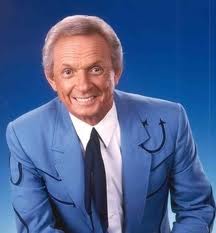
100 Greatest Men: #33. Mel Tillis

Sunday, August 19th, 2012

100 Greatest Men: The Complete List

A comedic flair, a speech impediment, and a famous daughter have often overshadowed the fact that Mel Tillis is one of the finest songwriters and performers in the history of country music.

Tillis hailed from Tampa, Florida, and he discovered music at a young age, playing guitar and singing songs at local talent shows.  Though he had a severe stutter from age three, the impediment disappeared when he sang.  Tillis entered the military, and while stationed in Japan, formed a band called the Westerners.  Once back stateside, he moved to Nashville to jump-start his songwriting career, alternating between Tennessee and Florida until the hits started coming in.

From 1957 to the end of the sixties, Tillis would record for major labels and score a handful of hits, but he had a far bigger impact as a songwriter.  He wrote hits that are now standards, recorded by legends like Webb Pierce (“I Ain’t Never, “No Love Have I”), Bobby Bare (“Detroit City”), Ray Price (“Heart Over Mind”, “Burning Memories”) and Kenny Rogers and the First Edition (“Ruby, Don’t Take Your Love to Town.”)

However, once the seventies arrived, Tillis became a major presence on country radio, scoring dozens of hits, many of which were his own recordings of his compositions that had been hits for other artists in the sixties.   In 1976, he was named CMA’s Entertainer of the Year, the same year he was inducted into the Nashville Songwriters Hall of Fame.  Tillis’ comedic talents made him an in-demand performer, and he was a fixture on both network and syndicated television shows during the peak years of his career.   He also appeared in several movies, with Smokey and the Bandit II and Cannonball Run being the most successful.

As with many of his contemporaries, the hits slowed down in the eighties, even though other artists continued to score hits with his material, most notably Ricky Skaggs’ chart-topping  recording of “Honey (Open That Door)” in 1984.   He purchased radio stations that he later sold for a big profit, and he became one of the most popular draws in Branson, Missouri, where his theater was a cornerstone for tourist entertainment.

In recent years, Tillis has frequently collaborated with his daughter Pam Tillis, making appearances on her albums and co-headlining a popular Christmas show at Opryland.   Tillis was inducted into the Grand Ole Opry in 2007, and elected to the Country Music Hall of Fame that same year.  In 2010, he released his first comedy album, You Ain’t Gonna Believe This…, on Show Dog Records.

Essential Singles:

  • Heart Over Mind, 1970
  • I Ain’t Never, 1972
  • Good Woman Blues, 1976
  • Heart Healer, 1977
  • I Believe in You, 1978
  • Send Me Down to Tuscon, 1979
  • Coca Cola Cowboy, 1979
  • Southern Rains, 1980

Essential Albums:

  • Life’s That Way, 1967
  • Sawmill, 1973
  • M-M-Mel, 1975
  • Love Revival, 1976
  • Heart Healer, 1977
  • Mr. Entertainer, 1979
  • Your Body is an Outlaw, 1980

Next: #32. ?

Previous: #34. Charlie Rich

100 Greatest Men: The Complete List

Age Ain’t Nothin’ But a Number

Monday, November 9th, 2009

george-strait1While Taylor Swift mania continues to grow, there’s another impressive accomplishment being achieved by two veterans of country music on the opposite end of the age spectrum.

Contrary to what is commonly believed, there has always been a ceiling on how old you could be and still get country airplay. This year, both George Strait and Reba McEntire have been working steadily to shatter that ceiling.

Take a look at the age of country legends when they earned their most recent top ten solo hit:

  1. Eddy Arnold, 62
  2. Kenny Rogers, 61*
  3. Conway Twitty, 58
  4. George Strait, 57
  5. George Jones, 57**
  6. Marty Robbins, 57
  7. Willie Nelson, 56**
  8. Ray Price, 56
  9. Reba McEntire, 54
  10. Waylon Jennings, 53
  11. Merle Haggard, 52
  12. Alan Jackson, 50
  13. Charley Pride, 50
  14. Johnny Cash, 49
  15. Ernest Tubb, 49
  16. Ronnie Milsap, 48
  17. Loretta Lynn, 47
  18. Webb Pierce, 46
  19. Garth Brooks, 45
  20. Dolly Parton, 43**
  21. Hank Williams Jr., 41
  22. Tammy Wynette, 40

* Kenny Rogers was the lead singer for his final top ten hit “Buy Me a Rose”, with harmony vocalists Billy Dean and Alison Krauss credited on the single

** George Jones, Willie Nelson, and Dolly Parton returned to the top ten in later years through duets with younger artists

It’s also worth noting that Alan Jackson, at 50, isn’t too far away from passing several legends on the list.

So George Strait remains in heavy rotation at the age of 57, outpacing all but three stars in country music history. Among the ladies, McEntire is a full seven years older than her nearest competitor Loretta Lynn was when she enjoyed her last top ten hit.

Thoughts?

Traditional Country is a Link in a Long Chain

Tuesday, June 30th, 2009

The following is a guest contribution from Scott O’Brien.

“But someone killed tradition. And for that someone should hang.” –Larry Cordle & Larry Shell, “Murder on Music Row”

Dan Milliken’s recent post got me thinking: The country music I grew up with is nothing like the music on country radio today. If I turned on today’s country radio in 1988, I might not realize it was a country station and keep right on flipping. Back then, Randy Travis and Keith Whitley’s traditional twang ruled the airwaves. Today, they are dominated by the giggly teeny-bopper ditties of Taylor Swift and the boy band sounds of Rascal Flatts. Did they get away with murder on music row? Well, let’s start by briefly uncovering country’s traditional roots.

What is traditional country music? Is it simply anything from the past? That seems too broad; Shania Twain wasn’t traditional. Anything that isn’t pop? Maybe, but that is still a rather wide and subjective net. To me, traditional country music is honky tonk music. It heavily employs steel guitars, fiddles, and forlorn vocals. It moves at a slow pace. There are no drums or electric guitars. The songs typically deal with heavy topics such as heartbreak, cheating, or drinking, with a ballad here and there. In most cases, the goal is to induce pain. Not bad pain, but the therapeutic empathy that tugs your heart and helps you through your personal struggles. The patron saint of traditional country is Hank Williams. Hank’s first disciple is George Jones. Jones’ first disciple is Alan Jackson. The traditional template is supposed to help us decipher what is country and what is not. After all, what makes country music country if not fiddles and cheatin’ songs?

These days, traditionalists have a legitimate beef. When you turn on the radio, you don’t hear much steel guitar. Instead, you hear what might pass for 1990s pop, replete with fluffy repetitive lyrics, catchy drum beats, guitar riffs, and sex appeal. We aren’t preserving country music when the CMT Music Awards feature the B-52s and Def Leppard in lieu of John Anderson and Charley Pride. Was there a tribute to recently deceased traditionalist Vern Gosdin? No way. Do today’s artists “tear your heart out when they sing”? Not a chance. Is Keith Urban going to fill Conway Twitty’s shoes? Not a prayer. You know we are in trouble when pop-infused zipwire-flier Garth Brooks sounds more like Merle Haggard than today’s stars. Heck, just listen to Taylor Swift’s latest album. If that is country, I’ll kiss your ass. Nashville, we have a problem.

But let’s not go off the deep end just yet. Maybe traditionalists are thinking about things too narrowly. Country music is much more than Webb Pierce’s raw steel guitar-laden crooning. It always has been. Going back before Hank to the First Family of Country Music, the Carter family sound was an amalgam of several different sub-genres including Appalachian old-time, folk, and gospel. Jimmie Rodgers, the Father of Country Music, blended elements of jazz, gospel, old-time and blues to create some of the first country sounds. Marty Robbins played just about every musical style conceivable. Traditionalist hero Elvis Presley sang rockabilly. Johnny Cash had similar beginnings and even years later there was nothing “traditional” about his trademark up-tempo bass beat. Waylon Jennings’ music incorporated Buddy Holly’s rock-n-roll rhythm; he even wrote a song about how un-Hank-like his music was. Merle Haggard’s Bob Wills-inspired Bakersfield sound used amps and electric guitars. Even 1980s ACM Artist of the Decade Alabama shunned the steel guitar altogether and typically sang up-tempo, feel-good music. Yet these names are among the most venerated by traditionalists. What gives?

The problem is that traditionalists aren’t even sure what traditional country is. If it includes all artists who sold country records without crossing over to pop, the label is not very helpful. If it is strictly honky tonk, do we really want a bunch of Hank Williams clones? As great as he was, we surely do not. There has to be some updating – just ask Alan Jackson, who has innovated the traditionalist motif without sacrificing his authenticity. The genre has to evolve or it risks becoming boring and repetitive. Waylon Jennings understood this well (“It’s the same old tune, fiddle and guitar/Where do we take it from here?”). Hank Williams’ own son realized it too after trying for years to replicate his father’s sound. His song “Young Country” directly attacked the tradition-or-else mentality: “We like some of the old stuff/We like some of the new/But we do our own choosing/We pick our own music/If you don’t mind, thank you.” He is right. Why draw lines? Strict uniformity is not desirable in any genre, particularly country, whose trademark is its diversity of influences, instruments, rhythms, voices, song topics, and stories.

So what should define today’s country music? It should pay tribute to the past by incorporating and updating its unique fusion of diverse influences. It doesn’t have to be strictly “traditional.” But country music needs to capture the sentiments of rural and working class America. It needs to cover painful topics like drinking and cheating. It needs to tell colorful stories. It needs to tear your heart out sometimes. It also needs to make you feel good sometimes. What it shouldn’t do is become pop music. When country is indistinguishable from Top 40, it loses its soul. Unfortunately, this has happened with the Keith Urbans, Rascal Flatts, and Taylor Swifts – all talented artists to be sure. But country artists? Not so much. Still, there are old warhorses like George Strait who carry the torch and newcomers like Jamey Johnson who give us hope that country’s soul will stay alive and well.

Webb Pierce, “There Stands the Glass”

Sunday, August 24th, 2008

There Stands the Glass
Webb Pierce
1953

Writt

en by Audrey Grisham, Russ Hull & Mary Shurtz

He was the top country artist of the 1950s, spending 113 weeks at No. 1 that decade. As a cast member of the Louisiana Hayride and the Grand Ole Opry, he was heard on radio stations coast to coast. Throw in his larger-than-life persona and appearances in Hollywood films, and you’ll reach an inescapable conclusion: Webb Pierce was country music, its most visible and successful performer for the better part of a decade.

Which makes his current obscurity all the more tragic. While his contemporaries like Hank Williams, Johnny Cash, Marty Robbins and Eddy Arnold have been lionized by history, Pierce has been nearly forgotten, despite the fact that his talent and contributions to the development of country music as a popular art form were immeasurable. Fans dedicated to discovering country music’s roots cannot do so without discovering Webb Pierce. When they’re ready to do so, they should start with “There Stands the Glass.”

The record opens with a pure hillbilly wail that contemporary country fans will instantly recognize as an influence on the vocal styles of Dwight Yoakam and Patty Loveless. Pierce is staring at the drink that he’s ready to down, the one “that will ease all my pain, that will settle my brain.” It’s a stunningly vulnerable admission of how he’ll be using alcohol tonight to “hide all my tears” and “drown all my fears.”

But the listener learns quickly that Pierce’s confidence is not quite what it seems, as that opening wail foreshadowed at the beginning of the song. He’s wondering where the woman who left him is, and if she’s thinking of him in his misery. As he repeats the line “it’s my first one today” – not even tonight, mind you – it’s clear that there will be many more, and that this routine is nothing new.

The song was banned by some radio stations for promoting the consumption of liquor, but it’s a half-hearted endorsement at best. There’s a sense in Pierce’s performance that he’s doing this because he has to, not because he wants to, and that perhaps his taste for the drink is the greater obstacle between him and happiness. As Homer Simpson famously said, “To alcohol: The cause of – and solution to – all of life’s problems.” Webb’s desperate barfly would certainly agree.

“There Stands the Glass” is the the latest in a series of articles showcasing Classic Country Singles. You can read previous entries at the Classic Country Singles page.

Writers

Latest Comments

Most Popular

Worth Reading

View Older Posts