Archive for January, 2012

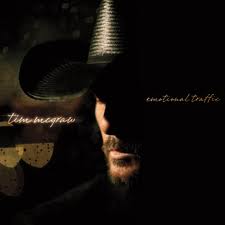
Album Review: Tim McGraw, Emotional Traffic

Tuesday, January 31st, 2012

Tim McGraw
Emotional Traffic

If you had a friend who was a tightrope walker, and you were walking down a sidewalk, and he fell, that would be completely unacceptable. – Mitch Hedberg

~~~

Emotional Traffic is a collection of poor choices.

First and foremost, the material is shockingly weak.  Yes, McGraw has been slowly slipping over the last couple of albums, but the bottom has completely fallen out here.

Take a song like “Right Back Atcha Babe”, for example.  It’s a hodgepodge of little details in the same vein as “Something Like That,” but none of them are believable.  And why are they having the conversation anyway? It’s not like they’ve suddenly run into each other after a really long time.  Why is he recapping the events like he’s got to get her caught up before this week’s episode?

“One Part, Two Part” and “I Will Not Fall Down” are Nashville songwriting at its laziest.   They’re not even songs so much as they’re song titles.   It’s all packaging and no product.

The album is polluted with that bizarre inversion of modern country music:  The less a song has to say, the longer it takes to say it.   Songs go on forever on this album.  The bloated opener, “Halo”, doesn’t contain a single intelligible moment, despite five minutes of trying.   “Touchdown Jesus” is a ridiculous concept to begin with, and could’ve made its point in two minutes instead of four, had McGraw had the good taste to cover Bobby Bare’s “Dropkick Me, Jesus” instead.

Look, you know you’re in trouble when nine tracks in, it’s a relief to hear “Felt Good On My Lips.”  Sure, the melody’s so blatantly derivative of “Video Killed the Radio Star”  that it makes Lady Gaga sound fresh and original.   But at least it has a pulse, even if I’m still bewildered by the Incredible Machinery of it all.

And to be fair, there are some decent moments scattered throughout, like “Better Than I Used to Be” and “Die By My Own Hand”, but it’s all ground that McGraw’s covered before, and better, too.   They’re just not worth sitting through Emotional Traffic for.

Had I not committed to writing this review, I don’t know that I would’ve listened to this album at all, certainly not for a second and third time.  This level of work from this level of talent is nothing short of completely unacceptable.


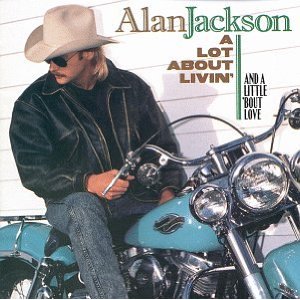
Retro Single Review: Alan Jackson, “Tonight I Climbed the Wall”

Monday, January 30th, 2012

1993 | Peak: #4

There really isn’t anything much more sad or upsetting in a relationship than cold, awkward silence. Things left unsaid or the silence after things that shouldn’t have been said can create what seems like an impenetrable, cold wall.

In his twelfth single, Alan Jackson expertly captures the forlornness of being in just such a situation. With crying steel and mournful vocals, “Tonight I Climbed the Wall” sounds like a perfect country song. Except, there’s a happy ending where, in the end, humility saves the day and the wall of silence is climbed. Ultimately, a song that manages to be both mournful and hopeful makes for an even more perfect country song.

Peaking at #4, “Tonight I Climbed the Wall” may not be one of Jackson’s signature hits, but its quality makes it one of his best.

Written by Alan Jackson

Grade: A

Next: Chattahoochee

Previous: She’s Got the Rhythm (and I Got the Blues)

Single Review: Eric Church, “Springsteen”
Sunday, January 29th, 2012

You already know that feeling.

One Sunday afternoon you go about rummaging through your attic, looking for items to donate to a local rescue mission…..and suddenly you find yourself re-acquainted with a bedroom poster depicting your favorite artist growing up, lightly caked in dust. At that very moment you let out a bittersweet sigh, and fondly stare into space as you reminisce of an early flame that came and went in your life, while that artist contributes the soundtrack to your saudade.

Which brings us to “Springsteen”: the third single from Eric Church’s breakout album Chief and follow-up to his first-ever chart-topping single “Drink In My Hand”.

Predictably, the track is another in a growing line of songs that purposefully references the name of another established artist or hit song (such as “Tim McGraw” and “All Summer Long”) for the purpose of reminiscing on a treasured memory, and is also heavy on references to some of the most definitive hits of that artist’s career (i.e. “I’m On Fire”, “Born to Run”, “Glory Days”, “Born in the USA”). On the surface, it appears little worth examining.

I invite you to gaze a little deeper.

“Springsteen” is every bit as semi-melancholy as it is a fond glimpse back at the past, with a gravity of shimmering sadness driving its production that is most closely tied to the Boss’s 1987 tortured-heart testimonial “Tunnel of Love”. Steered by a drum machine, and besprinkled with misty-eyed synthesizers and chatoyant glints of keyboard, “Springsteen” is without question far-removed from decidedly country soundscapes, but more resembles the sound of one of the Boss’s lesser-known releases, “Tougher Than The Rest”, albeit softer around the edges.

Church also channels Springsteen’s spoken-word style of singing here, with an understated, pensive and reflective vocal delivery in the verses that leaves you believing he is re-evaluating his slate of memory as he is speaking. The first verse, which sets the scene in reminiscing on a now seemingly distant world “somewhere between that setting sun, ‘I’m on Fire’ and ‘Born to Run’”, poignantly ends with the last line: “I can still hear the sound of you sayin’ don’t go…

After a decidedly carefree, warm first verse overall, this last line before the first chorus sets the stage to the remaining direction of the track. Church sings the first chorus as though, upon looking back on the amplitude of the memory and suddenly feeling the sting of saudade, he feels the impetus to belt off his chest exactly what he sees in his mind’s eye when he thinks of that former flame: a seventeen-year old self gazing at the stars on a July Saturday night.

The second verse begins with an equal sort of urgency, where he croons:

*

“I bumped into you by happenstance,
you probably wouldn’t even know who I am,
but if I whispered your name,
I bet there’d still be a spark…”

*

He goes on to suggest that he used to be gasoline, admitting that those were the “glory days” and, thus, nothing he has experienced since then has quite compared to them. That doesn’t necessarily suggest or prove, straight up, that the protagonist is unhappy in the present by any stretch. But I do find it telling that he’d use the metaphor of “gasoline” within the second verse, as though he is admitting there’s a sort of vitality which that memory is teeming to the brim with that he has never quite been able to replicate……going so far as to wonder if, perhaps, there’s still time to give it another shot with her. That is, if she still thinks of him.

Does she still fondly regard him? There is slight reason to believe she does, as evinced in the coda, where Church’s propulsive “Whoa whoa, oh oh oh!” softly evokes a call-and-response effect, mimicked by an unknown female voice. Is the voice indeed that of his former lover? Or is it the murmuring of a muse? It could well be interpreted as either.

These emotionally ambiguous nuances, and the burst-of-sunlight-piercing-through-the-clouds production, are what elevate what could otherwise have been a paint-by-numbers ode to young love to a whole other level. You can practically imagine Church standing there outside her house on a Saturday night, holding onto the faintest hope she’s been watching him too as she’s dressed up in blue……….praying she’ll say yes to another dance. And you’re rooting for a happy ending, yet also feel a chill going up your spine fearing his effort will be met in vain: finding his star-crossed self pacing one step forward, two steps back.

“Springsteen” is a gorgeous, bittersweet anthem-to-be that will likely leave even some more hardened hearts simultaneously smile and cry listening. As Church’s best single to date, it will all but certainly take his career to the next level, even as he’s already selling out venues left and right at the dawn of his “Blood, Sweat & Beers” tour as we speak.

Come on, Eric. There’s no foolin’ us that you’re any more tougher than the rest of us, behind that brilliant discount shaded disguise. Lift them up from over your eyes and show us your tears. Atta boy, Chief!

Written by Eric Church, Jeff Hyde, and Ryan Tyndell

Grade: A-

2012 ACM Nominations

Friday, January 27th, 2012

The nominations have been announced for the 2012 Academy of Country Music Awards.

Kenny Chesney leads with nine nominations.   Jason Aldean, Lady Antebellum, and Brad Paisley follow.

Check out the entire list of nominees here.
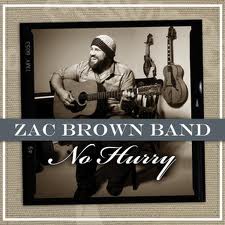
Single Review: Zac Brown Band, “No Hurry”

Thursday, January 26th, 2012

Via Facebook’s “Share” feature, you have probably bumped into a satirical motivational poster by now with this text:

PROCRASTINATION: “Hard Work Often Pays Off After Time, But Laziness Always Pays Off Now.”

On paper, this certainly shows with regard to the newly-released fifth single, “No Hurry”, from the industrious Zac Brown Band’s current album You Get What You Give: vying to tie Rodney Crowell’s record for most Billboard Hot Country Song #1 hits from a single album.

As you could indubitably guess from the title alone, this song depicts a passive protagonist whittling the day away and basking in faineancy without a care in the world. Lyrically, it regurgitates all-too-familiar images associated with relaxed, simple living. Old cane fishing pole? Check! Fold-up easy chair? Check! Hiding out from the “bossman”? Gotta have that, right?

It also follows an all-too-familiar narrative arc, where the first two verses are concerned with personal details, while the third and final verse moves onto more universal ruminations with regards to life and death (“Heaven knows that I ain’t perfect, I’ve raised a little cain. And I plan to raise a whole lot more, before I hear those angels sing…”)……..and feels the need to obligatorily exclaim “Gonna get right with the lord!” immediately after so not to, you know, displease the Focus On The Family types.

From the band that has already given us “Knee Deep” this time around, it sounds, straight-up, consonant to the band’s strengths. Who can go wrong with a harmless ditty that would probably make for a fine official anthem in observance of the Day After New Year’s Day, and the inevitable plentitude of nullified resolutions that appear in its wake?

So, lyrics aside………why does the band sound like it’s trying too hard here?

Ironically, Brown sounds as though he’s trying to give it his all vocally. By the time we reach the climatic final verse, he actually sounds like he’s rehearsing for a Bud Light “Real Men of Genius” television advertisement promo as opposed to singing an ode to quiet living (imagine that…….Zac Brown saluting Mister Croup-Preventing Skullcap Weaver………if not Mister Sweet Tea, Pecan Pie & Homemade Wine Fixer-Upper! ;) )

He certainly doesn’t sound laid-back by that point. He sounds like he’s starting to run a cold sweat. Which underscores the main reason I can’t seem to connect with this. The band actually makes procrastination sound……….dare I say it…………not any fun at all. Even funereal.

Jimmy De Martini provides another hearty helping of fiddle here that nevertheless only reinforces this lasting impression that the effort would sound better fitted to a late-autumn dirge than to the scents of early spring. Come on, fellas, you assured me before the only thing I ought to fear is if the tide is going to reach this easy chair!

Then again, as far as we know, perhaps that is the point. After all, “No Hurry”, punctuated by mournful fiddle throughout, may not be so much about celebrating procrastination than, from a more practical standpoint, accepting that we’d be fools not to worry about everything we can’t change in a more philosophical sense…….or else, in doing so, we would be fated to the tagline of another satirical, grimmer motivational poster on the issue of procrastination, depicting a dying goldfish in a dirty bowl:

PROCRASTINATION: “It’s, Hands-Down, Our Favorite Form Of Self-Sabotage”

Either way you skin it, “No Hurry” is a time-waster in that it fails to inspire either a rousing or reflective quality…….resulting in their weakest of ten singles to date. In spite of that, expect this to quite likely make history in making the Zac Brown Band the first group in the history of country music to produce five Billboard Hot Country Song #1s from a single album.

See, what did I tell you? Laziness Always Pays Off Now! Even for a band whose work ethic and rise to stardom has been anything BUT slothful.

Written by Zac Brown, Wyatt Durette, and James Otto

Grade: C

Listen: No Hurry

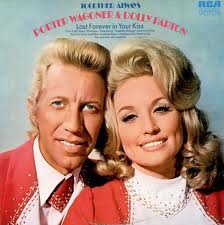
Retro Single Review: Porter Wagoner & Dolly Parton, “Together Always”
Wednesday, January 25th, 2012

1972 | #14

It’s another Porter and Dolly love song, and such do tend to be less memorable then their heartbreak songs and bickering-couple songs.  The chorus of “Together Always” is rather blank lyrically, but it’s lifted to a higher level by Parton’s spirited performance.  The lilting melody and light piano-driven arrangement lend a subtly infectious, joyful sound to the record.

It’s not one of the biggest or best hits by the Parton-Wagoner duo, but the tasteful sonic packaging make “Together Always” enjoyable, if nonessential.

Written by Dolly Parton

Grade:  B

Next:  My Tennessee Mountain Home

Previous:  Washday Blues

Album Review: Kellie Pickler, 100 Proof

Tuesday, January 24th, 2012


Kellie Pickler
100 Proof

From early on, it was announced that Pickler’s third album would more closely reflect the sound of the traditional country music that is closest to her heart, with Pickler claiming to have made the album “as country as I was allowed to make it.”  The bouncy steel guitars chords of opening track “Where’s Tammy Wynette,” and opening lyrics “While I’m torn between killin’ him and lovin’ him/ He stays torn between neon lights and home” quickly announce that Pickler is not kidding.

Does that mean that the album is a retro effort?  Not necessarily.  Rather, Pickler and her producers Frank Liddell and Luke Wooten effectively craft a sound that gives a respectful nod to country music’s past while simultaneously making tasteful use of modern sounds.  Thus, the album carries a strong traditionalist bent, but sounds vintage without sounding dated, demonstrating that it is indeed possible to create a fresh and modern contemporary country album while still maintaining a strong connection to the traditions of the past.

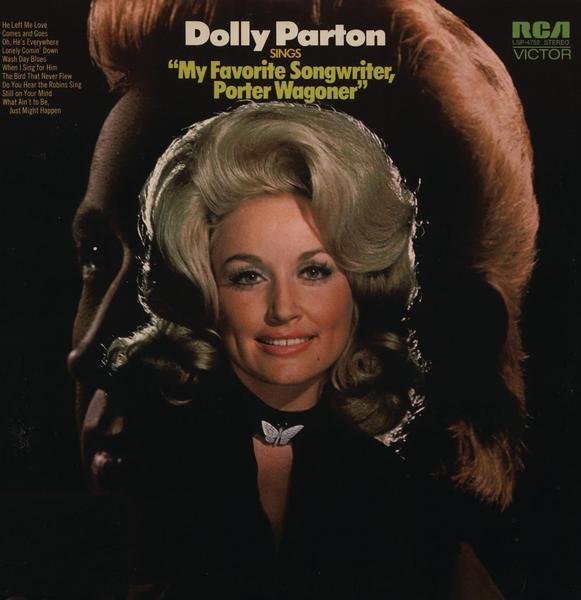
Ultimately, what really makes the album work is the fact that Pickler sounds at home and in her element throughout.  Though her technical vocal abilities are rather limited, the song selections and stylings of this album serve her well, highlighting her strengths as an interpretive singer.  Pickler herself takes writing credits on six tracks, collaborating with songwriting talents such as Dean Dillon and Leslie Satcher.  While she opts for softly wistful vocal takes on ballads such as “Long As I Never See You Again” and “Turn On the Radio and Dance,” she throws herself into the groove of “Unlock That Honky Tonk” with a loose, infectious energy.  “Rockaway (The Rockin’ Chair Song)” is just a simple charming delight of a song, with a lightly catchy melody that lingers in the head long after the song has ended.  Pickler longlingly sings “Don’t stop rockin’ with me, baby” while soft, airy fiddles lend the song a pleasant breezy feel.

While “Where’s Tammy Wynette” is unfortunately tainted by association with the ill-advised name-dropping craze, it’s actually a surprisingly decent song in which a wronged housewife looks to the honky tonk heartbreak queens of the past for advice and inspiration.  Like the 2008 Heidi Newfield hit “Johnny and June,” Pickler’s “Tammy Wynette” manages to reference a legend in a way that feels genuinly reverent and fleshed-out instead of superficial.  Even better is the straight-to-the-point “Stop Cheatin’ On Me” which has lyrics that sound thematically reminiscient of Loretta Lynn’s “You’ve Just Stepped In (From Stepping Out On Me)”  The female narrator counteracts her man’s philandering ways by threatening to repay in kind, while the song is backed by a steel-laden arrangement steeped in country tradition, the likes of which are rarely heard on country radio these days.

There are moments when the formula hits weak points.  Lead single “Tough” was written by Leslie Satcher, and was written for and about Pickler, supposedly inspired by her troubled childhood – an approach that is reflected in the song’s accompanying music video.  Unfortunately, it’s a bit too obvious that the song was written, not by Pickler herself, but by a co-writer (Leslie Satcher) who did not have Pickler’s firsthand experience, as the lyrics ring hollow for want of detail.  To her credit, Pickler sings it with gusto, and her producers dress it up with plenty of fiddle and banjo, making for a song that is sonically engaging but lyrically uninspiring.  Similarly, the production and vocal elevate the not-particularly-interesting road song “Little House On the Highway” to a degree, though it still ranks as one of the album’s more forgettable cuts.  The only instance in which production becomes an issue is in the overdramatic bridge on the title track, which culminates in an intrusive guitar solo.

Pickler shines brightest when she gets personal.  Drawing on her troubled childhood, she addresses both of her parents in songs with the tracks “Mother’s Day” and “The Letter (To Daddy).”  The former, written by Pickler with husband Kyle Jacobs, connects solidly by isolating a specific childhood experience that many listeners can relate to – buying a Mother’s Day card, having a photo taken with one’s mother – with Pickler expressing how she wishes she could have experienced such things for herself.  Though both songs mourn the heartaches of the past, they also cast a hopeful eye toward the future.  “Mother’s Day” finds Pickler vowing to be the mother she never had, should she ever have a child of her own, while “The Letter” concludes with Pickler determining to “make up for lost time” with her estranged father.  Best of all, both tracks utilize sparse acoustic production, allowing Pickler to connect deeply with some of her most beatifully restrained and compelling vocal performances to date.

All in all, there is much that 100 Proof gets right.  By placing Pickler in the musical environment that suits her best, and giving her a strong batch of song material, 100 Proof demonstrates that Pickler’s potential is significantly greater than her previous efforts suggested.  Without a doubt, 100 Proof is Pickler’s strongest album to date, and likely one of the better mainstream releases we’ll hear this year.

Single Review: Alan Jackson, “So You Don’t Have to Love Me Anymore”

Monday, January 23rd, 2012

I guess that the best way to remind us that Alan Jackson hasn’t put out a great song in a long time is for him to put out a great song.

A deeply moving spin on the same concept that anchors “Blame it On Me”,  “So You Don’t Have to Love Me Anymore” is the story of a man who loves the woman leaving him so much, he’s even willing to say she left him so she can save face.

As with many great country songs, the devil is in the details.  All of the direct consequences of a relationship’s end are explored, and as they get more mundane, the song becomes more powerful.   In great country music, reality always trumps fantasy.

I fear that Jackson’s remarkable run at radio may have already drawn to a close, but if there’s any justice, this will reignite his presence on the radio dial.  His new release ranks among his best work, and given that he’s one of the genre’s all time greats, that’s heady company for it to be in.

Written by Jay Knowles and Adam Wright

Grade: A

Listen: So You Don’t Have to Love Me Anymore

Retro Single Review: Dolly Parton, “Washday Blues”

Monday, January 23rd, 2012

1972 | Peak: #20

This is just plum terrible.

Loretta Lynn might’ve been able to make something useful out of it, a dime store take-off of “One’s On the Way” or something.

But there’s nothing domesticated about Dolly Parton.  Amazing how she’s much more believable as a lady of ill repute or a runaway teen than she is as a housewife.

It just doesn’t fit.

Written by Porter Wagoner

Grade: D

Next: Together Always (with Porter Wagoner)

Previous: Lost Forever in Your Kiss (with Porter Wagoner)

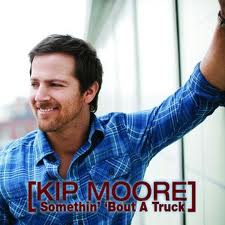
Single Review: Kip Moore, “Somethin’ ‘Bout a Truck”

Sunday, January 22nd, 2012

Two singles isn’t a lot of information to go by, but a couple of things about Kip Moore are becoming clear.

First, he really is about as country as Bruce Springsteen. That’s a compliment.  Springsteen’s working class ethos has more in common with country music greats of days gone by than anybody on the country radio dial today.

Second, Moore sings with equal parts of authority, sincerity, and conviction.   That’s what made “Mary Was the Marrying Kind” heartbreaking, and what makes “Somethin’ ‘Bout a Truck” invigorating.

Sure, it’s a laundry list of the small town lifestyle, and we’ve had more than enough of those lately.  But Moore doesn’t sound like he’s pandering.

No, if anything, he sounds like he’s reveling in the pleasures that await him at the end of the week after forty hours at the factory.   That’s a welcome change from those who sound like high schoolers who hit up that back country road on their way home from the mall.

Kip Moore is good.

Grade:  B+

Listen:  Somethin’ ‘Bout a Truck

Writers

Follow CU

Latest Comments

Most Popular

Worth Reading

View Older Posts