

Lorrie Morgan Starter Kit
 Amidst her generation of successful female country artists, Lorrie Morgan was the only one who was clearly from the tradition of heartbreak queen Tammy Wynette, with a healthy dose of Jeannie Seely in the mix. With her contemporaries far more shaped by the work of Linda Ronstadt and Emmylou Harris, Morgan was instrumental in keeping the sound of female country from the sixties still relevant in the nineties.
While Morgan never earned the critical acclaim or industry accolades of peers like Patty Loveless and Pam Tillis, she was immensely popular with country fans, able to sell gold with albums that radio largely ignored. She was the first female country artist to have her first three studio albums go platinum, with three additional albums going gold and a hits collection selling double platinum.
Many of Morgan’s best recordings were never sent to radio, and those interested in discovering her in depth should seek out her finest studio albums, Greater Need and Show Me How.
But her singles were pretty good too, with these being the most essential.
Ten Essential Tracks:
“Dear Me”
from the 1989 album Leave the Light On
This song broke through just as news of the death of Keith Whitley, Morgan’s husband, became known. She was unfairly accused of capitalizing on his death with this release, as people both misinterpreted the song’s meaning and apparently ignored the fact that it had gone to radio weeks before his death.
 Recently, while listening to Kathy Mattea’s Coal, I realized that, perhaps, the most important aspect to creating a themed play list was the ability to find some obscure songs to include with all those well-known classics. While Merle Travis’s “Dark as a Dungeon” as performed at Folsom Prison by Johnny Cash and Darrell Scott’s “You’ll Never Leave Harlan Alive” as performed by Patty Loveless are two of my personal favorite coal miner songs—they are already in heavy rotation on several of my play lists and are drawn from albums I listen to regularly.
 One of Country music’s most respected female artists, Reba McEntire, has had an expansive career that has spanned three decades. Those who have assessed McEntire’s longevity have rightly concluded that she has reinvented herself several times within her long career to adapt to the ever changing climate of country music.
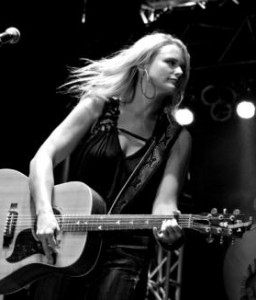 I think someone’s in a little songwriting funk. The #37-stalled “Dead Flowers” had intriguing lyrics but a generally bland sound; this one has the inverse problem. The melody and production are reminiscent of Little Big Town’s best rustic country-rock, and there’s a much more commanding hook here than “Dead Flowers” had, but the effort is compromised by throwaway lines like the chorus’ closing “And I don’t know why, white liar.” Don’t know why what, MirLam?
  The first week of Back to the Nineties will wind down with women who have something in common. Each one is the daughter of a legendary country star that struggled to break through during the late seventies and most of the eighties, then became commercially successful throughout the nineties.