Sunny Sweeney’s 2007 debut album was fantastic, but too raw and twangy for country radio to touch it with a ten-foot pole. Thus, Heartbreaker’s Hall of Fame produced no charting singles. Sweeney re-emerged in 2010 with “From a Table Away,” a single that took on a glossier finish so as to be more radio-friendly. Still, the core country elements were uncompromised. The strategy worked, netting Sunny Sweeney the first Top 10 hit of her career. Likewise, the remainder of her sophomore album has enough polish to be palatable to country radio, but Sweeney’s traditionalist bent remains intact, as the album retains an identifiably country sound throughout (such that the “pop-country” label would be a misnomer). Concrete sounds poised to build on Sunny Sweeney’s newfound career momentum, yet it also finds an artist able to make reasonable commercial concessions without sacrificing her own identity in the process.

Mainstream country music all too often settles for one-dimensional songs about domestic bliss, summer fun, country livin’, you name it. But Sweeney takes us back to the classic themes of country music – cheating, drinking, heartbreak – and puts her own distinct and creative spin on them. This is evident in her breakout hit single “From a Table Away,” which casts Sweeney as the infamous “other woman” character in the love triangle. The song walks us through the narrator’s revelation that the married man she loves has been lying to her as much as he’s lied to his wife, and that the fantasy of having him to herself will never become reality. But it’s the similarly-themed “Amy” that ranks as arguably the album’s best track. In a confrontation between wife and mistress, Sweeney asks for forgiveness for her own actions, but also asks the wife to recognize the own role she herself has played in her husband’s course of adultery. “Amy” is a song characterized by raw, unabashed honesty, and that’s the stuff of a country music classic.
In addition to her smart, punchy songwriting, Sweeney excels in her ability to inject emotion and personality into her song lyrics. That’s evident in the excellent current single “Staying’s Worse Than Leaving,” in which she delivers opening lines “Leaving’s hard/ Trust me, it’s really bad” with the tired, weathered tone of one who’s been there – and she has been there, having drawn on her own divorce as inspiration in her songwriting. Even the most well-constructed lyric can fall flat if the performance doesn’t pop, but Sweeney gives strong, commanding performances that strike all the right emotional chords in the lyrics. Album opener “Drink Myself Single” might not stand out much from any other good-timing country drinking song if delivered by a less-capable vocalist. But Sweeney injects spite and vindictiveness into lines like “I wanna know what it’s like/ To stagger in the house like you do every night/ Sneakin’ in the bed like I don’t know the truth…” thus adding a layer of snark and bitterness to the uptempo honky-tonk tune. Similarly, her anger-ridden delivery of “Helluva Heart” elevates the tell-it-like-it-is “You done me wrong” song a significant degree above the typical kiss-off number.
There are many reasons why die-hard country music fans have grown disillusioned with the format’s current state, with the absence of country instrumentation being one. But the greater loss has been the lack of well-crafted, resonant lyrical material matched with emotionally-connective vocal performances. That’s one of the biggest reasons why country radio has become such a yawn. Country music needs more artists like Sunny Sweeney, and more so now than ever before. Sweeney demonstrates a strong connection to the country music of the past, while also showing that she has plenty to say as an artist herself. If radio holds onto to her, she would present a formidable threat of making the format interesting again. Regardless, Concrete is a rock-solid effort strong enough to withstand more than a few repeated listenings.
Give them a good hook, as in “Need You Now” or “Just a Kiss,” and they’re blandly pleasant. Take away the hook and they’re just straight bland.
I feel sad for the young people whose lives Lady A are soundtracking. This music just isn’t built to last beyond a few elevator rides, and it’s going to sap all the fun out of those kids’ nostalgia sessions.
This rocks – and, in its own way, countries – harder than anything else out there. Church navigates it with the ease of a NASCAR driver on a suburban highway, weaving and bobbing so charismatically that Luke, Blake and Dierks start to seem like uptight party-poopers by comparison. You believe him on multiple levels when he hollers that he’s “about to tear a new one in this old town.”
And yet, “Drink in My Hand” is also just a radio hit, no higher aspiration than to be a slightly cooler version of “All About Tonight.” And the secret’s out now: Church can do better. So wait a few months and check back in. In the meantime, let’s get him away from whoever approved “boss-man can shove that overtime up his can.” (Evidently, there’s such a thing as trying so hard to talk like the common man that you end up talking like no one.)
Written by Eric Church, Michael P. Heeney, Luke Laird
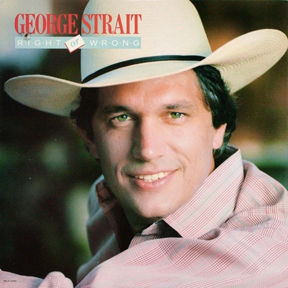
It started out as a foxtrot jazz ballad written in 1921. It become a Western Swing standard thanks to Bob Wills, and then in 1984 George Strait made it into a chart-topping country hit.
George Strait’s version retains a good helping of the Bob Wills-esque Western Swing influence, giving it a light bouncy beat and a laid-back arrangement with fiddle and steel aplenty, and an interesting mid-point instrumental break. The melody is a fine fit for Strait’s vocal style. He keeps up with the quick tempo, but without compromising the melancholy mood of the lyric. The lyric of “Right Or Wrong” taps into the vein of songs that put into words what the narrator thinks and feels, but knows better than to say, which has often been the making of a great country song.
George Strait’s version doesn’t exactly reinvent the wheel, but it’s a competent and enjoyable take that will no doubt set your toe tapping.
Written by Haven Gillespie, Arthur Sizemore, Paul Biese
It’s interesting to note the stark contrast between the uplifting “glass-half-full”-type songs Dolly often favors today with the much darker fare she often recorded in the sixties and seventies. “Daddy Come and Get Me” is one of Dolly’s most thematically distinct story-songs, telling of a woman placed in a mental institution by her cheating husband.
This record is a beautiful example of Dolly’s fine interpretive ability, particularly in performing her self-written material. She gives a beaufitul vocal performance subtly conveying the desperation of the song’s character. The real kicker is the spoken-word portion that comes halfway through the song. The emotional quiver in her voice is heartbreaking as she softly implores “Daddy… come and get me.”
A flat and emotionless rendering of this lyric would have been more of an eyebrow-raiser than a tear-jerker, but it’s Dolly’s performance that really brings the sad story to life.
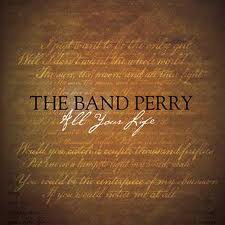
As wrong as it may be, the consistently gorgeous arrangements and Kimberly Perry’s compelling vocals almost make up for the lyrical deficiencies found on The Band Perry’s debut album. As it has been with all their singles so far, The Band Perry’s story of style being greater than substance continues with this promising group’s latest single as well.
With its acoustic based instrumentation, Kimberly’s pretty vocals and a sing-able melody, “All My Life” sounds like a typical love song on the surface. The girl isn’t asking for everything, just that the object of her obsession (check out the song’s bridge) loves her all his life. As it was with “If I Die Young”, however, the sentiment of the song makes perfect sense, but the nitty gritty of the lyrics are somewhat distorted or, perhaps, too fanciful. While there’s nothing wrong with asking if someone will love you all your life, it’s baffling how jars of sand or fireflies in a lamp delivered by someone in a tux proves anything. Grade: B
Tara Seetharam:
Not unlike the band’s previous three singles, “All Your Life” has an earthy sparkle that makes it hard to easily dismiss: it feels as earnest as a Taylor Swift song and sounds as charmingly simple as a Dixie Chicks song circa 1999. But the lyrics teeter between sleepy and trite, with Kimberly’s sprightly vocal nuances –at once natural, textured and emotive– serving as the most interesting part of the “love” story.
That is, until the vanilla turns to rocky road two and a half minutes in. Just as the piano-driven breakdown of “You Lie” is enough to keep me from switching the station, “All Your Life” delivers a sucker punch with an eerie, twisted bridge, sonically and lyrically: “You could be the centerpiece of my obsession if you would notice me at all.” In retrospect, the confession gives the rest of the song an intriguing and slightly psychotic undertone – you get the feeling Kimberly wants to follow up benign lyrics like “Would you walk to the end of the ocean just to fill my jar with sand?” with “Well, would you? WOULD YOU?”
And just like that, with a little injection of campiness, the song comes to life. Grade: B
Jonathan Keefe:
Their singles have really been all over the place, haven’t they? “Hip to My Heart” was just wretched, but “If I Die Young” was a once-in-a-career kind of hit. “You Lie” fell on the wrong side of just all right, and now “All Your Life” is a bit better than average.
The melody, especially in the refrain, is the real selling point here, and the light-handed arrangement and solid vocal harmonies help to make this one a pleasant listen. Still, a couple of nicely turned phrases in each verse aren’t enough to overcome the song’s fundamental cliches, and Kimberly Perry wanders off pitch more than a couple of times.
The bigger issue for me is that the single lacks a strong hook: “All Your Life” needed one standout line or distinctive production flourish to make it something more than just kind-of pretty. Grade: B-
Kevin John Coyne:
There are a lot of things that work about the Band Perry. I’m not hearing much of them on this particular track.
I love the bridge breakdown that recalls Nickel Creek at their trippiest, and I genuinely appreciate a country single actually sounding country.
But the lyrics and the vocal performances? Pure amateur hour. Grade: C-
Dan Milliken:
As others are noting, two things click: 1) The organic arrangement; 2) The cool bridge, which uses minor tonality better than any country single in recent memory.
Otherwise, though, it sounds like something Colbie Caillat would have written as a teenager. The case of Kimberly is a weird matter, too – certainly she’s got range, but you get a lot of ungainly pronunciations like “o-SHUH–hun.” Eh. Grade: C+
Ben Foster:
I love The Band Perry’s sound and style, as well as Kimberly’s voice, so I would definitely like to be pulling for them. The lyrics are where they tend to lose me. In this case, the deficiencies don’t come in the form of the wonky, off-beat “I oughta kill you right now and do the whole wide world a service” Band Perry kind of way. It’s just kind of blah, and a bit on the cheesy side. The bridge is more interesting, but I still don’t like how the song lets me sit through two boring verses before it makes any real attempt to engage me in the lyrics.
And yet, I still find the restrained country-bluegrassy arrangement so absorbing. While Kimberly’s vocal performance is not technically perfect, I still find it compelling and believable in its own way (and preferable to the buzzy, processed auto-tune effects that I hear on other artists’ records). Overall, the single is good enough that I’ll probably come back to listen periodically, but I would still like to see the band making greater artistic strides with their lyrics on future releases. Without a solid lyric that’s strong from start to finish, they’re still one base shy of a home run. Grade: B-
Connie Smith is hailed by many as the best vocalist in country music history, and that distinction is clearly warranted. When it comes to tone, phrasing, and vocal power, the woman has no equal. In listening to Long Line of Heartaches, her first album of new material since 1998, it would be a great understatement to say that she is still in fine voice. Her voice may have picked up a few rough edges over the years, but she still posseses more than enough vocal chops to blow today’s hitmakers out of the water.
Perhaps one of the most important characteristics setting Smith head-and-shoulders above so many current artists is her firm grasp on one of the most important truths about great country music: Sincerity comes before power. “I believe that country music is the cry of the heart,” she says in the album’s liner notes. “It spans the whole of our emotions from the ecstasy to the agony. I believe the role of a singer is not just to perform, but to communicate this heart-felt cry to the audience.”
Right from the opening steel guitar chords of the title track, Long Line of Heartaches gives unshakable authority and authenticity to the above statements. Husband Marty Stuart acts as producer for this twelve-track set, backing Smith with vintage-sounding traditional country arrangements that consistently allow her incomparable voice to be the center of attention. The sound of this record is not far removed from the music of her 60′s heyday, yet it benefits from the clarity of sophisticated modern-day recording techniques. She wringes every ounce of emotion from each song’s lyrics, bringing a weathered been-there-done-that pathos to her delivery of “Long Line of Heartaches” and “The Pain of a Broken Heart,” both co-written with Stuart (Smith shares writing credits on five of the album’s twelve tracks).
Today’s mainstream artist’s often lean toward positive uplifting material so as to be accepted by country radio, but they all too often seem to forget the fact that country music’s signature theme is heartache. On this set, however, heartache is the central theme – treated often with undercurrents of pain and regret, but sometimes tinged with hope and dawning optimism. In the beautiful “That Makes Two of Us,” written by Kostas with Patty Loveless and Emory Gordy, Jr., Smith expresses a desire to set aside past differences and to reconcile with her former lover, and seeks to find out if her feelings are requited, entreating “Don’t you think it’s time to let the healing start?”
On “Ain’t You Even Gonna Cry,” Smith is determined to walk out on an ill-fated relationship, completely self-assured of her decision, yet still taken back by the nonchalant ease with which her significant other watches her leave. In contrast, she puts on a confident air on the album standout “I’m Not Blue,” yet the lyric and performance betray the fact that she is in denial of her true feelings. (“If you think there’s teardrops in my eyes/ They’re only raindrops from the sky… The truth gets hard to say when pride stands in the way/ So just let me lie to you/ I’m not blue) In addition to these fine selections, we are treated to a well-chosen cover of the Harlan Howard/ Kostas composition “I Don’t Believe That’s How You Feel.”
Complementing the high caliber of songwriting, Smith is joined by some talented musicians on this album, including the members of her longtime backing band The Sundowners. Marty Stuart plays electric, acoustic, and hi 3rd guitars, while renowned steel player Robby Turner plays on six of the album’s tracks. As a special treat in closing, Smith’s own daughters – Jodi Seyfried, Jeanne Jaynes, and Julie Barnick – sing background vocals on the album’s final track, the spiritual ballad “Take My Hand.”
Long Line of Heartaches triumphs artistically thanks to its unerring focus on song and storytelling above all else, thus drawing on Smith’s formidable vocal prowess without exploiting it. It’s the same approach that has served Smith well throughout her Hall of Fame-worthy career. The result is an album that ranks among the best of 2011, and that effectively builds on the already well-established legacy of Connie Smith.
Those blessed dirt roads make a return once again on Jason Aldean’s latest single, sans the hick-rap this time around. “Tattoos On This Town” is a simple small-town nostalgia trip that should fit in nicely with the current trends on country radio, and no doubt supply Aldean with another chart-topping hit. It comes as a pleasant surprise, however, that this particular offering displays a notable level of creativity while largely managing to steer clear of the clichés.
A common issue that plagues many of the rural small-town songs on country radio is a failure to pinpoint specific features of one’s hometown that make it special or meaningful to the narrator (“Small Town USA” is one notable offender in this regard). “Tattoos On This Town” is different in that it highlights unique characteristics of the narrator’s hometown that bring back memories of his youth – black marks on a country road, the words “Ali, will you marry me?” painted on an overpass, and a rope burn on an old tree branch are all mentioned. The narrator notes that, while his youthful exploits have definitely left some physical marks on the town he grew up in – like “Tattoos On This Town” - he also appreciatively reflects on how such experiences have shaped him as an individual. Such specific lyrical construction supplies color to the song’s story instead of just leaving it as a vague, black and white template.
Of course, some of the typical Aldean criticisms do still apply. Yes, the production is loud, as it often is. But as it turns out, “Tattoos” succeeds due to the fact that it rises about the superficial idealization and cliché formulas that have bogged down a great deal of Aldean’s material. This is one road that Jason Aldean would do well to go down further.
Written by Neil Thrasher, Wendell Mobley, and Michael Dulaney
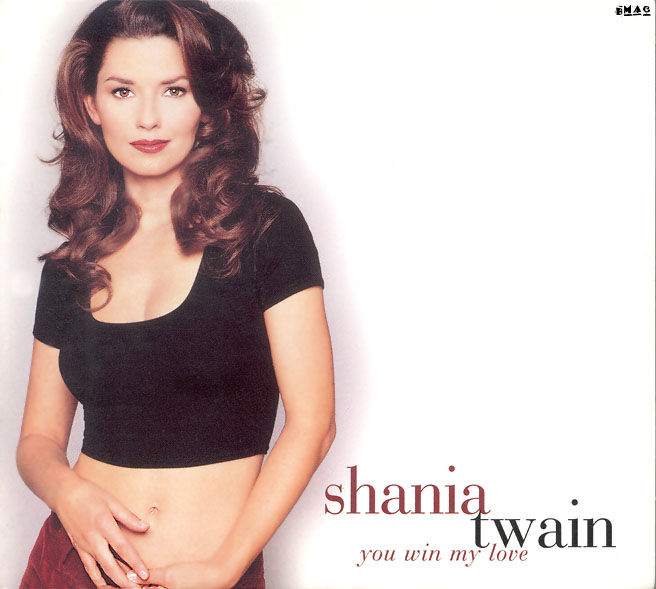
What can you say about a #1 country single with the word chassis in the first verse?
This is the only song from her last three studio albums that Twain didn’t have a hand in writing. That’s not a total surprise, as the “my love is like a car” metaphor is very “Mutt” Lange. It could’ve been recorded by Def Leppard or Bryan Adams just as easily.
But Twain’s sheer enthusiasm elevates it, and while it was easily the most pop-flavored hit from The Woman in Me, it might be a little too country for even Brad Paisley in 2011.
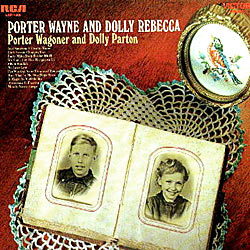
Originally a hit for George Jones as “A Girl I Used to Know”, their effective cover gave Porter & Dolly their second top five hit.
The harmonies are beautiful, and the steel guitar works wonders. You can hear Parton growing as a vocalist during the moments that Wagoner gets out of the way, and when Parton takes a back seat, it’s clear that Wagoner is in his singing prime.
The song’s become a standard, so it feels odd to nitpick over its flaws. But I have to say that what holds this record back is the questionable horn section. Thankfully, they only disrupt the song at its opening and its closing.