
Sunday Selections: June 5th, 2016
Break out the eye-drops, gang, this one’s a longread!

Break out the eye-drops, gang, this one’s a longread!

 100 Greatest Men: The Complete List
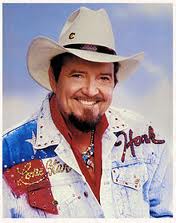
A legendary star who performed for more than sixty years, Hank Thompson stayed relevant as country music slowly moved from a regional music to a national one.
 My dad was passionate about many things, and in my memory, he’s defined by two of them: c0llecting vintage toys and loving music. Earlier today, my mother and I attended Toy Story 3. He loved the first two films, and it was a way to get closer to him in spirit this Father’s Day.
I couldn’t let this day end without using my humble little corner of the internet to celebrate some of his favorite songs. A love for country music was something that my father shared with my mother, and thanks to long car trips as child, this love eventually rubbed off on me. This morning, my mother put on the country classics Music Choice channel and it was playing their song: “Blanket on the Ground” by Billie Jo Spears.
 As with the similar CMA category of Single of the Year, looking over the history of this category is the quickest way to get a snapshot of country music in a given year. There is a quite a bt of consensus among the two organizations here, and it is very rare for the winner at one show to not at least be nominated at the other. The winners list here would make a great 2-disc set of country classics, at least for those who don’t mind a little pop in their country. The ACM definitely has more of a taste for crossover than its CMA counterpart, and the organizations have only agreed on 17 singles in the past four decades and change.
As always, we start with a look at this year’s nominees and work our way back to 1968.
2010
There’s usually a “Huh?” nominee among the ACM list in recent years. This year, it’s David Nail. Good for him! Currington hasn’t won yet for this hit, even though he got himself a Grammy nomination for it. With Lady Antebellum reaching the upper ranks of the country and pop charts with “Need You Now”, my guess is that they’re the presumptive favorites. Then again, Miranda Lambert is a nominee for the third straight year, and she’s up for her biggest radio hit.
2009
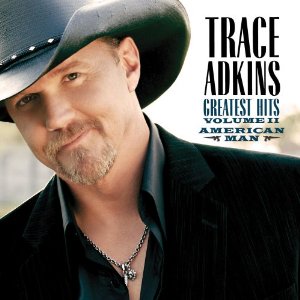
Adkins has been a fairly regular fixture on country radio since 1996, but this was his first major industry award. He also won the ACM for Top New Male Vocalist in 1997.
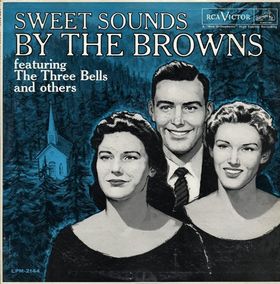 The Three Bells
The Browns
1959
Written by Dick Manning, Bert Reisfeld and Jean Villard
The structure of “The Three Bells” should be familiar to any listener of contemporary country music. A genre that prides itself on its simplicity is ambitious enough to tell an entire life story in under four minutes. It’s an approach that has created several classic singles like “Where’ve You Been” , “Time Marches On” and “How Can I Help You Say Goodbye.”
One of the most significant historical examples of this structure comes from The Browns, who had a massive crossover hit with their 1959 single “The Three Bells.” It’s a simple tale. The church bells ring three times throughout the course of Jimmy Brown’s life: on the day of his baptism, the day of his wedding, and the day of his funeral. The preacher has words of wisdom for each occasion, ones that would be familiar to any Christian churchgoer, Catholic or otherwise.
That the character shares the same name as lead singer Jim Ed Brown and takes place in a little country town might lead you to believe that this was a song of Nashville origin, but it actually began its life and its worldwide success in France as the story of Jean-François Nicot. Originally written in French, “Les Trois Cloches” was an international hit for Édith Piaf, the songstress that was recently immortalized in the film La Vie En Rose. The Browns, composed of siblings Jim Ed, Maxine, and Bonnie, had been performing the song since seeing it Les Campagnons de la Chanson performing an English-language version on the Ed Sullivan Show in 1952.
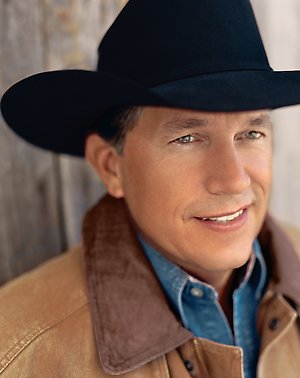 While Taylor Swift mania continues to grow, there’s another impressive accomplishment being achieved by two veterans of country music on the opposite end of the age spectrum.
Contrary to what is commonly believed, there has always been a ceiling on how old you could be and still get country airplay. This year, both George Strait and Reba McEntire have been working steadily to shatter that ceiling.
Take a look at the age of country legends when they earned their most recent top ten solo hit:
As song titles go, “Johnny Cash is Dead (And His House Burned Down)” doesn’t have quite the eloquence of “The King is Gone”, does it?
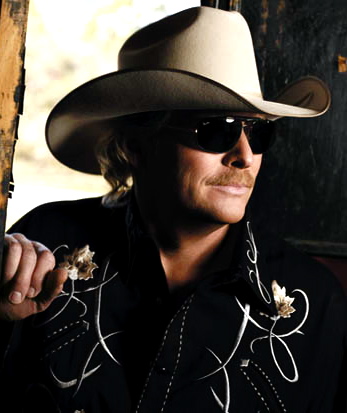
Not that subtlety would suit anything about this record anyway, which is as bluntly written and performed as you’d expect from the combination of title and artist here. Plenty of other late stars are name-dropped along the way, including Marty Robbins, Waylon Jennings, and Chet Atkins, with predictable lamenting that the “empty cowboy hats” of today can’t replace those who we’ve already lost.
The following is a guest contribution from Scott O’Brien.
“But someone killed tradition. And for that someone should hang.” –Larry Cordle & Larry Shell, “Murder on Music Row”
Dan Milliken’s recent post got me thinking: The country music I grew up with is nothing like the music on country radio today. If I turned on today’s country radio in 1988, I might not realize it was a country station and keep right on flipping. Back then, Randy Travis and Keith Whitley’s traditional twang ruled the airwaves. Today, they are dominated by the giggly teeny-bopper ditties of Taylor Swift and the boy band sounds of Rascal Flatts. Did they get away with murder on music row? Well, let’s start by briefly uncovering country’s traditional roots.
What is traditional country music? Is it simply anything from the past? That seems too broad; Shania Twain wasn’t traditional. Anything before 1990? Maybe, but that is still a rather wide net. To me, traditional country music is honky-tonk music. It heavily employs steel guitars, fiddles, and forlorn vocals. It moves at a slow pace. There are no drums or electric guitars. The songs typically deal with heavy topics such as heartbreak, cheating, or drinking, with a ballad here and there. In most cases, the goal is to induce pain. Not bad pain, but the therapeutic empathy that tugs your heart and helps you through your personal struggles. The patron saint of traditional country is Hank Williams. Hank’s first disciple is George Jones. Jones’ first disciple is Alan Jackson. The traditional template is supposed to help us decipher what is country and what is not. After all, what makes country music country if not fiddles and cheatin’ songs?
Copyright © 2024 | MH Magazine WordPress Theme by MH Themes
