

Pam Tillis has been having a moment.
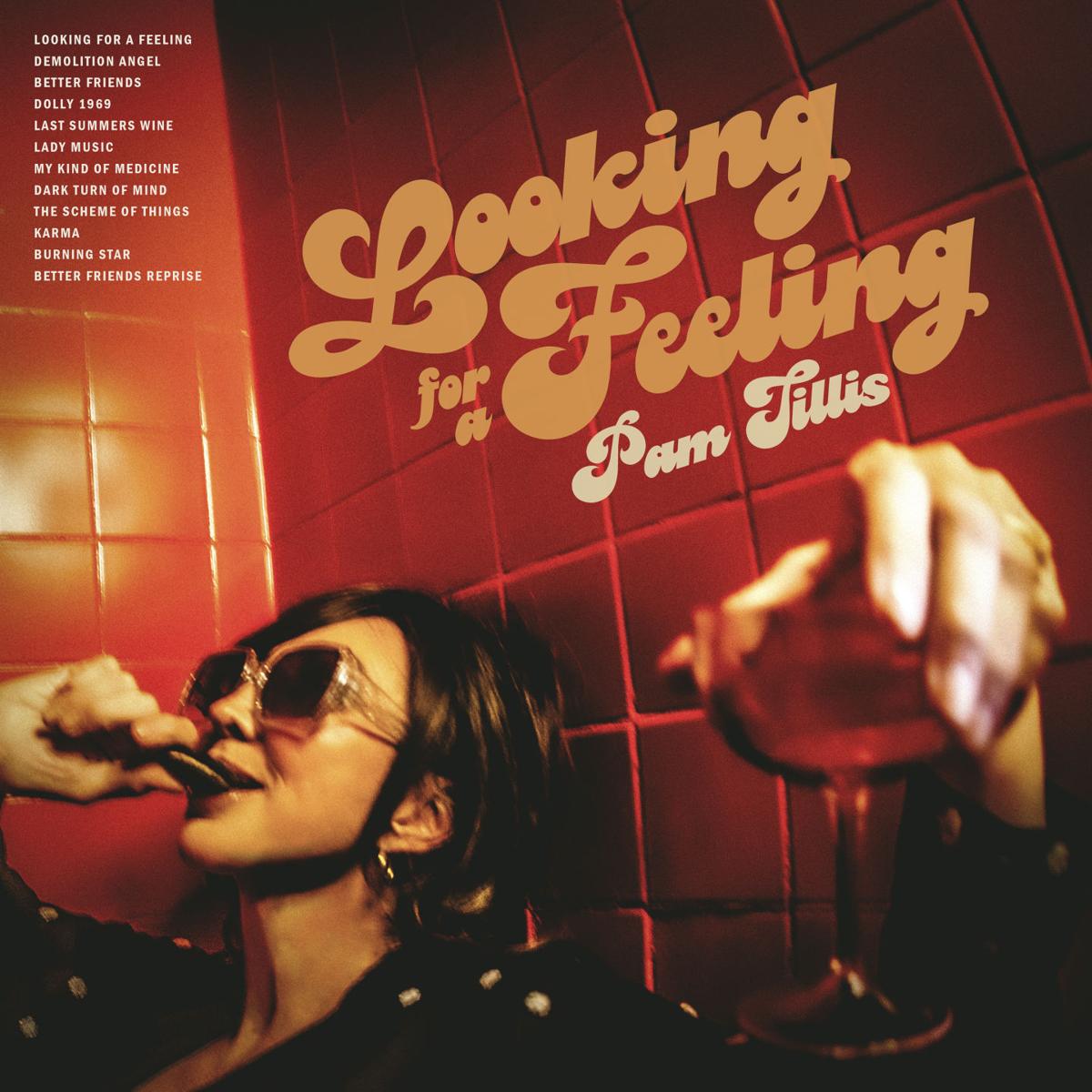
The venerable nineties country legend’s momentum has been rebuilding for some time. Since she exited Sony/Lucky Dog Records and left her major label days behind, she’s quietly cultivated her legacy, releasing two career-best studio albums (2007’s Rhinestoned and 2020’s Looking For a Feeling), as well as one solid and one splendid collaboration with her fellow second generation road buddy Lorrie Morgan (2013’s Dos Divas and 2017’s Come See Me and Come Lonely, respectively.)

And as the new generations of female country artists have emerged, her influence and impact on them is increasingly undeniable, with Ashley McBryde celebrating Homeward Looking Angel as a seminal album for her artistic development and Miranda Lambert referencing “Shake the Sugar Tree” and “Mi Vida Loca” on the Platinum-closing nostalgic gem, “Another Sunday in the South.”
Pam Tillis is such a seminal artist in my own life that I’ve usually stuck to the personal lens when discussing her work here. She’s one of my core three artists of all time, the ones who have provided the soundtrack to my life. And by virtue of her place in the lineup, she’s inevitably the most important one. Olivia Newton-John was my first musical love (and crush!), developing in my early childhood my taste for sincere and eclectic artists whose curiosity of the world and of others is anchored in radical empathy. Kane Brown connects me today to my son, a musician in his own right who feels as included and seen at his shows as I felt in the audience of a Kathy Mattea or Suzy Bogguss show back in the day.
But Pam was the artist of my adolescence, the one who got her tenterhooks into me with the one-two punch of “Maybe it Was Memphis” and “Melancholy Child” and never let go. It’s hard for me to write objectively because of that, and I’ve often overcorrected for it, to the point where I ranked her too low on the 100 Greatest Women list the first time around.
The cool thing about the passage of time is that the legacy of your favorite artists is completely out of your control. What is important and relevant to you at the time may sound dated to the next generation, the production too old-fashioned or the sentiments too ambered in the social dynamics of days gone by. Some artists are just very much of their time and their impact doesn’t go beyond their period of popular success. Others are underappreciated for their significance at the time, their transformation of the genre only visible through the benefit of hindsight.
And through the benefit of hindsight, Pam Tillis is one of the most significant and impactful country artists of all time, permanently shifting the perspective from which female country artists sing and write.
It’s an impact I didn’t fully understand myself until I embarked on the Every No. 1 Country Single of the Nineties feature. I first entered the chat at “Memphis” and heard “Don’t Tell Me What to Do” long after I’d already embraced what had come after it from acts like Mary Chapin Carpenter and Trisha Yearwood. Listening to the genre’s chart-topping hits sequentially was the first time I fully understood that record’s seismic impact. Through the jujitsu of switching the singer’s gender, “Don’t Tell Me What to Do” subverted the gender politics of its day the way that “Rose Garden” and “Different Drum” had before it.

But while those records did so in a way that kept tongue firmly in cheek, “Don’t Tell Me What to Do” didn’t mess around. It took the conventions of the classic country breakup song and turned them on their head, flatly rejecting the victim queen archetype that defined traditional country songstresses for generations, dating back to Kitty Wells and continuing through Reba McEntire, the superstar who loomed large over all the female artists of the eighties and nineties.
Tillis delivered a pivotal shift of perspective that became the new modern standard for how female artists would present themselves moving forward: You can break my heart, but you won’t break my spirit. She’d flesh out this concept with a series of hits that further expounded upon the nature of modern womanhood, centering the female voices of her generation while drawing upon the stylistic tropes of the artists that came before her.
The clarity and consistency of her point of view are all over her Arista debut album, Put Yourself in My Place. She explores her tortured, painful, but ultimately necessary rebellious years on “Melancholy Child.” She reclaimed her own “One of Those Things” from Janie Fricke and infused it with the same “I’m hurt, but I’mma handle my business” ethos of her breakthrough hit. She even gave us her first loving portrayal of the lonely single woman who’d reappear in various incarnations on future hits with “Blue Rose Is,” which recast the barfly often seen on records like Jeannie C. Riley’s “The Backside of Dallas” in a more sympathetic contemporary light.
The album’s success was ultimately powered by “Maybe it Was Memphis,” which also used a gender switch to turn a torrid song of nostalgic lust into a smolderingly sexy record the likes of which country radio had only heard from male artists like Conway Twitty. This was the record that made her a star, and it’s one of those rare hits that doesn’t diminish on impact with repeated listens. Tillis’ distinctively southern vocal delivery provides layers of depth, while the production provides the suffocating, intoxicating heat that she can still tap into when she closes her eyes, an untold number of years since that lonely Yankee went back home.

Tillis went into the recording of her first Arista album with the mindset that it might be her only one. For her second release, Homeward Looking Angel, she went in with the confidence that her first album’s success had given her, and she took full advantage of this, enjoying the freedom that comes with bloodline country credentials and the validation of having your work enthusiastically embraced by the scores of new country fans who were buying albums by the bucketloads. This confidence reached its peak with her ballsy move to work around her label cutting off her budget by putting her voice on the demo of “Shake the Sugar Tree,” which became one of her biggest hits and showed how versatile she could be as a singer, with that performance being as delicate as her “Memphis” performance was bold.
What that track has in common with all of the singles from Homeward Looking Angel is how Tillis both drew upon and subverted traditional country gender roles. “Sugar Tree” casts Tillis as the breadwinner of the household who expects her man to meet her physical needs, openly asking – on country radio in 1992, no less – “Do you think that I’m content with the cooking and the paying of the rent?”
The scorned housewife of “Let That Pony Run” doesn’t sit alone at her window crying because her daughter doesn’t wanna play house. She just packs the kids up, moves to West Virginia, and delivers her own liberation through “a divorce and a chestnut horse.”
The specter of Tammy Wynette lingers over “Do You Know Where Your Man Is,” which borrows heavily from Tammy’s signature conversational style to deliver a domestic message more reminiscent of Donna Fargo: while you’re both working so hard, don’t forget he needs the same love and affection that you expect from him.
And then there’s the implicit made explicit: the raucous, self-deprecating rocker, “Cleopatra, Queen of Denial.” This one was a little too much for country radio at the time, and made a bigger impact on the music video outlets of the day. The hilarious clip satirized country music imagery while the song subverted the victim queen country music tropes that Tillis had begun exiling from the genre only two years earlier.
This was the inner monologue that Loretta Lynn needed to divert her attention from the one who wasn’t woman enough to take her man, and toward herself for sticking with a guy who made such a conversation necessary. Tillis might still be with the cad at the end of the song, but her ferocious performance and the aggressive musical outro makes clear that her boot is sharpened and she’ll be kicking him to the curb when he gets home.

Tillis reached her critical and commercial peak with 1994’s Sweetheart’s Dance, launching an 18 month cycle where her talents were fully appreciated and celebrated. The album’s big hits all pushed the genre forward stylistically while referencing the country and pop of the past.
The biggest radio hit, “Mi Vida Loca (My Crazy Life),” was so casually inclusive of Mexican-American culture and language that it would struggle to get played on the xenophobic country radio of today. Her crackling cover of “When You Walk in the Room” was revelatory in its interpretation, allowing the underlying electricity of the song’s crushing hard narrator to break through to the surface with a pleading vocal, disregarding the song’s tightly woven structure that had limited so many other covers of it that came before. And “In Between Dances” was a gorgeous waltz with an olden time melody that could’ve been sung by a chanteuse in 1894 but the lived experience of a woman in 1994.
But it was the trio of songs that went beyond singing about past, present, and future partners that made the album such a definitive feminine statement. These three tracks explored the relationships that sustain women – your sister, your best friend, your mother – while capturing that specific historical moment for women in America in the wake of the first wave of feminism. In all three, Tillis is the one who rejects the limitations put on the women who came before her, but critically, she shows love, understanding, and genuine appreciation for the other woman who remains in the traditional gender role.
“Calico Plains,” a haunting Matraca Berg cover, captured the closeness of sisters as one claims the freedom that the other had longed for, her wings clipped by “the tiny heart of the baby she carried inside.” Tillis sings so delicately when the lyrics are about her sister, then soars as she hops in that “seat by the window on wings made of steel” and makes her sister’s dreams her own reality. They remain connected through time and space through the power of that dream, while her sister “reads the letters that she made me promise to write.”
“Spilled Perfume” has been as central to the younger generations discovering the power of Tillis’ work as it was to powering her to platinum-selling status in her heyday. Even thirty years later, there hasn’t been anything like it since, despite the very real and very common scenario it captures: a woman carrying the full weight of the shame that society places on her for being “duped” by a one night stand.
It’s a scenario that has resurfaced in award-winning hits like Lee Ann Womack’s “I May Hate Myself in the Morning” and Lady A’s “Need You Now,” but even those later hits kept their focus firmly on how the protagonist feels about the man in question. “Spilled Perfume” is about friendship, a morning after reminder that guys like that are actually quite disposable and what you really need is a friend who can hold your hand, understand, and maybe nudge you toward the realization that you didn’t do anything wrong in the first place.
Mel Tillis, Pam’s legendary father, sings on album closer “‘Till All the Lonely’s Gone,” as does her brother and two of her sisters. But it’s her mother Doris who is lovingly celebrated on the song itself. Longtime Tillis followers know all about Mama Tillis’ biscuits. They got a shoutout in her CMA acceptance speech, and she had a Mystic Biscuit band and a Mystic Biscuit cookbook.
But it’s on this song where Tillis shines the spotlight on the silent generation mothers who supported their daughters as they pursued opportunities that hadn’t been afforded to them, or to their own mothers and grandmothers. They provided that invisible but ever-present support: the biscuits, yes, but also the babysitting and the “you can do this” confidence boosts to salve those wounds that come from breaking through glass ceilings. With just one verse, Tillis reaches back to the generation before her in gratitude and celebrates them properly.

Tillis followed Sweetheart’s Dance with the self-produced All of This Love, a musical cornucopia that somehow predicted both the lush pop-country of Breathe-era Faith Hill and the brilliant bluegrass revival of the Chicks that would come to dominate country and pop radio by the end of the decade.
The album’s centerpiece, “The River and the Highway,” takes the big swings and delivers the profound sentiments found in all of her biggest hits, bringing an orchestral poetry to country radio with genuine gravitas. The album’s other two hits were further examples of Tillis’ ability to capture the complexities of modern relationships: “Deep Down” comes to terms with a memory that has permanently altered your DNA after its ended, while “It’s Lonely Out There” captures that terrifying moment of uncertainty when the connection might be severed for good.
It took All of This Love five years to reach the gold-selling status of its predecessors, a sign that the shift in perspective that Tillis had pioneered had so taken root that its practitioners – Martina McBride, Shania Twain, Terri Clark, Jo Dee Messina – had begun to elbow Tillis off of the radio.

But she ended her big run of hits with two Greatest Hits singles that both centered those relationships that had made Sweetheart’s Dance so distinctive, providing the perfect coda to her remarkable run at country radio.
“Land of the Living” is another Tammy-style conversation number like “Run, Woman, Run” or “Woman to Woman,” with the signature Tillis twist: “Run back, girl, but to yourself, not to him.” And the career record “All the Good Ones are Gone” somehow includes both supportive friends and a worried mom as our main character celebrates her 34th birthday.
There is so much going on underneath the surface of that song’s bridge, as she takes a birthday call from her mother that emphatically lacks the intergenerational understanding implicit in “‘Till All the Lonely’s Gone.” Mom is dying inside that her daughter doesn’t have the family that society taught her was needed for a woman’s fulfillment, so much so that she can’t check herself on the girl’s birthday. The daughter is similarly trapped, trying desperately to make her mother understand that she wouldn’t have been fulfilled by that, and that she needed to hold out for something more, all while navigating the desperate loneliness that has come with that choice.
There isn’t another singer on the planet who could’ve delivered that bridge the way Tillis did, taking what is on the surface an almost toxic conversation, but communicating with her vocal how much these two women love each other, hurt for each other, and both long for the daughter’s happy ending.

Tillis’ final two Arista albums didn’t have the commercial impact of those first five releases for the label, but they have their gems worth discovering, especially 1998’s Every Time. By 2002, Tillis had exited the label and found distribution through Sony for her self-produced tribute to her dad, It’s All Relative: Tillis Sings Tillis. In a perfect world – or maybe just in 1994, which was pretty close – the pairing of Mel’s generation-best songwriting and Pam’s generation-best song interpretation would’ve been widely celebrated and delivered some radio hits.
But by this point, women were being exiled from country radio anyway, a trend that would contribute to Tillis’ own influence and impact being obscured for many years. After all, how could you hear how she had shifted the perspective of female country artists when they weren’t even playing any of them on the radio?
Two decades later, the streaming era has made new artists more accessible and radio less relevant than it’s ever been. Unsurprisingly, once us nineties country fans who loved the female artists the most were given some autonomy, we discovered Brandy Clark and Kacey Musgraves and Tami Neilson and Rhiannon Giddens and Ashley Monroe, most of whom radio couldn’t be bothered with but all of whom were making music that wasn’t only influenced by Pam Tillis and her contemporaries, but was of a similar quality, too.
And younger listeners with that same autonomy are embracing these nineties ladies, too, but in surprisingly different ways.
Pam Tillis had multiple critically acclaimed gold and platinum albums in her heyday and nearly two dozen top forty country radio hits. She even won the 1994 CMA trophy for Female Vocalist of the Year. Yet she was still something of an underdog in her day, as all of her contemporaries – Wynonna, Lorrie Morgan, Mary Chapin Carpenter, Patty Loveless, and Trisha Yearwood – sold more records than her, even going multi platinum with some of their releases.
But today, Tillis trails only Yearwood on the streaming platforms, and the gap has been closing, driven by fiercely independent and emotionally sophisticated records like “Memphis,” “Don’t Tell Me What to Do,” and most especially “Spilled Perfume.”
I surprised myself when I ranked “Spilled Perfume” as the best Tillis record, but today that decision feels as prescient as when I ranked Dolly Parton as the greatest female country artist of all time back in 2008. Maybe time has a way of making the truly exceptional seem more obvious, as “we never heard it done like this before” is joined by “we haven’t heard it done this well since.”
All I can say is that in the early days of Country Universe, I wrote about Pam Tillis with the hope that her significance would be recorded for posterity in at least one small corner of the internet. But today? Her influence is everywhere.
Ashley McBryde, who asked for Homeward Looking Angel for Christmas as a child, not only doesn’t cry over spilled perfume, but is quite happy to spill it herself on “One Night Standards.”
She also draws on tracks like “Melancholy Child” and “Homeward Looking Angel” with her own prodigal daughter stories like “Stone,” “Sparrow,” and “Learned to Lie,” singing candidly about intergenerational trauma and trying to break destructive cycles through the sheer power of song.
Carly Pearce’s artistic and commercial peak to date, 29: Written in Stone, is a full album of the conversational tracks that Tillis revived in the nineties. “Next Girl” and “Never Wanted to Be That Girl” feel like direct descendants of Tillis classics like “Spilled Perfume” and “Let That Pony Run,” where the feelings of the women are centered and the feelings of the men who did them wrong are properly dismissed.
Best of all, Carter Faith’s brilliant debut Cherry Valley is the most Tillis thing the genre has heard since Tillis herself, capturing that steel magnolia aesthetic that pairs incisive and insightful lyrics with a pure country vocal that can go from whisper to scream as needed and infuses country, pop, and R&B into something that’s somehow both new and timeless.
Perhaps the most enduring element of Tillis’ legacy is that the victim queen archetype lampooned on “Queen of Denial” has yet to return. We’ve sadly long since retreated from the in your face girl power of Shania Twain and the Chicks. The genre snapped back to its boys club baseline in 2003 and never looked back.
But the bulwark built by Tillis has held strong. And her influence is everywhere now, the Jill of all trades who could do a little bit of everything is now a little bit of the magic sauce of this generation’s strongest artists. She’s the connective tissue between the legendary country queens that came before her and the modern artists who remain committed to Tillis’ empowered point of view.
Now, as my hope has shifted to the Country Music Hall of Fame loosening its bottleneck so she’s still young enough to enjoy her inevitable induction, I’m feeling immensely satisfied that this extraordinary artist whose music transformed my life is once again being given her flowers.
If you’ve yet to see her on the road, she’s one of the few nineties artists whose vocal skills have hardly diminished with time, and the audiences are getting bigger and more enthusiastic since she crossed over the rubicon to revered legend.
For those of you still just discovering Pam Tillis, please enjoy this playlist of her biggest hits and most essential deep tracks.
So good to have you back, Kevin!!
This Pam Tillis essay is wonderful! I had no idea she was enjoying such popularity today. Definitely very well deserved. Thanks to you, I’ve grown to significantly appreciate her music over the past almost 20 years. I own and love all of her country albums, especially “It’s All Relative” and “Rhinestoned.” Lets not forget that I did place her Christmas album as my favorite country Christmas album, after all, which should validate my gold status Pam Tillis Fan Card.:)
It was my enduring love of Pam Tillis that drove me to improve her Wikipedia page to “Good Article”. I have fond memories of almost all of her Arista singles and they’ve aged like fine wine. So has Pam herself, who still brought her A-game when I saw her at the Concert for Love and Acceptance in 2023.
@Bobby, as a regular user of Wikipedia to check out a lot of the artists mentioned on here, just want to say thank you, her page is wonderful.
Thanks! I’ve always been frustrated by Wikipedia’s spotty coverage of country music. I’m only one person but I’m trying my best. My most recent promotion to “Good Article” was SHeDAISY, another favorite around these parts.
You’ve done such great work on Wikipedia.
It may take only takes a couple of–or maybe one–dedicated fans to change an artist’s stature on Wikipedia.
Jan Howard’s biggest claim to fame is that her husband wouldn’t give her “I Fall to Pieces” and gave it to Patsy Cline. But on Wikipedia, she’s as big as–maybe bigger than–Bobbie Gentry.
Jeannie Seeley was a minor country star with a long tenure on the Opry, but there’s been a big push to get her in the Country Music H-o-F. In Wikipedia-world, she’s accorded the reverence of a significant 20th-Centryy American entertainment figure–like she was Rosemary Clooney. Even albums that she made in her 50s for minor labels and that few people ever heard of are accorded mock-serious coverage and “analysis.”
Love love love Pam Tillis, easily Top 5 on my list of nineties country females (probably fourth, after Loveless, Yearwood and Bogguss). Those first three Arista records were seamless–especially Homeward Looking Angel and Sweethearts Dance–and who’d have thought releasing FIVE singles from an album and the fifth one being the best would be a thing at country radio, Mary Chapin Carpenter and later Shania Twain notwithstanding? (Yes, I think In Between Dances is the best single off SD). She lost me a little bit with All Of This Love; good album, some great singles (Deep Down, It’s Lonely Out There), a terrible one (Betty’s Got A Bass Boat) and one of her best ones that never actually was one (her gorgeous reading of Bruce Hornsby’s Mandolin Rain), but I didn’t think it matched the uniform excellence of her prior two albums. Things really seemed to lose steam with Every Time (which I re-listened to recently and think is better than I used to) and Thunder and Roses (a few good songs but the least essential of her country albums to that point). The Mel tribute and Rhinestoned were not my cup of tea, but I’m going to re-investigate them soon. Would love to see her in the Country Hall, but I feel like there are several names ahead of her at this juncture.
Regarding the hall, Pam is in a different lane than most of her 90s counterparts. She got an earlier start, so she’ll be going in as veterans era. She’s in the lane that John Anderson and Marty Stuart got in through. Among female artists, she’s primarily competing with Lorrie Morgan, Rosanne Cash, and Crystal Gayle.
Trisha Yearwood, Faith Hill, Martina McBride, Shania Twain, Alison Krauss, Lee Ann Womack, and the Chicks are all crowding up the modern era lane. And they’ve got to compete with all the guys too.
“In Between Dances” is my most played SD track by a wide margin. Definitely a cleanup single for the ages!
Hey Chris–Telling us that Pam Tillis is your 4th favorite 90s female country artist is not showing the love love love love that you seem to think it is. It’s a pretty left-handed compliment.
Nope,still love love love (it was only three, since we’re now getting into semantics) alot of Pam’s output that decade (especially those first three Arista records), so I just see it as a regular old compliment. But hey, thanks for the call out.
There are just way, way too many high caliber female country artists from that era for this to be true.
Picking your top three from the murderer’s row of Suzy Bogguss, Mary Chapin Carpenter, Faith Hill, Alison Krauss, Patty Loveless, Kathy Mattea, Martina McBride, Reba McEntire, Lorrie Morgan, Pam Tillis, Tanya Tucker, Shania Twain, Lee Ann Womack, Wynonna, and Trisha Yearwood? Hard to go wrong with any combination of these ladies, and that’s just limiting myself to the ones that I personally believe belong in the Hall of Fame, if they aren’t there already.
Still, my holy Trinity will always be Loveless/Tillis/Yearwood!
I listen to a lot of the artists mentioned on here on Youtube, given the lack of availability of their music physically, and I have fallen in love with Pam Tillis. She’s now second behind Trisha Yearwood in my favourite 90s ladies.
Also, I know I’ve commented about this before, but your love for Olivia Newton-John is similar to mine, @Kevin. I love the way you write about her.
Two of my favorite artists to write about! That means a lot.
Trisha and Pam are part of what I call the holy Trinity of 90s female country singers. I don’t talk nearly enough about Patty Loveless, who completes the set for me. God, have her singles and albums held up.
Patty and Trisha are neck and neck at number one for me, with Suzy Bogguss just edging out Pam for third place (I thought her run of albums between ’91 and ’98 were slightly more consistent in quality control over Pam’s during that same time frame, but it’s still pretty close).
Suzy Bogguss is so underrated. Those albums definitely belong in the conversation about the decade’s best work, just as much as Patty’s and Pam’s and Trisha’s do.
And back to the wall, my solid number four is probably Faith Hill, at least going by my play counts. A lot of the heavy lifting is done by her post-90s work, but that’s true of the other three ladies as well for me.
Just an unimpeachable era for female artists in the genre. They’re also collectively worth celebrating that we can all pick the ones that we like the most with no duds in the bunch.
I can’t name one of them whose work hasn’t stood the test of time. It’s a think piece on its own right that I’ve gotta get on the record at some point. It was like the platonic ideal of every specific style of country music found its vessel in one of these women. I could tell the story of country music’s entire history, past, present, and future, just using the work of nineties female country artists. It’s astounding.
I was overdue to give my Pam Tillis records a spin anyway, but after reading this, I think the timeline might be accelerated. I had been listening to and enjoying country music throughout my elementary and middle school years in the 80s and early 90s, but it was that 1992-94 sweet spot that really captured me. Listening to the radio became front-line entertainment rather than merely background noise while country music video-viewing became appointment television. Pam Tillis was absolutely in the top tier of artists elevating the genre to its artistic crescendo in those halcyon years and, to your point, a strong case can be made that she was the most consistent female artist at a time when female artists were both prolific and overshadowing their male peers with the quality of their records.
Just like when there’s an extended period of economic vitality or relative global peace, we tend to take for granted that golden ages of entertainment are also gonna last forever before historical patterns reemerge. Back in the day of “Sweetheart’s Dance”, there was no good reason to not believe that country music was gonna continue to be as innovative and exciting as it was in the first half of the 90s far into the horizon, especially to those of us who were young enough that we failed to appreciate the “cycle” of the business and entertainment sector, sectors where the suits always find a way to squash dynamism and creativity. Couple that with the reflexive conservatism of the country genre’s forbears and contemporary listeners alike and you have a built-in formula for creative retreat and circling the wagons around the mediocre.
Pam Tillis’ fade from country radio accompanied its first bout of stalled momentum in my lifetime. I couldn’t have imagined that whatever regression I detected in the late 90s would still be better than just about anything that would came afterward for the generation to come, at least in the commercial country sphere. There are quite a few artists whose rise and fall occurred in tandem with the genre’s overall qualitative surge but I’d be hard-pressed to pick one whose timeline fits more perfectly than Pam Tillis.
This is the best synopsis of everything that went right and everything that went wrong in the 90s that I’ve ever read.