Archive for September, 2011

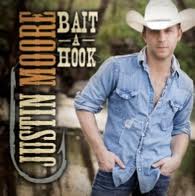
Single Review: Justin Moore, “Bait a Hook”

Thursday, September 29th, 2011

That’s it.  I’m done.

This is the last time I’m going to review a country pride song.

I have nothing left to say.  From now on, I’m turning a song like this off thirty seconds in, and I’m never going to pay it any attention again.

But since it is the last time, let me say it just one more time:

You don’t have to be a blathering idiot to be country.

You can be intelligent.

You can talk about the charms and limitations of the southern youth experience, like Hal Ketchum did in  “Small Town Saturday Night.”

You can let us know that you know why “(Margie’s at) The Lincoln Park Inn”, spotlighting all the moral ambiguities and complexities lurking underneath the surface of suburban America.

You can even do a list song intelligently, as Tom T. Hall proved over, and over, and over again.

You can celebrate the rural without diminishing the urban, trusting that the commonality of the human experience transcends the boundaries of geography.

Justin Moore, you’re making Tracy Byrd at his silliest seem brilliant in retrospect.

Drivel like this is making me hate country music, and I love, love, love country music.

No more for me.  I refuse.

Written by Rhett Akins, Justin Moore, and Jeremy Stover

Grade: F

Listen:  Bait a Hook


Album Review: LeAnn Rimes, Lady and Gentlemen

Tuesday, September 27th, 2011

LeAnn Rimes

Lady and Gentlemen

A new covers album from LeAnn Rimes would likely draw comparisons to her 1999 self-titled effort, which found her covering the likes of Hank Williams and Patsy Cline.  But this time, there’s a twist:  All of the songs she’s covering were originally recorded by male artists.  Thus, Rimes is re-interpreting them in a female perspective.

And while 1999′s LeAnn Rimes album might have given you a feeling that you were listening to really good karaoke singer, as her versions seldom strayed far from the originals, Rimes’ new collection Lady and Gentlemen finds her taking substantial liberties with these classic hits.  She even alters lyrics on Waylon Jennings’ “Good Hearted Woman” and “Only Daddy That’ll Walk the Line” (re-titled as “The Only Mama That’ll Walk the Line”).  The songs are given modern, yet reverent, production arrangements, with Rimes adding her own personal style to each one, resulting in a uniquely creative effort.

Besides the obviously strong song material, what really makes Lady and Gentlemen a keeper is the fact that, although she covers everyone from Jennings to Jones to Haggard, the project remains first and foremost a LeAnn Rimes album.  She sounds entirely in her element – After all, she grew up listening to these songs – and the result is a strong set of performances that sound natural, sincere, and unaffected.

Rimes and her co-producers Vince Gill and Darrell Brown craft arrangements that sound simultaneously vintage and modern, never treating the songs as museum pieces.  The albums kicks off with Rimes’ cover of John Anderson’s “Swingin,” which was released as the project’s first single last year.  Though it barely made a ripple on the charts, it easily ranked as one of the best singles of the year.

While everything about the original Anderson recording screamed “eighties,” LeAnn speeds up the tempo, and transforms the über-cheesy hit into a modern-day jam session.  In listening to Rimes’ vocal delivery, you’d think she chugged down a pot of espresso before heading into the recording studio.  Like an auctioneer at the county fair, Rimes calls out the verses in rapid-fire succession, while the band furiously plucks away behind her.

The better part of the album finds Rimes backed with simple acoustic and steel guitar-driven arrangements, such as on the Freddy Fender cover “Wasted Days and Wasted Night” – worth hearing for her Spanish accent alone.  She utilizes a similar sonic approach on Merle Haggard’s “I Can’t Be Myself,” notable also for a vocal that sounds deeply plaintive, while also casting a feminine tone over the classic lyric.  While her version of Tennessee Ernie Ford’s “16 Tons” carries a deep retro vibe, she adds an extra layer of sass to the lyric, which makes the song one of the album’s most interesting tracks.

She deviates from the vintage approach with her cover of Vince Gill’s “When I Call Your Name,” and instead puts a blue-eyed country soul spin on the nineties hit.  Such an approach accents the deep bluesy tone in her voice, but the unnecessary addition of a gospel choir distracts from the raw emotion that came through in Gill’s original recording.  Though interesting, her take on “When I Call Your Name” is less satisfying than many of the album’s other tracks.

Perhaps the song that gives her the biggest shoes to fill is the classic Bobby Braddock/ Curly Putman composition “He Stopped Loving Her Today,” a hit for George Jones in 1980, and widely regarded as the greatest country song of all time.  Appropriately, Rimes and Gill’s approach places the classic lyric front and center, with no superfluous bells or whistles.  Rimes is backed by little more than an acoustic guitar as she recounts the dark tale of a man who loved his woman until the very end, even when his love was no longer requited.  She gives a remarkably moving performance of the familiar ballad, even when delivering the spoken-word portion.  Vince Gill adds his distinctive harmony touch to the track, and the result sounds absolutely haunting, making “He Stopped Loving Her Today” a strong contender for being the album’s best track.

The album closes with the original songs “Crazy Women” and “Give,” both of which have seen release as singles.  “Crazy Women” sounds like something out of a Broadway musical (or a Laura Bell Bundy album, for that matter), and Rimes deftly pulls it off with a broadly entertaining performance of the wickedly snarky tune.  Current single “Give” returns Rimes to a fully modern pop-country style.  While the philosophical song – a call for proactivity and benevolence in the world – is a strong composition, the musical styling is an awkward fit for an album that is largely retro in style.  It’s a good song – It just sounds like it belongs on a different album.

As a special treat for her fans, Rimes offers a re-recorded version of her classic 1996 debut single “Blue,” commemorating the fifteen-year anniversary of the song’s release.  The new version sounds even more traditional than the original, which is saying a lot, while also displaying Rimes’ growth as a vocalist and lyrical interpreter.  She gives a performance with more restraint than the original, connecting with the underlying emotions on an even deeper level than before, while the simpler, twangier arrangement highlights the timeless nature of the Bill Mack composition.  It’s impressive to note the ease with which “Blue” fits in among all these revered classics.  As one who’s known and loved the song “Blue” for years, I do not say this lightly:  The new version of “Blue” rivals the original.

A binding thread running throughout the set is the palpable reverence Rimes displays for these songs, which makes Lady and Gentlemen one of the most intriguing and wholly satisfying releases of 2011, and of Rimes’ own career output.  It all comes together so well that the project’s success seem perfectly natural.  LeAnn Rimes is a great singer, and these are great songs, so in her tackling these timeless tunes, it logically follows that a great album would result.

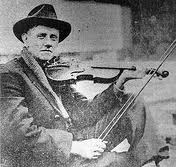
100 Greatest Men: #82. Fiddlin’ John Carson
Monday, September 26th, 2011

100 Greatest Men: The Complete List

It’s no wonder that so many purists believe it just ain’t country if you don’t have a bit of fiddle.  Thanks to Fiddlin’ John Carson, the first legitimate country hit had fiddlin’ all over it.

Like many performers of his generation, being a musician meant live performances.  Hailing from Georgia, Carson traveled around the south for decades playing his signature fiddle.   While the meager pay meant he had to work several other side jobs, one of which was manufacturing moonshine, Carson’s fame outpaced his fortune.

By the time he walked into an Atlanta Recording studio in 1923, Carson was already a seven-time Georgia Fiddlin’ Championship winner and his music had been heard across much of the United States, thanks to a gig on the Atlanta-based radio station WSB.

He recorded just two tracks: “Little Old Log Cabin” and “The Old Hen Cackled and the Rooster’s Going to Crow.”  The label, Okeh Records, pressed only five hundred copies, but they sold out almost immediately, with Carson promoting the discs at his live performances.  By many accounts, it was the first real hit of the genre that would come to be known as country.

Before long, he was called back into the studio to record another dozen songs, this time in New York. Carson would go on to record over 150 songs, many of them with his daughter, Moonshine Kate.  His illiteracy led to some copyright issues, and legal wranglings over the songs he wrote would become a nuisance for him.

But even though he didn’t reap the financial windfall that artists of similar popularity would soon enjoy, he did lay the groundwork for country music as we know it when he walked into that Atlanta studio so many years ago.

Essential Singles:

  • Little Old Log Cabin, 1923
  • The Old Hen Cackled and the Rooster’s Going to Crow, 1923
  • You Will Never Miss Your Mother Until She is Gone, 1924
  • Fare You Well, Old Joe Clark, 1924
  • Old Dan Tucker, 1925

Essential Collections:

  • Fiddlin’ John Carson: Complete Recorded Works  Vol. 1-Vol. 7, 1998

Next: #81. Eagles

Previous: #83. Freddie Hart

100 Greatest Men: The Complete List

Single Review: Lee Brice, “Woman Like You”

Sunday, September 25th, 2011

Lee Brice’s new release is a song that sets a casual conversation to music.  Woman asks husband, “Honey, what would you do if you’d never met me?”

Answer: “I’d do a lot more offshore fishin’ / I’d probably eat more drive-thru chicken / Take a few strokes off my golf game / If I’d have never known your name / I’d still be driving that old green ‘Nova / I probably never would have heard of yoga / Be a better football fan / But if I was a single man / Alone and out there on the loose / I’d be looking for a woman like you.

I’m digging the sound of this record. I particularly appreciate the restrained, acoustic-based arrangement. As another significant plus, Lee gives a low-key vocal delivery that works well with the conversational tone of the lyric, while also making for a nice change of pace from the more theatrical vocal performances heard on some of his previous singles.

But my problem here is that I have a hard time seeing why this guy answers his wife’s question by going into all of the hobbies and pastimes he enjoyed as a single man (and would still be enjoying had he not met his woman), only to jolt back to his life of domestic bliss, saying that he’d be all alone and “looking for a woman like you.” That latter development feels gratuitous and underdeveloped, fitting in awkwardly with the rest of the chorus.

The bridge ties things together to some extent, explaining that he plays a lousy golf game, his wife makes the best friend chicken, he loves the sound of her name, et cetera.  But the problem remains that the song spends too much time focusing on little inanities.

It’s a very pretty-sounding tune, to be sure, but the lyrics just don’t quite add up.  In most cases, my current
mood will probably determine whether I think the strength of the performance offsets the general disjointedness of the lyrics.

Written by Jon Stone, Phil Barton, and Johnny Bulford

Grade: B-

Listen: Woman Like You

100 Greatest Men: #83. Freddie Hart

Wednesday, September 21st, 2011

100 Greatest Men: The Complete List

Back in country music’s golden age, an artist could maintain a solid career for two decades before suddenly reaching a massive height of popularity.

Freddie Hart was a great example of this.   As one of fifteen children born to an Alabama sharecropper, Hart’s only chance at success was striking out on his own.  Though he played guitar since the age of five, Hart’s first tour of the world was as a soldier at the age of fifteen.  He lied about his age to join the service during World War II.

He settled in California after the war, and worked at a police academy, teaching self-defense lessons.  His musical career first took off when he joined the road band of Lefty Frizzel, who was instrumental in earning Hart a recording contract with Capitol. While his song “Loose Talk” was recorded by Carl Smith, he didn’t have significant success as a recording artist beyond a handful of tracks that peaked outside the top ten.

After a stint at an independent label, Hart returned to the Capitol roster in 1970.  His first releases fared so poorly that the label dropped him, but they still sent another single to radio: “Easy Loving.”  It took off immediately, and by the time it reached #1, he was back on the Capitol roster.

“Easy Loving” is widely acknowledged as one of the most significant singles in country music history, bringing a new frankness to the genre.  A slew of hits followed, and Hart dominated in the industry awards in 1971 and 1972.  The album Easy Loving was so big that it earned gold status, a rarity for country music albums in the early seventies.

Though the hits died down toward the latter half of the seventies, he remained a popular touring act.  Even today, he still commands a fan base that stretches around the world, proving that sometimes, slow and steady really does win the race.

Essential Singles:

  • The Key’s in the Mailbox, 1960
  • Easy Loving, 1971
  • My Hang-Up is You, 1972
  • Super Kind of Woman, 1973
  • Trip to Heaven, 1973
  • The First Time, 1975

Essential Albums:

  • Easy Loving, 1971
  • My Hang-Up is You, 1972
  • Bless Your Heart, 1972
  • Super Kind of Woman, 1973

Next: #82. Fiddlin’ John Carson

Previous: #84. Uncle Dave Macon

100 Greatest Men: The Complete List

100 Greatest Men: #84. Uncle Dave Macon
Tuesday, September 20th, 2011

100 Greatest Men: The Complete List

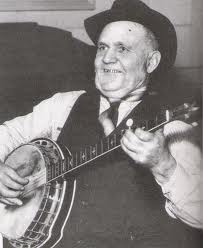
Every country star worth their salt longs to play the Opry stags.  That’s thanks in large part to Uncle Dave Macon, who helped put the Opry on the map.

Macon began performing at a young age, learning skills from the wide variety of guests who passed through his family’s hotel.  But he chose a career in freight trains instead, and settled for being an amateur performer until he was in his fifties.

Despite the late start, he quickly became a well-known musician, recording sides for a variety of labels.  But it was his showmanship that made him a legend, coupled with a good dose of humor and a breathtaking musical prowess.  He was a huge hit on the Vaudeville circuit.

Nicknamed the Dixie Dewdrop, Macon’s live performance were a mix of lyrical cleverness, creative banjo picking, and hillbilly storytelling.   His success touring the south earned him a slot on the Grand Ole Opry in 1925.   Already in his fifties when he made his Opry debut, Uncle Dave Macon preserved the tradition of the music that shaped him, but framed its presentation with comic humility.  It was the template that countless future Opry legends would follow.

His ability to perform stunts while picking the banjo predated Garth Brooks’ stadium-filling antics by 65 years, and his pure skill went on to influence future Opry stars Grandpa Jones and Stringbean.  He even appeared on film, in a Roy Acuff vehicle, singing “Take Me Back to That Old Carolina Home” with his son, Dorris.

He performed into his early eighties, making Opry appearances until three weeks before his death in 1952.   Fourteen years later, he was inducted into the Country Music Hall of Fame.  His legacy lives on in the annual tradition of Uncle Dave Macon Days, an annual music festival held every year in his home of Tennessee.

Essential Collections:

  • Travelin’ Down the Road, 1995
  • Classic Sides: 1924-1938, 2004

Next:  #83. Freddie Hart

Previous: #85. Marty Stuart

100 Greatest Men: The Complete List

Retro Single Review: Alan Jackson, “Dallas”
Monday, September 19th, 2011

1991 | #1

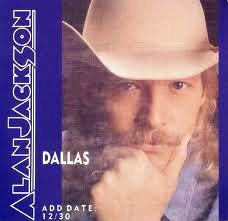
No, this isn’t Alan Jackson covering The Flatlanders, although that would have been phenomenal. Rather, this is Jackson performing right in his sweet spot: a simple enough song, yet with some clever lyrics, a generous dose of pedal steel and Jackson’s typical smooth, agreeable vocals. “Dallas” may not be Jackson at his most experimental (see “I’ll Go On Loving You”) or mainstream (“Chattahoochee”), but it’s a pleasant little gem in a very rich catalog of music.

Seriously though, what was the narrator thinking in trying to get a girl named “Dallas” to be happy outside of Texas? And in Nashville of all places, where country music is all fake and the radio stations don’t play at least one Willie Nelson song every hour. That’s just asking for heartbreak – though it does make for a good song.

 Written by Alan Jackson and Keith Stegall

Grade: B+

100 Greatest Men: #85. Marty Stuart

Monday, September 19th, 2011

100 Greatest Men: The Complete List

He enjoyed a brief period of radio success, but Stuart’s legacy was cemented when he left the commercialism behind and embraced the country concept album.

His career started on the independent labels Ridge Runner and Sugar Hill, but he paid the bills by playing in the band of his father-in-law, Johnny Cash.   When the major labels came calling, he left Cash’s road show.

A stint on Columbia produced little notable music, and his furor over Cash being dropped by the label derailed his contract with the company.  After signing with MCA, he enjoyed a few radio hits in the early nineties.  His Rockabilly style sounded great on the radio, but he was just as well known for the road tavern country duets that he performed with Travis Tritt.

After a pair of albums for MCA failed to produce a major hit, Stuart produced The Pilgrim in 1999.  While its commercial failure led to his dismissal from the MCA roster, the concept album laid the groundwork for the critically acclaimed work that he would produce in the years that followed.

While exploring styles ranging from classic country to Southern gospel, Stuart slowly emerged as an elder statesman of the genre.   He collected rare artifacts from country music history, hosted a cable show that showcased country legends, and produced comeback albums for Porter Wagoner and Connie Smith.

As a member of both the Grand Ole Opry and the board of the Country Music Foundation, Stuart continues to preserve the genre’s history when both on and off the stage.

Essential Singles:

  • Hillbilly Rock, 1990
  • ‘Til I Found You, 1991
  • Tempted, 1991
  • The Whiskey Ain’t Workin’ (with Travis Tritt), 1991
  • Burn Me Down, 1992
  • This One’s Gonna Hurt You (For a Long, Long Time) (with Travis Tritt), 1992

Essential Albums:

  • Hillbilly Rock, 1989
  • Tempted, 1991
  • The Pilgrim, 1999
  • Soul’s Chapel, 2005
  • Ghost Train: The Studio B Sessions, 2010

Next: #84. Uncle Dave Macon

Previous: #86. Nitty Gritty Dirt Band

100 Greatest Men: The Complete List

100 Greatest Men: #86. Nitty Gritty Dirt Band
Sunday, September 18th, 2011

100 Greatest Men: The Complete List

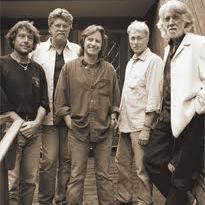
They’ve been around in various incarnations for more than four decades, but the common thread has always been a deep respect for, and desire to preserve, the history of country music.

Nitty Gritty Dirt Band has gone through several personnel changes since they started as a California country-rock band in 1966.  At one point, they even changed their name to the Dirt Band.

But the constants have been guitarist Jeff Hanna and drummer Jimmie Fadden. Though he left the band in 1986, later returning in 2001, John McEuen’s instrumental prowess have also been key to most of the band’s finest moments.

“Mr. Bojangles” was their biggest pop hit, reaching the top ten in 1970 and exposing their sound to a wider audience.  But they soon turned to their country music roots, which led them to make what is arguably the most historically significant album in the genre’s history: 1972′s Will the Circle Be Unbroken.

Recorded in Nashville, it gathered the forefathers (and mothers) of the genre and captured them performing their classic songs and sharing the stories that surrounded their creation.  It was so successful that it later spawned a highly successful sequel in 1989, which won a Grammy and the CMA for Album of the Year.

In between those two bookends, the band scored a hit with Linda Ronstadt in 1979 called “An American Dream.”  A string of fifteen consecutive top ten country hits followed, highlighted by a trio of #1 singles that included the modern classic, “Fishin’ in the Dark.”

In recent years, they’ve continued to record roots music, ensuring their legacy as the band that pushed country instrumentation forward by looking back.

Essential Singles:

  • Mr. Bojangles, 1970
  • An American Dream, 1979
  • Long Hard Road (The Sharecropper’s Dream), 1984
  • Modern Day Romance, 1985
  • Fishin’ in the Dark, 1987

Essential Albums:

  • Uncle Charlie & His Dog Teddy, 1970
  • Will the Circle Be Unbroken, 1972
  • Stars & Stripes Forever, 1974
  • Hold On, 1987
  • Will the Circle Be Unbroken, Volume Two, 1989

Next: #85. Marty Stuart

Previous: #87. Billy Walker

100 Greatest Men: The Complete List

Single Review: Lucas Hoge, “Give a Damn”

Sunday, September 18th, 2011

Did you wake up this morning thinking “Man, I would sure love to hear another song about being from the sticks in the backwoods, and not giving a damn what those stuck-up city folks think?”

If you did, I just might have to bonk you on the head.  Anyway, here comes Lucas Hoge to make his own mark in the hallowed tradition of the “I’m so country songs.”  It plays like you would expect, with clichés  aplenty, and the guy sounding like a has a major chip on his shoulder throughout.  That aside, Hoge’s performance doesn’t have nearly enough oomph to sell a song like this.  That aside, the production makes the single sound like it was recorded over a bad karaoke track.

I can’t give much credit for taking an already-overused concept, and washing it over with extra blandness.  If you like one-dimensional backwoods cliché-piles, then this is the song for you.  Otherwise, stay away.  Far away.

Grade:  D

Listen:  Give a Damn (via Taste of Country)

Writers

Latest Comments

Most Popular

Worth Reading

View Older Posts