

Shania Twain Starter Kit
 There were two solo artists who changed the course of country music history in the nineties. The first was Garth Brooks, who ushered in the boom years with his mega-selling albums No Fences and Ropin’ the Wind. The second was Shania Twain, who permanently altered the female point of view in country music with her mega-selling albums The Woman in Me and Come On Over.
Twain’s debut album was decent enough, with some charming singles like “What Made You Say That” and the Gretchen Peters-penned “Dance With the One That Brought You” being among the highlights. But it was the combination of Twain’s pen and Mutt Lange’s production that made her a superstar. Throughout her career, she’s been a champion of mutual monogamy and carefree independence. She didn’t protest for women to be treated with equality and respect so much as write from the assumption that no other option had ever existed.
In truth, all three of her self-written albums are essential listening, but if none of the 60 million albums that Twain has sold are in your personal collection, here are some tracks to help you get started:
Ten Essential Tracks
“Whose Bed Have Your Boots Been Under?”
From the 1995 album The Woman in Me
For all the heat Twain gets for being too pop, it’s hard to imagine anything this country getting played on even country radio today, let alone pop radio.
“Any Man of Mine”
From the 1995 album The Woman in Me
There were two songs from this album that essentially powered it toward becoming the best-selling female country album up until that point. I’ve always preferred this one over “I’m Outta Here!”
 She’s one of the most successful female country artists of the past two decades, and though it was the 2000s that brought her most of her accolades, Martina McBride became a star in the nineties. She also released her strongest music during that decade, and her first three albums remain her strongest efforts to date.
 Sugarland
 Our readers have clearly responded well to our Back to the Nineties features this month. (Fret not, there are more on the way.) Part of the reason is that so many of you, like myself and Leeann, first discovered country music in that decade.
 Poor choices lead to a lack of cohesion on the latest Kellie Pickler release. There’s such an incongruity between the softly sung verses and the bombastic chorus that it’s hard to get a handle on how she’s asking the titular question. Is she angry? Sad? Disappointed? Disbelieving? Take any twenty seconds of the song, and you might get a different answer.
 It seemed like Chely Wright was on the cusp of stardom for her entire career, releasing several albums in the nineties that garnered enough interest to keep her signed but not quite enough to make her an established star. She finally scored a big hit when “Single White Female” went #1, and the album of the same name would eventually be certified gold.
 Deana Carter was one of the first post-Shania Twain female country stars, and she quickly proved she could sell in big numbers. Thanks to the omnipresent smash “Strawberry Wine”, she soon owned a debut album that went platinum five times over.
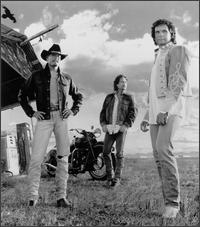 A group of veteran industry songwriters and performers came together as BlackHawk, and were quickly signed to Arista Nashville, a label that had already had success with Exile and Diamond Rio. Their debut album was a smash, selling double-platinum and spawning five hits.
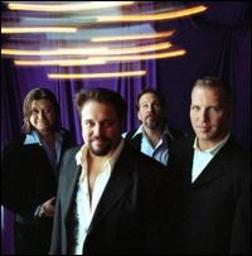 Even though they never made it into heavy rotation on country radio, The Mavericks were still one of country music’s most lauded bands in the mid-nineties. The CMAs named them Vocal Group in both 1995 and 1996, and they won similar honors from the Grammys and the ACMs.
 He could’ve been – heck, still could be – one of the genre’s great traditional vocalists. The depth of his baritone was matched by its nuance, making Josh Turner sound like an amateur in comparison. Here’s hoping he’ll resurface sometime soon, since he could blow most of today’s young guys out of the water.