

Review: Chris Young, “The Man I Want To Be”
 One thing that mainstream country music still has in abundance is artists with great voices. Chris Young can easily be counted among such talent, but he is also firmly in the category of artists with quality voices saddled with inferior material.
Supported by a simple melody with a chorus that overreaches for memorability, “The Man I Want to Be” also stretches to work within the confines of a lyrical hook: “I want to be a (insert adjective or verb here) man” pervades the song and turns out to be more of a distraction than a clever turn of phrase.
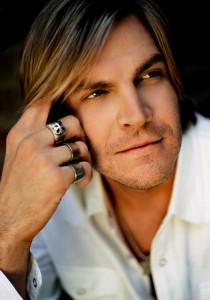 It’s taken a long time to put words together for this review, mostly because the prospect of Patty Griffin being billed on a mainstream single is too exciting not to cloud critical judgments a little. I mean, seriously – “featuring Patty Griffin.” From the same label that just won Taylor Swift a Female Vocalist award. It’s far too much cool for a body to digest in one sitting.
 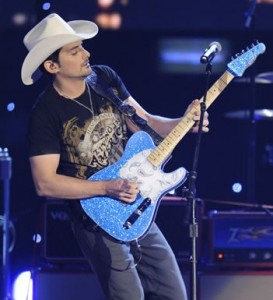 It’s no secret that in country music, some expressions of patriotism are more prevalent, and arguably more acceptable, than others. It’s refreshing, then, to see Paisley offer a solid albeit frivolous departure from the conventional with “American Saturday Night,” a proud depiction of America as a nation whose identity is molded by not one, but numerous cultures:
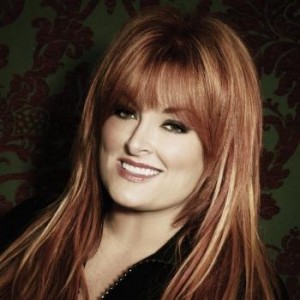 A Guest Contribution
 Carrie Underwood
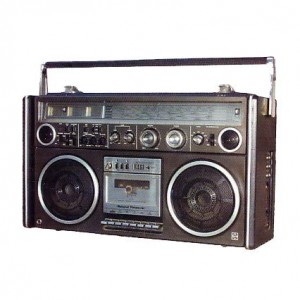 Driving to work this morning, I scanned the XM stations and settled on Roadhouse, which was playing Tammy Wynette’s “I Don’t Wanna Play House.” Thus started a stretch of songs that got me all the way to work: Kenny Rogers, “The Gambler.” The Judds, “Young Love (Strong Love).” Conway Twitty & Loretta Lynn, “After the Fire is Gone.” Charlie Rich, “A Very Special Love Song.”
 Winners
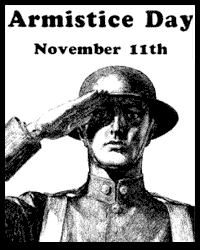 Happy Veterans Day, formerly Armistice Day. In memory of my father, a veteran of the United States Navy, I share his favorite song. When the video came on, he stopped whatever he was doing and just watched:
 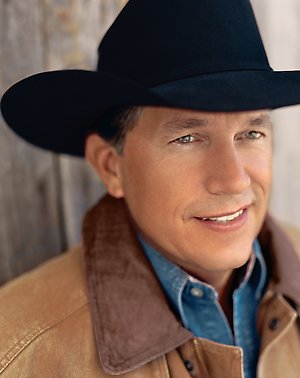 While Taylor Swift mania continues to grow, there’s another impressive accomplishment being achieved by two veterans of country music on the opposite end of the age spectrum.