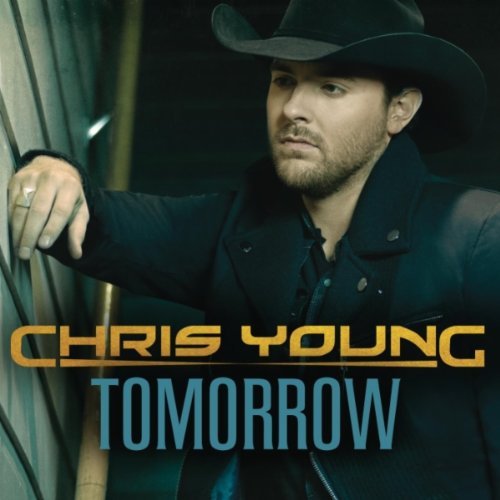
How to put it? I would listen to this man sing about IBS. I would listen to him sing a long-form denunciation of my value as a human being – possibly my mother’s and little sister’s, too. Young’s baritone is like the aural incarnation of warm fuzzies, and most everything it touches/fuzzes goes down easy – even those lame, creaky-hinged Music Row assembly songs scattered across his first two albums.
So, granted: This single was probably going to sound all sexy-cool no matter what. But we can all enjoy with a little less cognitive dissonance this time, because “Tomorrow” makes a serious play at substance. Young is finally a radio star, and he’s using his powers to inject some actual psychological complication back into the format.

Synopsis: Tomorrow, he’s leaving his lover for good. Tomorrow, he’s going to sew himself up and let the healing begin. The two want each other so bad, but their relationship is never as strong as their attraction to it. So tomorrow, he’s out. But tonight, he’s going to indulge like there’s no – heyyy, I see what you did there!
It’s probably as fresh of a twist as you could wring out of such a stale idiom, and the song’s premise is standby country. I love that there’s room for doubt as to whether this will really be the last time, too. Unlike “Voices” or even “The Man I Want to Be,” this song feels fully attuned to the complexities and ambiguities of the human experience. You trust it not to judge you for yours.
Where “Tomorrow” comes up short, as those predecessors also did, is in its chorus melody – which barely exists. The whole section is basically a boring two-note progression repeated over and over while lyrics are spewed out at double-time. It’s listenable because the production wills it to be (and, of course, because of Young’s fuzz factor), but imagine it performed acoustically and the song collapses. It’s the kind of tossed-off stuff you might expect from an especially dull Trace Adkins or Craig Morgan release, but here, it’s a dead weight pulling a potentially great single down from the heights of its theme and performance.
My fear is that we’re going to be hearing more and more of these tune-challenged songs as writers collectively sort out what mainstream country will sound like moving forward. Unhummable afflictions like “This” and “Crazy Town” and “Love Like Crazy” – heck, even the clumsy moments in otherwise-pleasant singles like “Mary Was the Marrying Kind” and “Amen” – give me the impression that we’ve lost touch with what made the classic songs work structurally, that maybe our basic sense of aesthetics needs sharpening.
But that’s a bit of a tangent. Here’s the point: Yes, Chris Young, I’m going to buy your new album, Neon, and yes, I will try to sing along to “Tomorrow” when it comes on in my car. And if you musically ask me to, I will delete this whole review and replace it with a cute YouTube video of your choosing. But until then, please go listen to some more Gretchen Peters and Alan Jackson (or, heck, Neil Sedaka and Carole King). And study up.
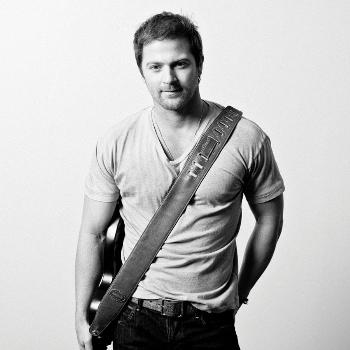
i leave for NY in a few hours. i’ve always heard how fast pace everything and everyone is up there, so i’m thinking i’m gonna find the person that seems to be in the biggest hurry, step rt in front of them and start walking as slow as my country ass can and every time they try to go around me, i’ll step in front of them and act as if i’m sight seeing. wonder how quick i’ll get the “F” bomb dropped on me.
Listen, Kip. I love your single and everything, but if you get trampled today, I have no sympathy. People who come to my city with pre-emptive rudeness on the fallacious assumption that New Yorkers are the rude ones get no love.
I slow my pace down when I’m down south. Pick yours up when you get here.
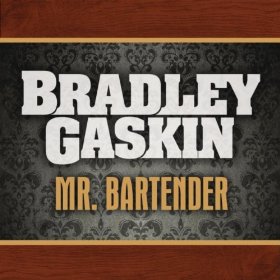
In a surprising twist to 2011, it seems that certain songs are hearkening back to country music’s glory days of the nineties. Newcomer Bradley Gaskin’s “Mr. Bartender” is one such example.
There’s no telling how this song could play on current mainstream country radio alongside the pop and rock country being played there, but it’s an unapologetic throwback to the neo-traditional sound of the nineties. Furthermore, Gaskin sounds uncannily similar to one of the decade’s superstars, Travis Tritt. In fact, his soulful voice coupled with a hardcore production, not to mention theme, could easily be mistaken as an unreleased album track of Tritt’s. However, as appealing as that comparison may seem, the song itself sounds more like good filler rather than a strong single that can stand on its own, therefore, rendering it almost all but forgettable.
The barroom weeper possesses many of the elements that make a great, pure country song, but the package as a whole comes off as more of a calculated imitation rather than a fresh take on one of country music’s most prosperous decades.
Gaskin’s got the powerhouse pipes and admirable traditional sensibilities, including being the sole writer of the song. So, all he needs now is to develop his own identity, which will make him more memorable in his own right instead of seeming like a very talented clone of somebody else.
Ultimately though, “Mr. Bartender” and its singer are a welcome diversion and, hopefully, a sign of country music becoming more recognizable as such again.
At first, they were the very embodiment of a valid reason to suspect the credentials of TV singing contest winners. But over time, they became one of the most thought-provoking and substantial country music bands.
Sawyer Brown began as the backing band for Don King, who had a handful of minor country hits in the late seventies and early eighties. When King stopped touring in 1981, the band decided to strike out on their own. The original lineup of Mark Miller, Bobby Randall, Joe Smyth, Gregg Hubbard, and Jim Scholten named themselves Sawyer Brown after the Nashville street where they often rehearsed.
The band quickly earned a reputation on the road, honing the live act that would keep them in the green during all of their ups and downs at country radio. In 1983, they auditioned for the first season of Star Search, where they were th winning act, securing a $100,000 prize which led to a contract with Capitol Records.
They were a hit from the start, with a handful of big singles from their first two albums, including “Step That Step” and “Betty’s Bein’ Bad.” As the titles indicate, they built their early career on goofy novelty hits, and were known for their outlandish outfits and campy dance moves. Even though they won the CMA Horizon Award in 1985, they weren’t taken terribly seriously by the country music industry.
Their road business never wavered, but as the new traditionalist movement went into full swing, radio airplay was erratic. After “Bad” hit #5 in 1985, the band enjoyed only two more top ten hits in the following five years, one of which was a high-energy cover of the George Jones classic, “The Race is On.” Original guitarist Randall left the band, replaced by Duncan Cameron.
Then, in one of the most surprising second acts in country music history, they resurfaced as a major player in the most competitive era the genre has ever seen, and they did it with a string of serious, thought-provoking songs like “The Walk”, which traced a father-son relationship through time; “Cafe on the Corner”, which captured the stories of several small-towners hard hit by the early nineties recession; and “All These Years”, a harrowing look at a faltering marriage that just might be saved by an act of infidelity.
The personality was there too, with “Some Girls Do” and “Thank God For You” recapturing the energy of their early hits without the accompanying silliness. For most of the decade, the band would remain hitmakers, finally winning a Vocal Group award from the ACM in 1997, and regularly reaching the upper heights of the charts with well-picked covers and strong self-written material.
Their most recent studio album, Mission Temple Fireworks Stand, was among the most critically acclaimed of their career, and spawned their last top forty hit, “They Don’t Understand.” The set was followed in 2008 with a Christmas collection, Rejoice. Their touring schedule remains hectic, with the band regularly playing venues and fairs across the country every summer and fall.
This is the Martina McBride that I was really into when I was a teenager.
Well partially, at least. I love the huskiness of her voice, which I haven’t heard on record since her Wild Angels artistic peak. There’s none of the earnestness that has characterized her work ever since, and you’d actually have to remix “Teenage Daughters” quite a bit to get it to fit on AC radio.
Why on earth are there “do da doo doos” popping up in the middle of an otherwise charmingly resigned number about the realities of being the parent of a teenage girl? I guess they need something for the critics to poke a stick at.
But the lack of a glossy sheen and the palpably real vocal performance are more than enough to make this a winning preview of her first release for Republic Nashville. Can’t wait to hear the rest.
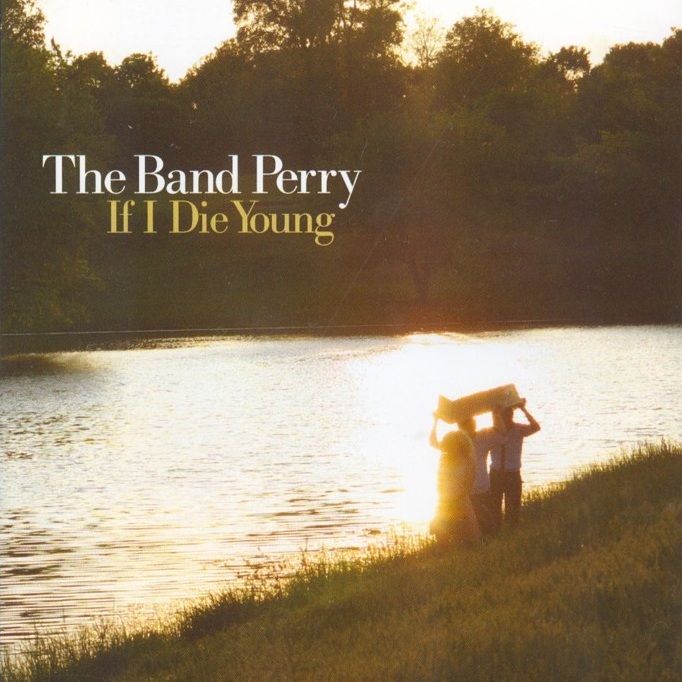
To the Perrys’ credit, I guess, the song is too deeply country-folky to convince as a straight-ahead pop ballad. Not to the Perrys’ credit…what would be so bad about a little string-band action on Top 40?
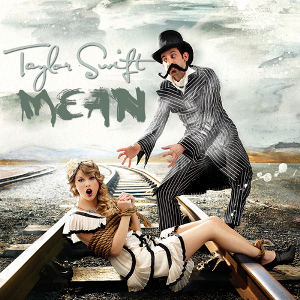
I’ve never been a big fan of Taylor Swift because of two reasons. One, I don’t find any personal relevance in the adolescent perspective that she usually writes from. And two, I don’t care for her vocal style.
Go figure that she writes what’s probably her most adolescent song since “Picture to Burn” and directly answers criticisms that she can’t sing in the third verse, and the end result is my favorite thing she’s done to date.
Seriously. I want to go buy the album now. I realize that the song was inspired by those who’ve criticized her talent more than her work. But just like “Not Ready to Make Nice” was a direct response to death threats over a political statement but tapped into something more universal, “Mean” serves a larger purpose as well. It puts into song that feeling of being disrespected and insulted by someone with more power or a larger platform than you, for no other reason than they don’t like you.
The image I always use in my head is one of inner light. When that light shines bright, it offends those who’ve had their light go out. Nothing frustrates people like that more than someone whose light is completely resistant to every attempt made to extinguish it. It brings out their inner meanness.
Swift’s message to those on the receiving end is that those who will put you down may have power over you now, but it’s limited by time, place, and your own self-awareness.
I’m glad that this song exists. There isn’t nearly enough civility and kindness in the world, and some people really are just mean. I can’t think of another song that articulates the distinction between honesty and cruelty so well. It does it in a very adolescent way, with a healthy dose of snark-ridden contempt, but since mean people usually haven’t evolved beyond adolescence in the first place, such an approach seems wickedly appropriate.
I have mixed feelings about days like this. I understand why they’re necessary, but I can’t help but wonder what today being international women’s day makes the other 364 days of the year. A little more than half the population should be due at least 183 days.
But I can’t pass up a day to celebrate female country artists, so in the spirit of the day, how about some recognition for women who don’t get a lot of praise?
I’ll go with Mandy Barnett. What a set of pipes. Here’s her debut single, which still sounds fresh fifteen years after its release:
What female artist do you think deserves recognition?